EU backs European prosecutor but urges Greece to strengthen rule of law

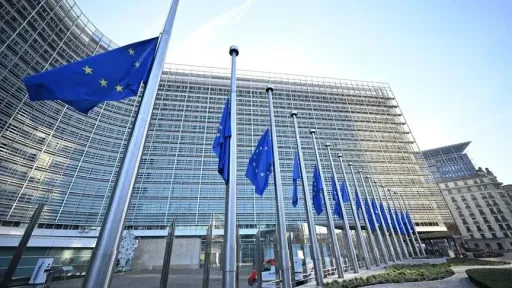
The European Commission has expressed strong support for the European Public Prosecutor’s Office (EPPO) and its chief prosecutor Laura Kövesi, while its latest rule of law report on Greece highlighted continued concerns over the justice system, transparency and safeguards for journalists.
Although the report offers limited criticism of the Greek government, the Commission stressed that the European Public Prosecutor’s Office is an independent institution operating under European Union law and that all member states have an obligation to cooperate with and support its work.
Brussels defends independence of European prosecutor
European Commission Executive Vice President Henna Virkkunen said the bloc fully supports the European Public Prosecutor’s Office, describing it as an objective and independent institution.
Commissioner for Democracy, Justice and the Rule of Law Michael McGrath also voiced support for EPPO, saying the body plays a crucial role in protecting the financial interests of the European Union.
McGrath added that the Commission plans to present a proposal by the end of the year to revise EPPO’s operating regulation as part of a broader review of Europe’s anti-fraud framework.
Cooperation with Greek authorities remains effective
In its report, the Commission said cooperation between Greek authorities and the European Public Prosecutor’s Office remains “generally effective.”
The report noted that the number of European delegated prosecutors in Greece increased from seven in 2023 to 13 in 2026.
It also highlighted that the Greek parliament lifted the immunity of 13 lawmakers following requests from EPPO, allowing investigations to proceed, while four other requests were rejected.
Concerns remain over corruption investigations
The Commission kept the same four recommendations for Greece included in last year’s assessment, calling for further progress in several areas.
One key concern is the need to establish a stronger record of prosecutions and final convictions in corruption cases, including high-level corruption.
The report acknowledged progress with the creation of a legal framework for a digital corruption case registry, which is expected to become operational in 2027, but said results remain limited.
Calls for stronger lobbying rules and journalist protection
The Commission said Greece has made only limited progress in improving its lobbying framework.
It called for a broader definition of interest representatives and more effective implementation of existing rules governing lobbying activities.
The report also urged Greece to strengthen legal and non-legal protections for journalists, particularly against abusive lawsuits known as strategic lawsuits against public participation (SLAPPs).
Civil society dialogue still needs improvement
The Commission recognized further progress in developing structured dialogue with civil society organizations but warned that the process has not yet become regular and sustainable.
Greece was urged to establish a more consistent dialogue framework and simplify registration requirements for civil society groups to ensure an open operating environment.
The latest rule of law assessment comes amid continued European scrutiny of institutional independence, judicial effectiveness and transparency in Greece.
Souce:efsyn.gr