Ceuta migration crisis deepens as death toll disputed and EU weighs response

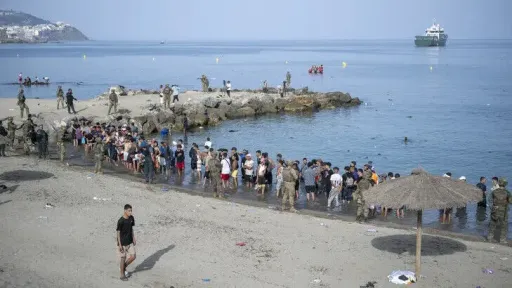
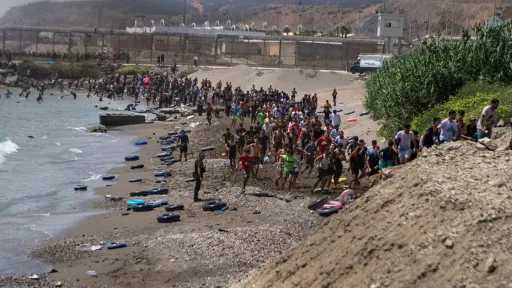
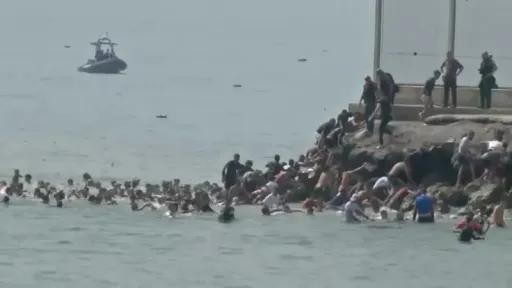
A mass attempt by tens of thousands of migrants to reach the Spanish enclave of Ceuta from Morocco has triggered a humanitarian and political crisis, with Moroccan and Spanish authorities reporting sharply different death tolls while the European Union prepares an emergency response.
Morocco's Interior Ministry said around 40,000 people attempted to reach Ceuta and about 1,135 headed toward the nearby Spanish enclave of Melilla. Ministry spokesman Rachid El Khalfi said 11 people died during the crossings, including one person who fell from a rocky area near Ceuta and 10 who drowned.
Spanish authorities, however, reported a significantly higher toll. According to Spanish public broadcaster RTVE, rescue teams have recovered 72 bodies from waters off Ceuta, while other Spanish media reported the number could be as high as 88.
Moroccan authorities said all migrants who reached Melilla were immediately returned, while coordination with Spain is continuing to verify reports of additional fatalities.
Tens of thousands returned to Morocco
Spanish authorities said more than 48,000 migrants have already returned to Morocco, with some estimates placing the figure at nearly 70,000 as repatriations and voluntary returns continue.
Officials said many migrants returned after Spain and Morocco agreed on repatriation measures, while others left because they were unable to access food, shelter and other basic services in Ceuta.
Spain has also deployed additional security personnel and begun installing a 500-meter floating barrier at the Tarajal border crossing to prevent further irregular sea crossings.
More than 1,100 migrants have received medical treatment in Ceuta, with one seriously injured person awaiting transfer to mainland Spain.
Morocco blames smugglers and online misinformation
Moroccan authorities said the mass crossings were not spontaneous but were driven by misinformation circulating on social media, human trafficking networks and misunderstandings surrounding recent legal developments in Spain.
According to Rabat, some migrants believed recent Spanish court rulings limiting the use of immediate returns for certain migrants intercepted at sea increased their chances of remaining in Europe if they reached Ceuta.
EU leaders call for coordinated action
The crisis has prompted growing calls across Europe for a coordinated response.
Ireland, which currently holds the rotating presidency of the Council of the European Union, will convene an extraordinary meeting of EU justice and home affairs ministers on Tuesday to discuss developments in Ceuta.
European Commission President Ursula von der Leyen said the vast majority of migrants had already returned to Morocco through cooperation between Spanish and Moroccan authorities, while stressing the need to strengthen the bloc's external borders and improve preparedness for similar crises.
Meanwhile, 22 European leaders signed a joint letter calling for urgent talks, warning that uncontrolled mass crossings could undermine the EU's migration policy and encourage further irregular migration. The leaders urged greater support for Spain, enhanced cooperation with Morocco and consideration of additional assistance from the EU border agency Frontex.
Czech prime minister calls for Schengen suspension
Czech Prime Minister Andrej Babis called for Spain to be suspended from the Schengen passport-free travel area, arguing that Madrid's handling of the crisis contradicts the European Union's migration policy.
Czech Foreign Minister Petr Macinka described the situation as a serious challenge for the Schengen Area but said Spain's position should be fully assessed before any decision is taken.
The migration crisis is expected to dominate discussions among EU interior ministers as member states seek a common response to one of the bloc's largest recent irregular migration incidents.
Source:AA