France braces for fresh protests as student unrest spreads nationwide

France is preparing for another wave of nationwide demonstrations as student protests that began over deteriorating school conditions have expanded into a broader movement against rising living costs, strained public services and government policies.
In an analysis for Anadolu Agency (AA), Şeyma Erkul Dayanç traces how the demonstrations developed from school-based protests into a nationwide movement, prompting mass arrests, clashes with police and growing pressure on President Emmanuel Macron’s government.
Despite announcing a series of education concessions and strengthening security measures, authorities have failed to persuade protest organizers to abandon further demonstrations.
According to Interior Ministry figures, 1,435 people were arrested during demonstrations on October 24, following 2,628 arrests recorded during the previous major mobilization on October 17.
The developments have raised fresh questions about public order, policing and the government's ability to respond to mounting social grievances.
School conditions spark initial demonstrations
The protests initially emerged from complaints about overcrowded classrooms, teacher shortages, deteriorating school buildings and insufficient support staff.
Demonstrations first gained momentum in France's overseas territories of Mayotte and French Guiana before spreading to mainland cities, particularly the Paris suburbs.
Students reported classes of up to 36 pupils and prolonged shortages of teachers in core subjects. They also demanded changes to Parcoursup, the country's university admissions platform.
By September 29, around 180 schools had been affected by protests, with 164 arrests reported by the Interior Ministry.
On October 1, demonstrations had spread to 1,027 schools, including 222 blockades. Authorities recorded 1,949 arrests during the nationwide unrest.
The movement escalated further on October 5, when a 15-year-old student lost a hand after a stun grenade exploded during a demonstration in Lens. Authorities subsequently suspended the use of that grenade model at student protests pending an investigation.
Between September 28 and October 5, more than 6,000 arrests were recorded, with minors accounting for the overwhelming majority of those detained.
Living costs turn student protests into wider movement
The demonstrations gradually moved beyond education, bringing together concerns over economic inequality, public spending, fuel prices and declining public services.
Calls circulated on social media for nationwide demonstrations on October 17, drawing comparisons with the Yellow Vest movement that began in 2018.
Workers, farmers, pensioners and residents of disadvantaged neighbourhoods were encouraged to gather at roundabouts, petrol stations and toll roads.
Student organizations also joined the mobilization, although they maintained their own demands and organizational structures.
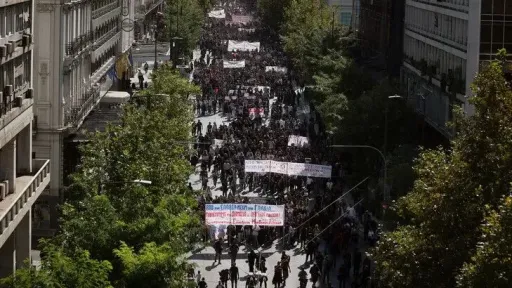
The October 17 demonstrations attracted an estimated 550,000 participants, according to the Interior Ministry, while the CGT trade union put the figure at 800,000.
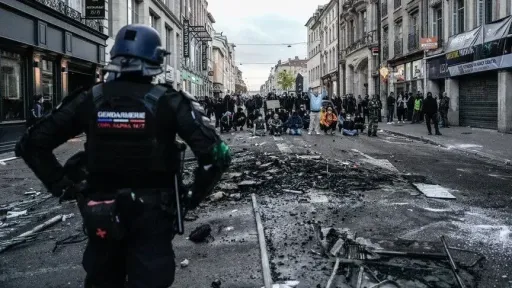
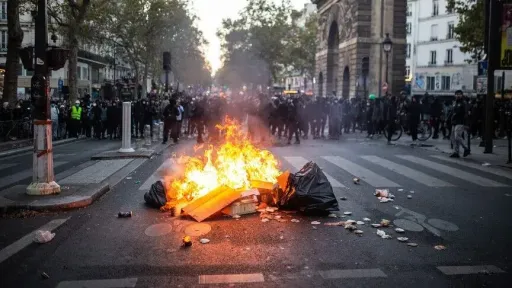
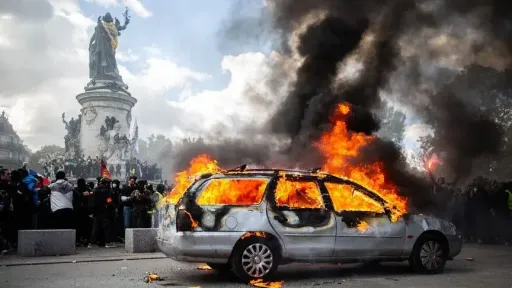
Although many marches remained peaceful, several cities witnessed violent confrontations, fires, looting and clashes between demonstrators and security forces.
In Limoges, a fire severely damaged the historic city hall. In Marseille, demonstrators broke into the city hall, while Lyon's tourist office was set on fire. Damage was also reported in Paris and other cities.
Authorities subsequently reported 2,628 arrests, 1,144 injured security personnel and damage to or looting of 1,522 businesses.
Political tensions and security concerns intensify
The violence prompted strong reactions from France's political leadership.
Prime Minister Sebastien Lecornu blamed radical left-wing groups and criminals, while Macron condemned the destruction and called for those responsible to face prosecution.
Jean-Luc Melenchon, leader of France Unbowed, criticized police command decisions and urged the government to address the anger among young people.
Marine Le Pen of the far-right National Rally also accused France Unbowed of contributing to the unrest, while calling for calm and expressing support for security forces.
Interior Minister Laurent Nunez acknowledged that authorities had underestimated the scale of the demonstrations and lost control in some areas.
Macron rejected Nunez's offer to resign and instead demanded an examination of intelligence and security failures.
The government subsequently introduced targeted curfews, including restrictions on minors, and increased the planned deployment of police officers and gendarmes.
Arrests continue as protests enter new phase
The October 24 demonstrations confirmed that the movement remained active despite the government's security response.
The Interior Ministry estimated nationwide participation at 410,000, including 110,000 in Paris, while the CGT reported approximately 800,000 demonstrators.
Authorities recorded 289 demonstrations, fewer than the 441 reported a week earlier.
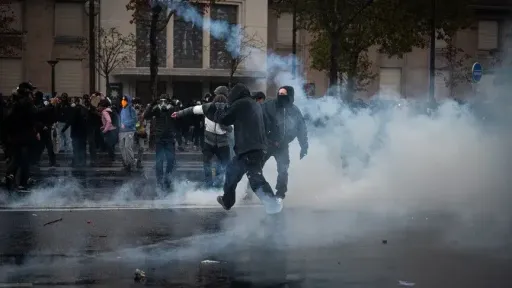
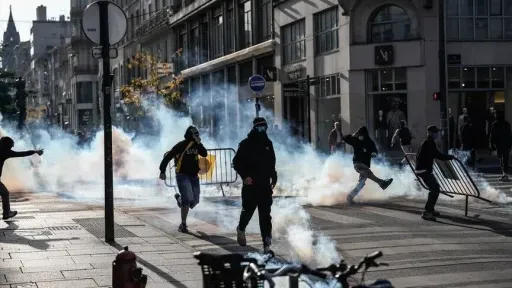
Most marches passed without major incidents, but clashes erupted towards the end of several demonstrations. Police used tear gas and water cannons in Paris, Nantes and Lille after some protesters threw projectiles.
Authorities also reported further looting and property damage.
In Paris, police recorded 65 arrests and more than 3,000 identity checks. Lyon saw 36 arrests and 22 injuries, including 18 among security personnel. Six people were arrested in Nantes in connection with looting.
On October 26, Nunez announced that the demonstrations had resulted in 1,435 arrests, with 267 security personnel and 150 protesters injured.
The number of fire-related emergency interventions fell sharply to 75, compared with 2,025 during the previous weekend.
Nevertheless, three protesters suffered serious injuries in Toulouse, Clermont-Ferrand and Reims, with an investigation opened into the incident in Toulouse.
Government announces education concessions
In an attempt to address the underlying grievances, the government announced a package of education measures on October 26.
The proposals include replacing Parcoursup in 2028, introducing changes to the admissions process for the 2027 academic year and creating 15,000 additional higher education places.
The government also pledged to limit first-year high school classes to 28 students, beginning in half of the most disadvantaged schools in 2027 before extending the measure to all public high schools in 2028.
Other commitments include cancelling 836 planned secondary education job cuts and creating 500 additional teaching positions.
The package also provides for €4 billion in loans for school renovations, €1 billion in university campus investment and increases in student grants linked to inflation from 2027.
Student representatives welcomed some of the announcements but said important questions remained over university capacity and the proposed replacement for Parcoursup.
The student organization Les Lycéens! maintained its call for further demonstrations, indicating that the government's concessions had not brought the movement to an end.
Fresh mobilizations planned ahead of 2027 election
Further demonstrations have been called for October 31, while trade unions have announced a nationwide day of action for November 5.
Nunez has announced another deployment of 70,000 police officers and gendarmes for October 31, warning of a high risk of violence during the Halloween period.
Authorities are also preparing restrictions on gatherings in city centres considered particularly vulnerable to public disorder, with some demonstrations expected to be redirected towards outlying areas.
As France approaches its 2027 presidential election, the protests have become a major test for the government, bringing education reform, economic pressures, public services and policing into the centre of the national debate.
While the authorities have announced measures aimed at addressing student concerns, the continued calls for demonstrations suggest that the unrest has evolved beyond its original education-focused demands.
Source:AA