Laura Kövesi warns EPPO faces ‘silent destruction’ as funding and political pressure threaten its independence

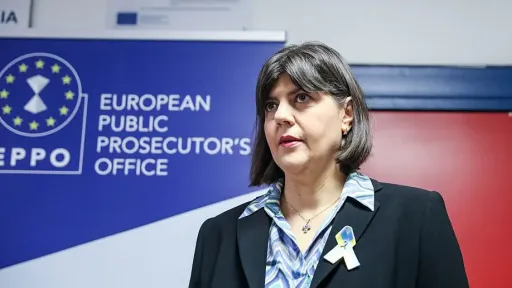
European Chief Prosecutor Laura Kövesi has warned that the European Public Prosecutor’s Office (EPPO) risks being weakened through funding shortages, bureaucratic delays and attempts to restrict its powers, arguing that political pressure is intensifying as the EU’s independent prosecution body investigates suspected fraud and corruption involving public funds.
In an interview with POLITICO, as her seven-year term comes to an end, Kövesi said she was concerned that the institution could be “silently destroyed” for carrying out its mandate. She also accused some politicians of supporting judicial independence only until investigations approach them or their close associates.
“Some politicians talk about an independent and efficient justice system until they are affected themselves and until you get close to their inner circle,” Kövesi said, describing what she sees as a pattern of attacks on prosecutors, attempts to narrow their powers and efforts to deprive the institution of financial and operational resources.
Funding shortages threaten investigative capacity
Kövesi said the EPPO was designed to have 230 European Delegated Prosecutors but had secured funding for only 180 positions, leaving a substantial gap in its planned capacity.
She also pointed to staffing shortages in participating EU countries. In Poland, 24 delegated prosecutor positions had reportedly been agreed upon, but only 15 prosecutors were serving. In Hungary, the European Commission had proposed funding that would cover approximately half of the office’s needs, according to Kövesi.
She warned that these shortcomings go beyond administrative inefficiency, potentially undermining the EPPO’s ability to investigate cases effectively and maintain public confidence in its work.
Established to investigate and prosecute crimes affecting the EU’s financial interests, the EPPO handles cases involving suspected fraud, corruption and other offences involving European funds.
Greek agricultural subsidies investigation draws political scrutiny
Kövesi singled out Greece’s agricultural subsidy scandal involving the payments agency OPEKEPE, rejecting claims that the EPPO’s investigations are driven by political considerations or election timetables.
She said the office’s responsibility was to determine whether European funding reached eligible farmers, rather than to adjust its investigative schedule around election campaigns.
According to Kövesi, some people who allegedly presented themselves as farmers received European funds despite not being entitled to the subsidies, while the money was reportedly used for luxury trips and expensive cars. These allegations form part of the wider controversy surrounding the distribution of agricultural support in Greece.
The EPPO has faced criticism in Greece over its handling of the case, including proceedings involving members of parliament and questions surrounding the lifting of parliamentary immunity.
Kövesi rejected suggestions that the office had acted improperly when seeking the lifting of immunity for 11 Greek lawmakers. She stressed that such requests do not establish guilt but are intended to allow prosecutors to investigate and gather evidence.
“Lifting immunity is not a question of guilt,” she explained, describing it as a procedural requirement for continuing an investigation.
She also argued that accusations of political interference risk diverting public attention from the substance of the cases and undermining the credibility of the institution.
Kövesi rejects claims of political interference
Responding to allegations that investigations involving politicians could influence upcoming elections, Kövesi said the EPPO could not suspend its work whenever an election campaign was under way.
She maintained that the office’s responsibility was to investigate suspected offences impartially, regardless of the political consequences.
In her view, criticism intensifies when investigations affect powerful figures, with accusations of political motivation being used to discredit prosecutors and discourage further scrutiny.
The Greek case has become a prominent example of the tensions surrounding the EPPO’s role in investigating alleged misuse of EU funds in politically sensitive circumstances.
National sovereignty versus cross-border law enforcement
Kövesi also challenged arguments that participation in the EPPO undermines national sovereignty, asking whether allowing criminal organisations to operate beyond the reach of fragmented national enforcement systems would be a preferable alternative.
She argued that criminal networks increasingly operate across borders, making cooperation between national authorities essential to tackling fraud, corruption and offences affecting the EU budget.
Kövesi further said that withdrawing from the EPPO would be extremely difficult, pushing back against suggestions by some Greek politicians that the country could simply end its participation.
The challenge facing Kövesi’s successor
Reflecting on her tenure, Kövesi said her original objective had been to build a strong, effective and independent institution capable of earning public trust. She believes significant progress has been made, but warned that the EPPO’s future depends on whether that progress can be sustained.
Her successor will face the challenge of protecting the office’s independence and credibility while addressing staffing shortages, inadequate funding and resistance to investigations involving politically influential individuals.
Kövesi also invoked the phrase “In Brussels, nobody can hear you scream,” associated with the Danish television drama Borgen, to convey her perception of the difficulties faced by those seeking accountability within European institutions.
Her warning raises a broader question for the European Union: whether its independent prosecution service will receive the resources and institutional support needed to investigate suspected crimes affecting the bloc’s financial interests without political interference.