France arrests 1,314 during nationwide protests

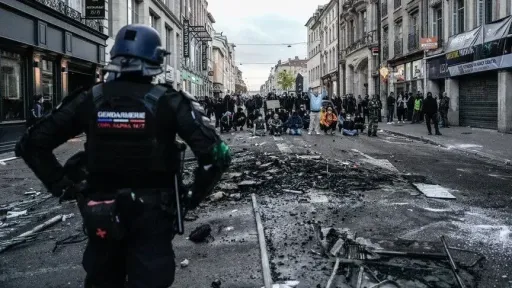
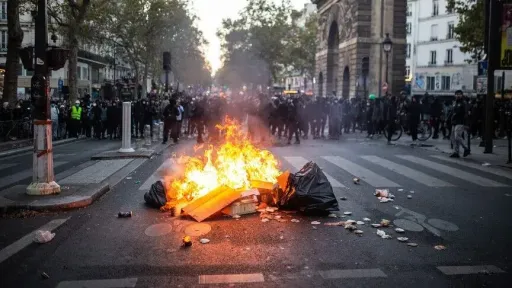
French authorities arrested 1,314 people during nationwide demonstrations on Saturday, while 53 security personnel were injured, the Interior Ministry said Sunday, as protests over rising living costs and public services continued across Europe.
The ministry estimated that 410,000 people took part in demonstrations across France, including 110,000 in Paris. Trade unions put nationwide turnout at nearly 800,000, with 250,000 protesters in the capital.
The figures marked a significant decline in violence compared with Oct. 17, when authorities reported 2,628 arrests and 1,144 injuries among security personnel.
The ministry also reported that 24 businesses were looted on Saturday, compared with 1,522 a week earlier, while fire-related interventions fell from 2,025 to 75.
Interior Minister Laurent Nunez described the outcome as positive, crediting security measures with helping prevent widespread looting and damage to public buildings.
Clashes reported in Paris, Marseille and Lyon
In Paris, 142 people were arrested, including 126 placed in police custody, according to the police prefecture. Two businesses were damaged, one of which was also looted, while officers prevented protesters from entering another establishment.
In Marseille, 71 people, including 40 adults, were arrested. Authorities placed 61 people in police custody, while seven businesses were reportedly looted or vandalized.
Marseille Mayor Benoit Payan described the demonstration as peaceful despite minor incidents at the end of the march, adding that the situation was calmer than during the previous weekend's protests.
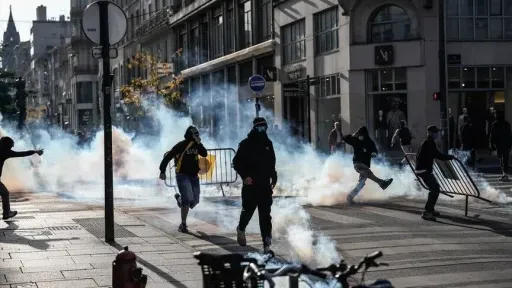
In Lyon, around 2,000 protesters defied a demonstration ban, with police deploying tear gas after fireworks were reportedly fired toward security forces. Demonstrators gathered mainly in the city's 7th arrondissement, according to local media.
Tensions were also reported in Nantes and several western French cities, where some gatherings took place despite restrictions. In Brest, around 10,000 people joined a march, while approximately 1,000 participated in demonstrations in Vannes and 1,200 in Lorient, according to regional media.
Authorities also reported serious hand injuries to two people during demonstrations in Clermont-Ferrand and Toulouse.
Government reportedly considered social media restrictions
Separately, French online outlet Blast reported that Prime Minister Sebastien Lecornu had asked telecommunications operators to prepare for possible temporary restrictions on social media platforms if violence escalated during the protests.
According to the report, a letter sent Thursday to representatives of Orange, SFR, Free and Bouygues Telecom referred to platforms including TikTok, Instagram, Snapchat and X.
The proposed restrictions would reportedly have been limited to mobile phones and specific areas. Telecommunications operators expressed reservations, saying they lacked the capacity to implement the measures at short notice.
The government had not publicly responded to the report at the time of publication.
France previously blocked access to TikTok during unrest in New Caledonia in 2024, but the country's Council of State overturned the restriction in 2025.
Italy sees clashes as police deploy tear gas and water cannons

Violent confrontations also erupted in several Italian cities on Saturday as demonstrations turned tense.
According to the ANSA news agency, police used tear gas in Turin after demonstrators threw bottles and fireworks. Officers also deployed water cannons and tear gas in Rome, while police in Bologna pushed back crowds after bottles and firecrackers were thrown.
Tensions were also reported in Milan and Florence, where police blocked demonstrators from entering parts of the city centers.
Authorities carried out more than 150 searches in Milan, nearby Monza and 20 other cities as part of investigations into unrest during the previous weekend's demonstrations. The searches concerned alleged threats and plans to attack police, damage vehicles and set buildings on fire, ANSA reported.
Interior Minister Matteo Piantedosi said security had been reinforced in cities considered particularly sensitive and warned that authorities would respond firmly to violence.
Youth protests turn violent in Barcelona

In Spain, demonstrations involving young people turned violent in central Barcelona, where hundreds gathered at Catalonia Square following calls circulated on social media.
Some protesters looted shops, set rubbish containers on fire and threw stones and bottles at security personnel, prompting police intervention. Clashes continued in nearby streets as demonstrators dispersed, with injuries and arrests reported.
Municipal police closed several streets in the city center, and many businesses lowered their shutters to prevent damage.
Catalan regional government President Salvador Illa condemned the violence, saying attacks and vandalism could not be considered democratic rights.
Meanwhile, Madrid hosted a separate demonstration in support of the country's state pension system. Organizers estimated that 50,000 people participated, while the government put turnout at 25,000.
Protesters called for pensions to remain linked to inflation and demanded measures to close the gender pension gap. The demonstrations came ahead of a snap election next month, amid political debate over the future of pension increases.
Tensions rise in Brussels while Liege remains calm

In Belgium, demonstrations in Brussels and Liege began peacefully, but tensions later escalated in the capital, according to public broadcaster RTBF.
Around 300 people gathered at Mont des Arts in central Brussels to protest alleged police violence and federal government reforms.
A subsequent march toward the Marolles district and Brussels-South railway station was unauthorized. Police used pepper spray after some demonstrators crossed a cordon, while protesters erected a barricade using electric scooters, bicycles, road signs and construction materials.
The unrest followed several days of false online calls for demonstrations, including posters reportedly generated using artificial intelligence. Some shops in central Brussels closed as a precaution, while the situation remained calm at several other locations mentioned in the online calls.
Protests reflect wider European discontent
The demonstrations formed part of a broader wave of public mobilization across Europe over rising living costs, education conditions, public services, pension security and alleged police violence.
In France, the latest protests brought together students, high school pupils, trade unions and supporters of the Yellow Vests movement, which originally emerged in response to economic pressures and living costs.
The scale of participation and the incidents reported in several countries highlighted the challenges facing European authorities as they seek to manage public demonstrations while responding to growing social and economic concerns.
Source:AA