US escalates pressure on Iran with unprecedented economic measures and indefinite blockade

Schumer calls for Hegseth’s dismissal amid reports of worsening conditions aboard USS Abraham Lincoln.
Iran rejects US claims of control over Strait of Hormuz as diplomatic efforts remain stalled.
Economic pressure intensifies
US Treasury Secretary Scott Bessent said Thursday that Washington plans to impose unprecedented economic measures against Iran, with further announcements expected next week.
“Watch this space for more announcements coming next week because we are going to apply measures like have never been seen in the history of economic isolation on a country,” Bessent said in an interview with Newsmax.
Bessent said the measures would combine intensified economic pressure on Tehran with the continued blockade of the Strait of Hormuz.
“It will be a combination of economic isolation like the world has never seen before, and the continued blockade in the Strait of Hormuz that will keep anything from going in or out of the Iranian ports,” he said.
The US Treasury Department expanded sanctions targeting Iran’s shipping and financial networks in July following renewed Iranian attacks on international vessels in the Strait of Hormuz.
US says blockade can continue indefinitely
US Defense Secretary Pete Hegseth said Thursday that the US Navy has the capability to maintain its blockade of Iranian ports indefinitely, citing its ability to rotate ships in and out of the region.
“We can hold it as long as we need to. Indefinitely, the United States Navy can maintain a blockade like that because we'll rotate ships in and out as we have and will continue to,” Hegseth told reporters in Panama.
Hegseth said no other navy has the same capability to maintain what he described as a “wall of steel” around Iranian ports.
“So Iran knows it can't get in and out on this blockade, and they know that there's no timeline on it either,” he said.
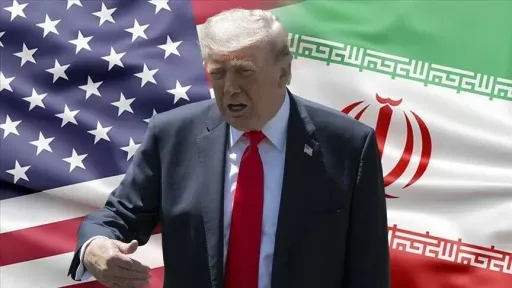
President Donald Trump has also said the US has “total control” over the Strait of Hormuz and vowed to maintain the naval blockade.
Iranian military officials have rejected Washington’s claims of control over the strategic waterway.
Iran’s central military command described the US statements as “baseless lies and fabrications,” according to a statement carried by Iranian state broadcaster IRIB.
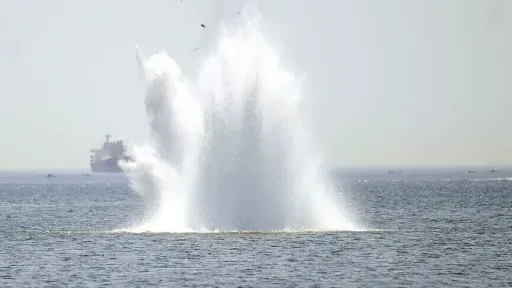
The Strait of Hormuz is one of the world’s most important routes for energy supplies and international trade. The dispute over freedom of navigation has therefore become a major point of tension between Washington and Tehran.
Political pressure grows over Hegseth
Meanwhile, US Senate Minority Leader Chuck Schumer called Thursday for Hegseth to be fired over reports of worsening conditions aboard the USS Abraham Lincoln aircraft carrier.
The carrier has remained deployed for an extended period amid sustained military operations related to the conflict with Iran.
“When Pete Hegseth was nominated, everyone knew he was completely incompetent,” Schumer said in a post on X.
“Now our brave sailors are paying the price in a horrific and unfathomable way. Pete Hegseth must be fired immediately,” he added.
Reports have described mounting strain among sailors following months at sea, repeated deployment extensions and sustained operations.
At least two sailors were reportedly stopped from attempting to jump overboard, while another sailor entered the water and was rescued.
The crew has also reportedly faced shortages of basic supplies, sanitation problems, disrupted mail deliveries and severe food rationing during the extended deployment.
Hegseth has disputed the sailors’ accounts, saying descriptions of conditions aboard the aircraft carrier have been “completely misrepresented.”
Ceasefire efforts remain stalled
The latest escalation follows a series of failed efforts to resolve the broader dispute between Washington and Tehran.
The US and Iran agreed to a Pakistan-brokered ceasefire in April and later signed a deal on June 17 to launch negotiations toward a final agreement.
The talks subsequently stalled over disagreements concerning security guarantees and freedom of navigation through the Strait of Hormuz.
Between July 8 and July 24, the US and Iran exchanged further military strikes. Washington launched attacks on targets inside Iran, while Tehran responded with strikes on what it described as US military facilities and equipment in several Arab countries, including Jordan, Bahrain and Kuwait.
With diplomatic efforts stalled, Washington is now signaling further economic and military pressure on Tehran, while Iran continues to reject US claims regarding control of the Strait of Hormuz and the effectiveness of the blockade.