Zeybek accuses Government of abandoning livestock farmers in İskeçe amid sheep pox

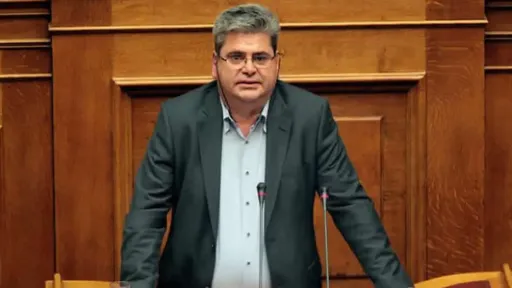
Hüseyin Zeybek, Member of Parliament for İskeçe, has criticized Greece's Ministry of Rural Development and Food over its response to the challenges faced by livestock farmers affected by sheep pox, accusing the government of failing to provide concrete solutions and leaving producers in prolonged uncertainty.
In a statement released on Friday, Zeybek said the ministry's reply to his seven-point parliamentary question failed to address the most pressing concerns of livestock breeders. He argued that the response relied largely on general references to European Union legislation and previously paid compensation while leaving most of his specific questions unanswered.
According to Zeybek, the ministry acknowledged that no timetable has been established for the restocking of herds culled due to the disease. He said this leaves hundreds of livestock farmers without production, income or certainty about their future.
Zeybek also argued that the government has not announced an income support scheme to help affected farmers remain financially viable, nor has it provided a timeline for outstanding compensation payments. He further criticized the absence of a comprehensive strategy to prevent the decline of livestock farming and population loss in rural areas.
The opposition lawmaker also questioned the government's handling of coupled agricultural payments, claiming that farmers who were ordered by the state to cull their herds have been excluded from support despite earlier assurances that they would not suffer financial losses. He criticized the ministry for citing the rules of the EU Common Agricultural Policy Strategic Plan instead of assuming political responsibility.
Calling for immediate action, Zeybek urged the government to provide full compensation, income support, guaranteed coupled payments and a comprehensive recovery plan aimed at rebuilding the livestock sector.
He pledged to continue raising the concerns of livestock farmers from İskeçe and the wider Eastern Macedonia and Thrace region in parliament and before the public until a comprehensive support and restructuring package is introduced.