Greece joins call to halt Israel’s E1 settlement plans

Greece has joined the European Commission and seven other countries in calling on Israel to immediately withdraw plans for the E1 settlement project in the occupied West Bank.
Austria, Spain, Australia, New Zealand, Sweden and Belgium also backed the statement, adding to growing international pressure over the proposed expansion.
The initiative was originally supported by the leaders of the United Kingdom, France, Germany, Italy, the Netherlands, Canada and Norway.
EU warns of threat to two-state solution
The E1 project covers around 12 square kilometres between East Jerusalem and the Israeli settlement of Ma’ale Adumim. It envisages thousands of housing units, along with roads and other infrastructure, expanding the settlement area east of Jerusalem.
European Commission President Ursula von der Leyen described Israel’s decision to publish construction tenders for the project as “unacceptable” and warned that it could undermine prospects for a two-state solution.
She said the project could divide the West Bank and disrupt the territorial continuity of the Palestinian territories.
Countries cite international law
The joint statement described Israeli settlements in the occupied West Bank as illegal under international law and urged the Israeli government to reverse its decision.
The countries also expressed concern over deteriorating conditions in the West Bank, including increased settler violence against civilians and restrictions affecting the Palestinian economy.
They warned that expanding settlements would further distance the parties from a lasting peace and could damage Israel’s international standing.
The countries also urged businesses to avoid bidding for construction tenders connected to the E1 project, citing potential legal and reputational risks.
Greece balances criticism with strategic ties
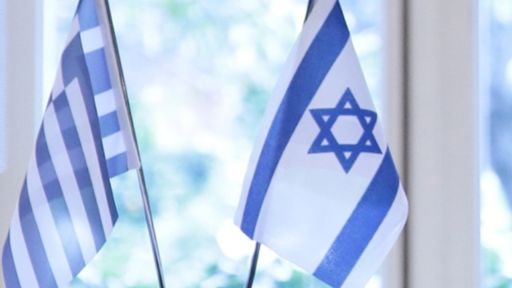
Greece’s decision to join the statement comes despite its close strategic relationship with Israel, which includes cooperation in defence, energy, trade, tourism and technology.
Greek Prime Minister Kyriakos Mitsotakis and Israeli Prime Minister Benjamin Netanyahu reaffirmed the strategic nature of bilateral ties during a meeting in Jerusalem in March 2025.
Defence cooperation has also expanded. In April 2026, Greece and Israel signed an agreement worth approximately $750 million for the supply of PULS rocket artillery systems to the Hellenic Armed Forces.
Eastern Mediterranean cooperation continues
Greece, Israel and Cyprus have also maintained a trilateral partnership focused on security, stability and cooperation in the Eastern Mediterranean.
At their 10th trilateral summit in Jerusalem in December 2025, the three countries agreed to strengthen cooperation and expand joint initiatives.
Greece’s support for the latest statement therefore represents a diplomatic expression of concern over Israeli settlement policy while its broader strategic, defence and regional ties with Israel remain in place
Source-Photo:turkiyetoday