Katrougalos calls for Greece-Israel cooperation to be reassessed
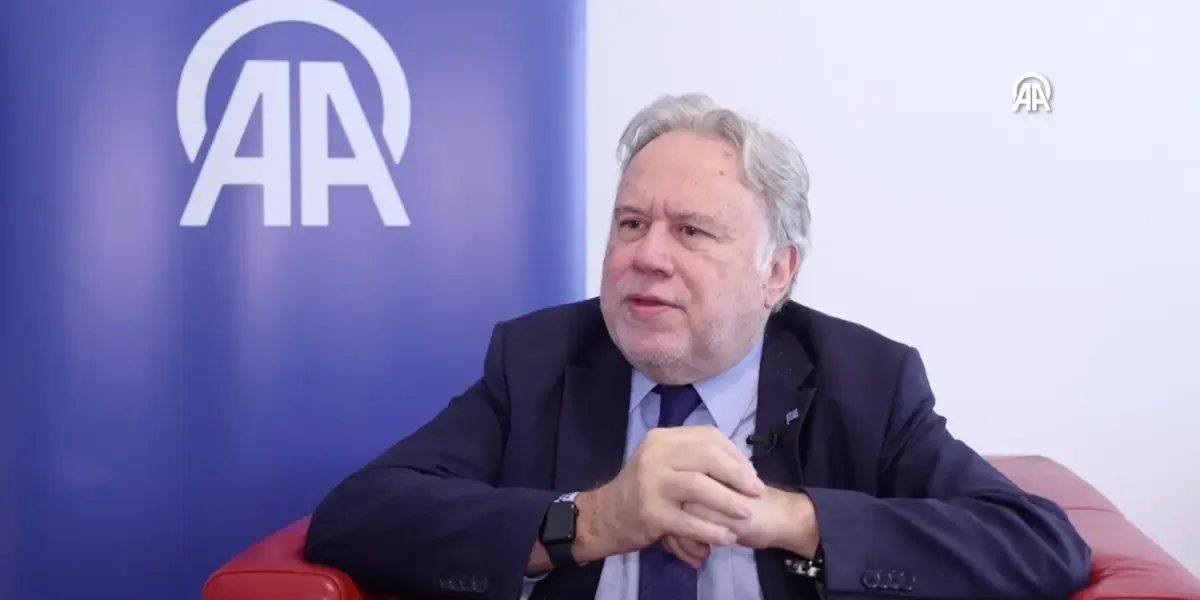
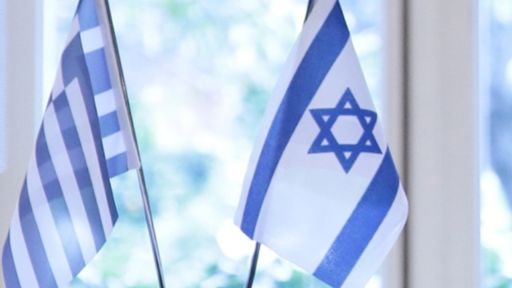
UN Special Rapporteur Giorgos Katrougalos has called for Greece to reassess several aspects of its cooperation with Israel in light of the Gaza war, arguing that Athens should ensure its foreign policy remains consistent with international law.
Giorgos Katrougalos, the UN Special Rapporteur on the promotion of a democratic and equitable international order, said Greece should reconsider several aspects of its long-standing cooperation with Israel following Israel’s military campaign in Gaza.
In an interview with Anadolu Agency, Katrougalos argued that Greece’s relations with Israel should be examined through the same international-law principles that Athens says guide its foreign policy.
“I believe many aspects of Greece-Israel cooperation should be reconsidered,” Katrougalos said, noting that the relationship was built over a period of 15 to 20 years under circumstances that he said were different from the current situation.
The comments were reported by Anadolu Agency on October 6.
KATROUGALOS SAYS INTERNATIONAL RESPONSE HAS FALLEN SHORT
Katrougalos described the situation in Gaza as an ongoing genocide and referred to what he called ethnic cleansing in the occupied West Bank. These are his characterizations of the situation, rather than an independent legal finding by the UN position he holds.
He argued that measures taken by the international community against Israel have so far fallen short of the gravity of the situation.
Katrougalos welcomed what he described as growing public awareness of alleged violations of international law, saying public pressure was increasingly influencing governments.
He also referred to decisions by 12 countries to restrict trade with the occupied Palestinian territories and to what he described as a shift in the UK government's position.
CALL FOR ADDITIONAL MEASURES
Katrougalos referred to the International Court of Justice’s July 2024 advisory opinion, which found Israel’s continued presence in the occupied Palestinian territory unlawful and said states have obligations arising from that finding.
He argued that additional measures should be taken regarding Gaza and criticized the European Union for failing to adopt a unified response.
According to Katrougalos, the lack of a common European position also highlights the limits of the EU’s strategic autonomy.
GREECE-ISRAEL TIES UNDER SCRUTINY
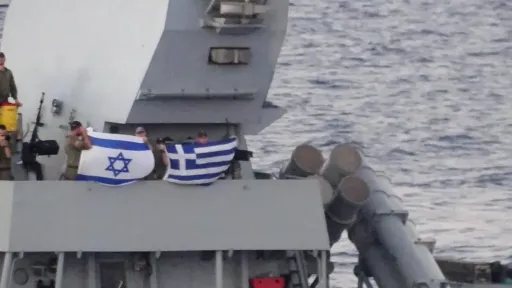
Katrougalos said Greece’s strategic partnership with Israel had developed over many years but argued that the circumstances surrounding the relationship had changed.
He said Greece has consistently presented international law as a foundation of its foreign policy and should therefore apply the same principle to its relations with Israel.
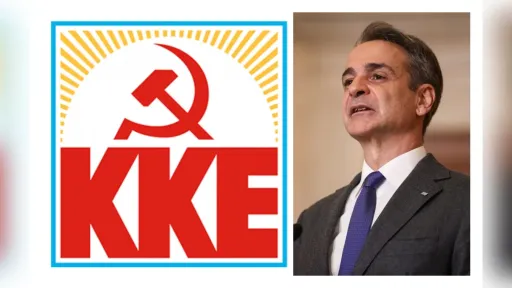
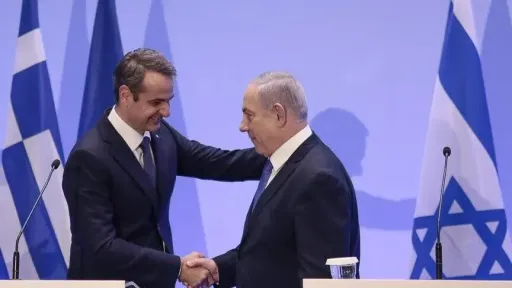
The Greek government, however, has continued to describe Israel as a strategic partner. In an address to the UN General Assembly in September, Prime Minister Kyriakos Mitsotakis said Greece had developed a long-term strategic partnership with Israel while maintaining relations with the Arab world.
In September, Foreign Minister Giorgos Gerapetritis also said Greece would continue developing cooperation with Israel, particularly in defense and technology.
NETANYAHU ARREST WARRANT AND EUROPEAN RESPONSE
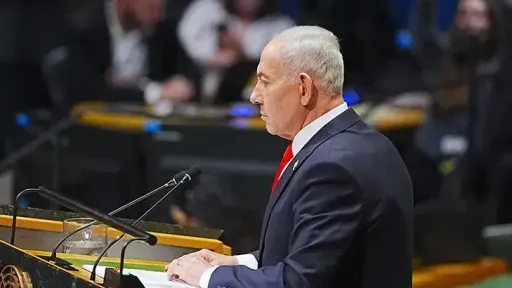
Katrougalos also criticized what he described as inconsistent European responses to the International Criminal Court’s arrest warrant for Israeli Prime Minister Benjamin Netanyahu.
He contrasted the European response to Netanyahu with the EU’s approach to Russian President Vladimir Putin, who is also subject to an ICC arrest warrant.
Katrougalos further criticized US sanctions targeting ICC judges and measures against UN Special Rapporteur Francesca Albanese, describing such actions as pressure on the international legal system.
“INTERNATIONAL LAW AND THE WORLD’S CONSCIENCE ARE AT STAKE”
Katrougalos said the issue should not be regarded solely as a matter for governments and international institutions.
He argued that public opinion can influence government decisions and called on individuals to express their views on the situation in Palestine.
“People should realize that not only international law but also the conscience and ethical understanding of our world are at stake in Palestine,” he said.