Pierrakakis calls for Greece to unlock the economic potential of its regions
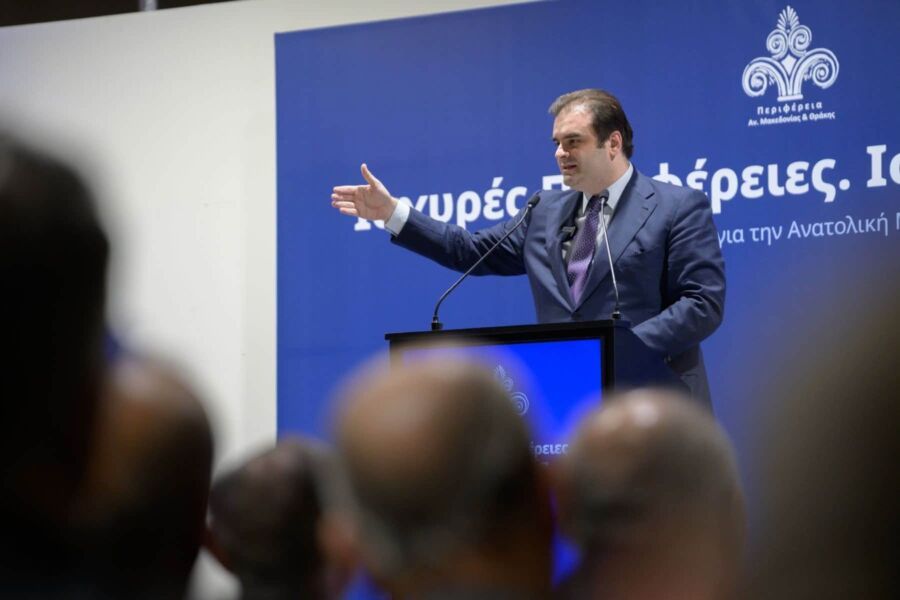
Greek Economy and Finance Minister Kyriakos Pierrakakis has called for greater investment in regional development, highlighting falling unemployment, support for higher education, demographic challenges and the strategic importance of Alexandroupoli (Dedeağaç) in northeastern Greece.
Speaking at an event in Alexandroupoli on October 27, 2026, titled “Strong regions, strong Greece: Prospects and opportunities for Eastern Macedonia and Thrace,” Pierrakakis said the region could play a central role in building a more productive, equitable and secure national economy. The event focused on the role of public investment, local opportunities and policies designed to support communities and attract businesses.
Unemployment falls as regional economic indicators improve
Pierrakakis cited figures indicating that the unemployment rate in Eastern Macedonia and Thrace fell from 16.2% in 2019 to 10.6%. He also highlighted a reported 42.3% increase in beekeeping activity since 2020 and a 21.8% rise in retail turnover between 2019 and 2025.
The figures were presented as evidence of economic progress in the region, although the source report did not specify the underlying datasets or methodologies used to calculate the changes.
The minister also pointed to efforts to strengthen Democritus University of Thrace through the expansion of existing departments and the creation of new academic units in the Evros regional unit.
Government incentives target population decline
Demographic decline was another key theme of the minister’s address. Pierrakakis said regional policy must support families, create incentives for young people to remain in their communities and address the disadvantages faced by areas distant from major administrative and economic centres.
Among the measures cited were relocation assistance of up to €10,000 in designated municipalities, a planned 50% reduction in the Unified Property Ownership Tax (ENFIA) for residents in small settlements, and increased compensation for conscripts serving in border regions.
The measures form part of a wider effort to support local communities and encourage people to live and work outside Greece’s largest urban centres. Eligibility for the individual schemes depends on the applicable conditions.
Alexandroupoli emerges as a strategic transport and energy hub
Pierrakakis highlighted Alexandroupoli’s growing importance to Greece and southeastern Europe, citing the city’s port, its connections with the Balkans and the development of regional energy infrastructure.
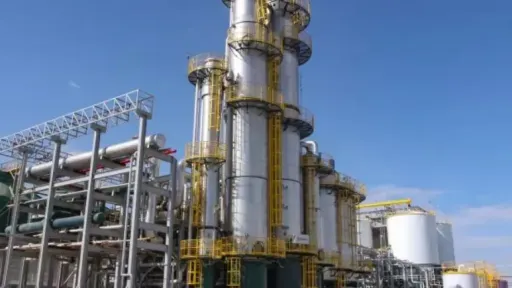
He referred to the Trans Adriatic Pipeline (TAP), the Greece–Bulgaria Interconnector (IGB) and the floating liquefied natural gas (LNG) terminal as components of the region’s expanding energy network.
According to the source report, increased cargo traffic and energy infrastructure development are contributing to the local economy while strengthening the region’s role in energy security and cross-border connectivity.
The government views Thrace’s geographical position as an opportunity to attract investment and reinforce Greece’s strategic presence in southeastern Europe.
Tax policy and investment in regional development
The minister also highlighted the government’s efforts to combat tax evasion, stating that 90 taxes and social security contributions had been reduced. He described these reductions as unprecedented in the country’s history and said Greece had improved its international standing in tackling tax evasion.
Pierrakakis also stressed the importance of European funding instruments in financing major infrastructure projects and supporting regional economic activity.
However, the long-term impact of these initiatives will depend on their implementation, the distribution of investment and their ability to generate sustainable employment and reverse population decline.
Building a stronger regional economy
Concluding his address, Pierrakakis argued that Greece must make fuller use of the economic potential of its regions to create a more productive and equitable country.
His remarks placed Eastern Macedonia and Thrace at the centre of a broader development agenda combining employment, education, demographic support, infrastructure investment and energy security.
For the Evros region in particular, the challenge will be to translate Alexandroupoli’s strategic position and infrastructure advantages into lasting economic opportunities for local residents.