İskeçe tobacco farming nears extinction as cultivated land shrinks by nearly 80%
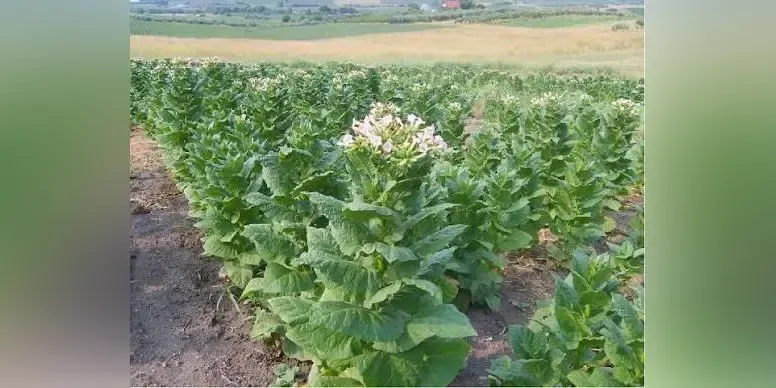
Tobacco cultivation in İskeçe (Xanthi), northeastern Greece, has declined sharply over the past five years, with the area devoted to oriental tobacco falling from 10,000 stremmas in 2020 to just 2,150 in 2025. Farmers and industry representatives warn that rising production costs, low prices and a lack of younger farmers threaten the future of the traditional crop, while cultivation continues on a larger scale in neighboring Rhodope.
According to figures provided by Andreas Kamarianakis, head of the Regional Directorate of Agricultural Economy and Veterinary Services (DAOK) in İskeçe, the area used to grow oriental tobacco, known locally as Basma, has contracted by nearly 80% since 2020. Declarations for the Virginia tobacco variety have fallen to zero.
TOBACCO CULTIVATION IN İSKEÇE
Official figures show a steady year-on-year decline in the area under cultivation:
2020: 10,000 stremmas
2021: 9,200 stremmas
2022: 7,500 stremmas
2023: 5,500 stremmas
2024: 3,500 stremmas
2025: 2,150 stremmas
One stremma equals 1,000 square metres, meaning the area under tobacco cultivation fell from approximately 1,000 hectares in 2020 to 215 hectares in 2025.
The decline marks a major setback for a crop historically associated with İskeçe’s economic development and international reputation, particularly during the interwar period.
HIGH COSTS AND A LACK OF SUCCESSORS
Nikos Tsinaridis, director of the local agricultural union, said tobacco production in İskeçe had almost disappeared, with only a small number of growers remaining in mountainous areas and around Selerou. He described the remaining production as limited and labour-intensive, with much of the work carried out by women.
Tsinaridis also pointed to the absence of younger farmers willing to take over cultivation, alongside growing pressure on the sector linked to tobacco taxation and public health concerns.
Nouran Alioglou, a tobacco grower from Filia in the Municipality of Avdira and head of İskeçe’s tobacco producers’ group, said the crop was no longer economically viable for many households.
According to Alioglou, growers in İskeçe sold their tobacco for €6.30 per kilogram last year. She said production costs had increased while prices had fallen, leaving many families unable to rely on tobacco income alone. As older farmers retire, she added, younger generations increasingly seek employment outside agriculture.
RHODOPE REMAINS A MAJOR TOBACCO-PRODUCING AREA
The situation is different in neighboring Rhodope, where tobacco cultivation continues on a substantially larger scale, although growers face similar economic pressures.
Sinan Ahmet, president of the Selerou Tobacco Growers’ Cooperative, said the region had around 2,500 producers cultivating between 20,000 and 25,000 stremmas. He estimated annual production at two to three tonnes, although the original report does not clarify the precise production measure behind that figure.
Ahmet said the previous year’s selling price was €6.87 per kilogram, while current production costs would require a price of around €10 per kilogram for growers to cover their expenses.
He cited higher fuel and fertilizer costs, saying diesel had reached €2.50 per litre. He also argued that tobacco producers in Greece lacked the support available to growers in some other countries, including Bulgaria, and warned that the sector could face further decline if conditions did not improve.
PIERRAKAKIS ADDRESSES FUTURE TOBACCO TAXATION
The report also highlighted comments by Greek Economy Minister and Eurogroup President Kyriakos Pierrakakis during a visit to SEKΕ on Monday, October 26. His remarks came ahead of expected discussions at the EU’s Economic and Financial Affairs Council (ECOFIN) on taxation of tobacco products.
Pierrakakis said Greece and other countries had secured a compromise proposal that was more favorable than the European Commission’s original plan. According to the minister, proposed tax increases would be more moderate, with implementation for Greece postponed from 2028 to 2036.
The future of tobacco cultivation in İskeçe will depend on whether farmers can secure viable prices, manage rising costs and attract a new generation of producers. For now, the figures point to a rapid contraction of a crop that once played a significant role in the region’s economic history.