Eastern Macedonia and Thrace seeks dedicated EU support for eastern border regions after 2027

The Region of Eastern Macedonia and Thrace has called for a dedicated European support mechanism for the EU’s eastern border regions under the next Multiannual Financial Framework after 2027, as part of efforts to address demographic decline, strengthen regional resilience and improve access to development funding.
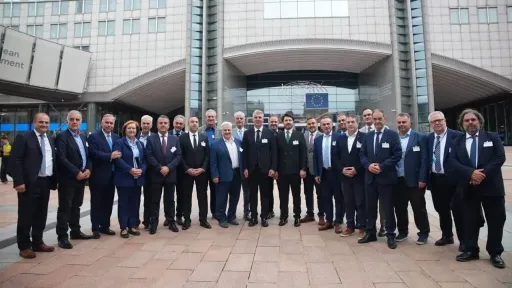
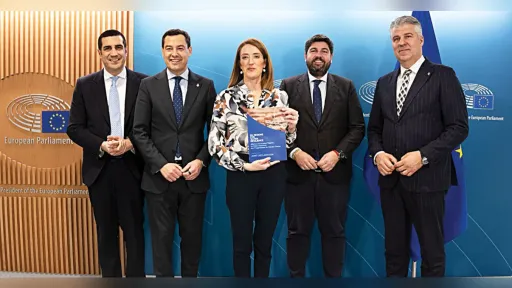
Regional Governor Christodoulos Topsidis presented the proposal during an event at the European Parliament on October 14, held under the title “From Decline to Resilience: Demographic Challenges and Policy Responses in the EU’s Eastern Border Regions.” The initiative seeks greater recognition of the shared challenges facing border regions and a coordinated European response through targeted policies and funding instruments.
The event was part of the region’s programme in Brussels on October 13–14, during the 2026 European Week of Regions and Cities.
CROSS-BORDER ALLIANCE TO ADDRESS DEMOGRAPHIC DECLINE
Representatives from Poland’s Podlaskie and Podkarpackie regions, Slovakia’s Prešov Region, Romania’s Botoșani County Council and the Larnaca District Local Government Organisation in Cyprus took part in the discussion.
The participating regions explored opportunities to strengthen interregional cooperation and develop a common position to advocate for targeted EU support.
The proposal links demographic resilience with broader economic and social development. According to the regional administration, job creation, modern infrastructure, access to quality public services and support for entrepreneurship are essential to encouraging young people to remain in their communities and enabling families to plan their futures locally.
The initiative also stresses the importance of maintaining a strong EU Cohesion Policy and ensuring that regional authorities have a meaningful role in shaping future European policies and funding priorities.
MEETINGS WITH EUROPEAN COMMISSION OFFICIALS
During the Brussels visit, Topsidis met Raffaele Fitto, Executive Vice-President of the European Commission for Cohesion and Reforms, and Themis Christophidou, Director-General for Regional and Urban Policy.
The discussions focused on the need for a targeted support framework for the EU’s eastern border regions after 2027, with particular emphasis on their development prospects and demographic resilience.
The regional delegation also visited Greece’s Permanent Representation to the European Union, where it presented the initiative to Ambassador Ioannis Vrailas and discussed potential next steps for advancing the proposal at European level.
RENOVATED BRUSSELS OFFICE REOPENS
On October 13, the Region of Eastern Macedonia and Thrace inaugurated its renovated office in Brussels, aiming to strengthen its institutional presence and improve communication with EU institutions, organisations and potential partners.
The office is intended to support the region’s policy priorities, facilitate new partnerships and provide timely information about European programmes and funding opportunities. It is also expected to serve as a point of contact for municipalities, businesses and other organisations across the region.
The inauguration was attended by Greece’s Ambassador to Belgium, Sofia Grammata, Members of the European Parliament Vangelis Meimarakis, Giorgos Aftias, Fredis Beleris and Giannis Maniatis, as well as regional governors, local government representatives and members of the Greek community in Brussels.
EU FUNDING OPPORTUNITIES FOR MUNICIPALITIES
The regional delegation also organised an information session on EU funding programmes available to municipalities across Eastern Macedonia and Thrace.
Krzysztof Wojcik, a LIFE programme project adviser at the European Climate, Infrastructure and Environment Executive Agency (CINEA), presented funding opportunities under the LIFE programme. Eleni Kefallinou outlined opportunities offered by the European Urban Initiative, with a focus on sustainable urban development.
Mayors attending the session had the opportunity to ask questions and explore how the programmes could support local development plans and address community needs.
The initiative aimed to strengthen municipalities’ capacity to develop viable project proposals and make more effective use of available European funding.
TURNING EUROPEAN ENGAGEMENT INTO LOCAL BENEFITS
The region’s Brussels programme combined efforts to secure dedicated European support for border areas, strengthen its institutional representation and improve local authorities’ access to funding.
By building alliances with other European regions, expanding its presence in Brussels and providing practical guidance on EU programmes, the regional administration aims to translate its engagement with European institutions into tangible benefits for local communities and the economy.
The proposed support mechanism remains an initiative to be advanced through European-level discussions; the source announcement does not indicate that such a mechanism has been formally adopted.