Mladic funeral draws backlash across Balkans

Mladic, who died at age 84 while serving a life sentence in The Hague, was convicted of genocide, crimes against humanity and war crimes committed during the 1992-95 Bosnian war.
His remains were returned to Serbia last week aboard a government plane and taken to St. Luka Church in Belgrade, where mourners began arriving early Monday to pay their respects.
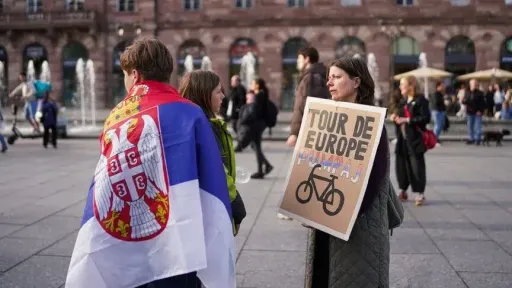
Police closed several streets around the church as crowds grew. AFP reporters saw people wearing shirts praising Mladic, while Serbian flags and a large banner describing him as a “hero” were displayed near the church.
Eu condemns glorification
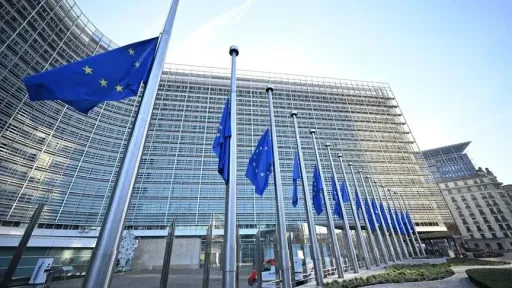
The funeral has intensified criticism from Brussels. EU enlargement commissioner Marta Kos canceled a planned visit to Serbia last week, saying the public glorification surrounding Mladic's death was incompatible with the values underpinning Serbia's EU accession path.
Serbian President Aleksandar Vucic said decisions concerning the burial had been made by Mladic's family and confirmed he would not attend the funeral because of a previously scheduled visit to Uzbekistan.
Bosnia warns of regional consequences
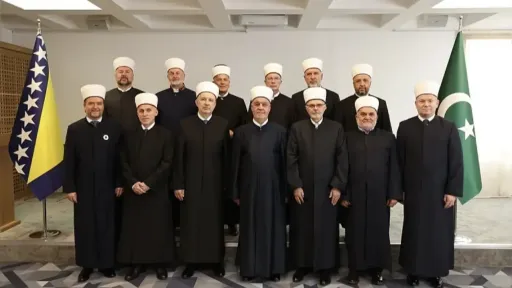
Denis Becirovic, chairman of Bosnia and Herzegovina's tripartite presidency, condemned the ceremonies honoring Mladic, calling them a serious insult to the victims of the genocide.
He urged the EU, the Council of Europe, the United Nations and other international organizations to respond to governments and institutions that honor convicted war criminals.
“This has unforeseeable consequences for the future of the entire region,” Becirovic said.
Croatian Foreign Minister Gordan Grlic Radman and Slovenian Foreign Minister Tone Kajzer also criticized the decision to honor Mladic, warning that such acts could deepen divisions and undermine efforts to strengthen stability in the Western Balkans.
Mladic convicted over Srebrenica
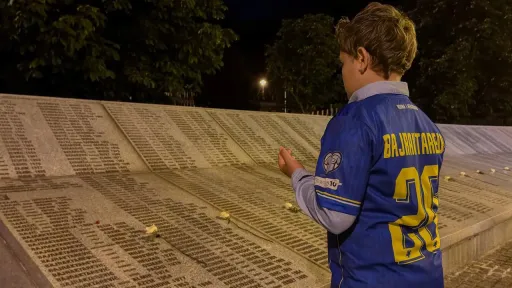
Mladic was convicted by the United Nations war crimes tribunal of genocide over the 1995 Srebrenica massacre, in which more than 8,000 Bosniak men and boys were killed.
He was also found guilty of persecuting and forcibly expelling Bosniak Muslims and Croats, terrorizing civilians during the siege of Sarajevo and taking UN peacekeepers hostage during NATO airstrikes in 1995.
The Bosnian war killed around 100,000 people and displaced about 2.2 million.
Mladic was indicted in 1995 but remained at large for about 16 years before his arrest in Serbia in May 2011. He was transferred to The Hague days later and ultimately sentenced to life imprisonment.
Divisive figure remains hailed by some
Despite his convictions, Mladic remains a hero to some Serbs, particularly in Republika Srpska, the Serb entity of Bosnia and Herzegovina.
Mourners at the Belgrade ceremony praised him as a national hero, while his son, Darko Mladic, said he was proud of his father's wartime role.
A memorial ceremony was also held in Belgrade on Saturday, attended by family members, Serbian officials and representatives from Republika Srpska, where speakers praised Mladic's role during the war.
For victims' families across Bosnia and Herzegovina, however, the ceremonies have revived painful memories of the atrocities for which Mladic was convicted.
Source:DailySabah