Dozens of child abuse cases recorded at Alexandroupoli hospital in nine months

Dozens of cases involving suspected child abuse, self-harm and serious psychological distress were recorded at the University General Hospital of Alexandroupoli between January and September 2026, highlighting growing concerns over child protection in Greece.
The hospital's Child Safety Care Unit documented a total of 62 cases during the nine-month period, including incidents involving infants with physical injuries, children allegedly abused by their parents and teenagers displaying self-destructive behaviour.
The figures were made public in connection with World Day for the Prevention of Child Abuse, drawing attention to the scale of the problem and the challenges involved in identifying cases of violence against children.
INFANTS AND CHILDREN AMONG THE REPORTED CASES
Among the incidents recorded were an infant admitted with a haematoma on the head, suspected abuse of an infant by the mother, a child allegedly abused by the father, and another child found with bruising around the neck in a case involving reported maternal involvement.
The hospital also documented a teenager who attempted suicide and was experiencing active suicidal thoughts, as well as another adolescent hospitalised in intensive care following a drowning incident. Cases of self-harm were also included.
The total of 62 cases additionally covered children and adolescents referred for counselling over issues including anxiety, phobias, panic attacks, school bullying, psychosocial difficulties and health-related problems.
'WE ARE ONLY SEEING THE TIP OF THE ICEBERG'
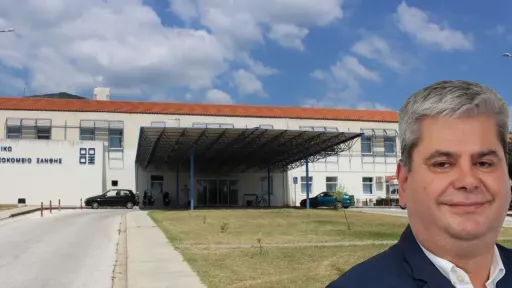
Dimitrios Kasimos, head of the hospital's Paediatric Clinic, warned that the number of recorded cases likely represents only a fraction of the actual problem.
"I believe there are many more cases than those recorded. We are only seeing the tip of the iceberg. Although awareness of child abuse has increased, I believe the trend is upward," he told the Athens-Macedonian News Agency (AMNA).
Kasimos, who works alongside psychologist Ioanna Karamanidou at the Child Safety Care Unit, linked the problem to wider social violence and the vulnerability of children within both society and the family environment.
He also pointed to financial difficulties within households as a potential source of increased tension, noting that problems such as alcoholism can further aggravate family circumstances and expose children to violence.
According to Kasimos, abuse often goes undetected because injuries are sometimes attributed to other causes rather than recognised as possible signs of violence.
He added that children can also reproduce behaviours they observe in their parents, television programmes and electronic games, while bullying and other forms of violence are not confined to major urban centres.
IDENTIFYING ABUSE REMAINS A CHALLENGE
The hospital director stressed that recognising child abuse is particularly difficult when psychological violence is involved or when the victims are very young.
Doctors often have only a brief opportunity to assess a child, making it difficult to understand the wider circumstances of their daily lives.
"Uncovering what children are going through and getting them to speak is extremely difficult during a 10- or 15-minute examination," Kasimos explained.
He emphasised the importance of a comprehensive approach that considers both the child and their family, particularly in cases requiring hospitalisation.
THE LONG-TERM IMPACT OF CHILDHOOD ABUSE
Asked whether the psychological effects of childhood abuse can disappear over time, Kasimos said the long-term consequences cannot be predicted with certainty.
He noted that children may either repeat abusive behaviour they experienced during childhood or consciously choose not to reproduce it in their relationships with others.
However, he also highlighted children's capacity to recover and move forward, stressing that the effects of traumatic experiences can differ from one individual to another.
ELIZA OPERATES CHILD SAFETY UNITS ACROSS GREECE
The Child Safety Care Unit at Alexandroupoli hospital was established through the initiative of ELIZA, an organisation dedicated to preventing and identifying child abuse and neglect in Greece.
Founded in 2008 by Marina Karella and her husband, Michael of Greece, ELIZA has supported the establishment of five Child Safety Care Units in public hospitals across the country.
The units aim to facilitate early detection, comprehensive assessment and medical care for children suspected of experiencing abuse or neglect.
The organisation also operates the ELIZA helpline, 10454, providing guidance and support to people concerned about a child's safety.