Balkan mafia allegedly exploiting Airbnb properties in Dedeağaç

The president of the Hellenic Hoteliers Federation has warned that thousands of allegedly illegal short-term rental properties are operating in northern Greece, including Alexandroupoli (Dedeağaç), outside the country's tax and regulatory framework. He also raised concerns over tourism prospects for 2027, rising taxation and declining advance bookings.
A so-called “Balkan mafia” is allegedly exploiting illegal Airbnb properties in several parts of northern Greece, including Alexandroupoli (Dedeağaç), according to Giannis Hatzis, president of the Hellenic Hoteliers Federation (POX).
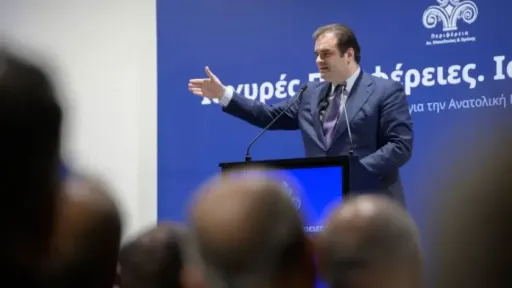
Speaking at a meeting with journalists, Hatzis claimed that thousands of short-term rental properties in Kavala, Alexandroupoli and Halkidiki were operating outside the country's tax and regulatory systems, with their economic activity generating virtually no revenue for the Greek economy.
“There isn't even a single cent left in the Greek economy,” Hatzis said, referring to properties allegedly rented out illegally by foreign owners. He described the situation as unacceptable and criticised the lack of a comprehensive regulatory framework to address the growing imbalance between hotels and short-term rental accommodation.
According to Hatzis, hotel bed capacity has increased by just 3% since 2018, reaching approximately 800,000–850,000 beds. By comparison, short-term rental accommodation now accounts for around one million beds, with the figure continuing to rise.
TOURISM PLANNING AND REGULATORY CONCERNS
The POX president also criticised the long-standing failure to establish a comprehensive institutional framework for tourism development.
He argued that public debate on Greek tourism remains inadequate, despite the sector's significant contribution to the national economy. Referring to the proposed Special Spatial Planning Framework for Tourism, Hatzis warned that the new framework could shape investment decisions over the next decade while encouraging smaller-scale tourism operations at the expense of service quality.
He also questioned the research underpinning the proposed framework, claiming that it relied on an outdated and insufficient study costing just €50,000, despite the tourism sector generating more than €12 billion in net hotel revenues.
TAX BURDEN AND OUTLOOK FOR 2027
Hatzis further highlighted what he described as a disproportionate increase in the tax burden on accommodation providers.
According to figures he cited, government revenues from the accommodation tax and climate resilience levy increased by 298% between 2023 and 2025, while travel receipts rose by 14.7% over the same period.
Looking ahead to 2027, he said there were currently no clear indications of a serious threat to the tourism sector. Nevertheless, the decline in advance bookings for the coming year should not be overlooked, particularly amid mounting pressure on the disposable incomes of European households.
He added that geopolitical instability, although still an important factor, appeared to have a less significant impact on prospective travellers than in previous years, as tourists had gradually become accustomed to international tensions.
ARRIVALS UP 10% IN 2026, BUT REVENUES GROW MORE SLOWLY
Assessing the current tourism season, Hatzis said arrivals in 2026 appeared to have increased by approximately 10%, while tourism revenues were expected to grow by around 4%.
He attributed the difference partly to a decline in average spending per visitor, linking it to the growing supply of lower-cost short-term rental properties and the increasing share of road-based tourism.
He also noted that road travellers often arrive from countries with lower GDP per capita than the countries from which many air travellers originate, potentially affecting average tourist expenditure.
Finally, Hatzis highlighted Greece's position in the international sun-and-sea tourism market, saying the country ranks third globally in popularity, behind Spain and Türkiye.