Greek media brand imam's declaration of Turkish identity a 'provocation'
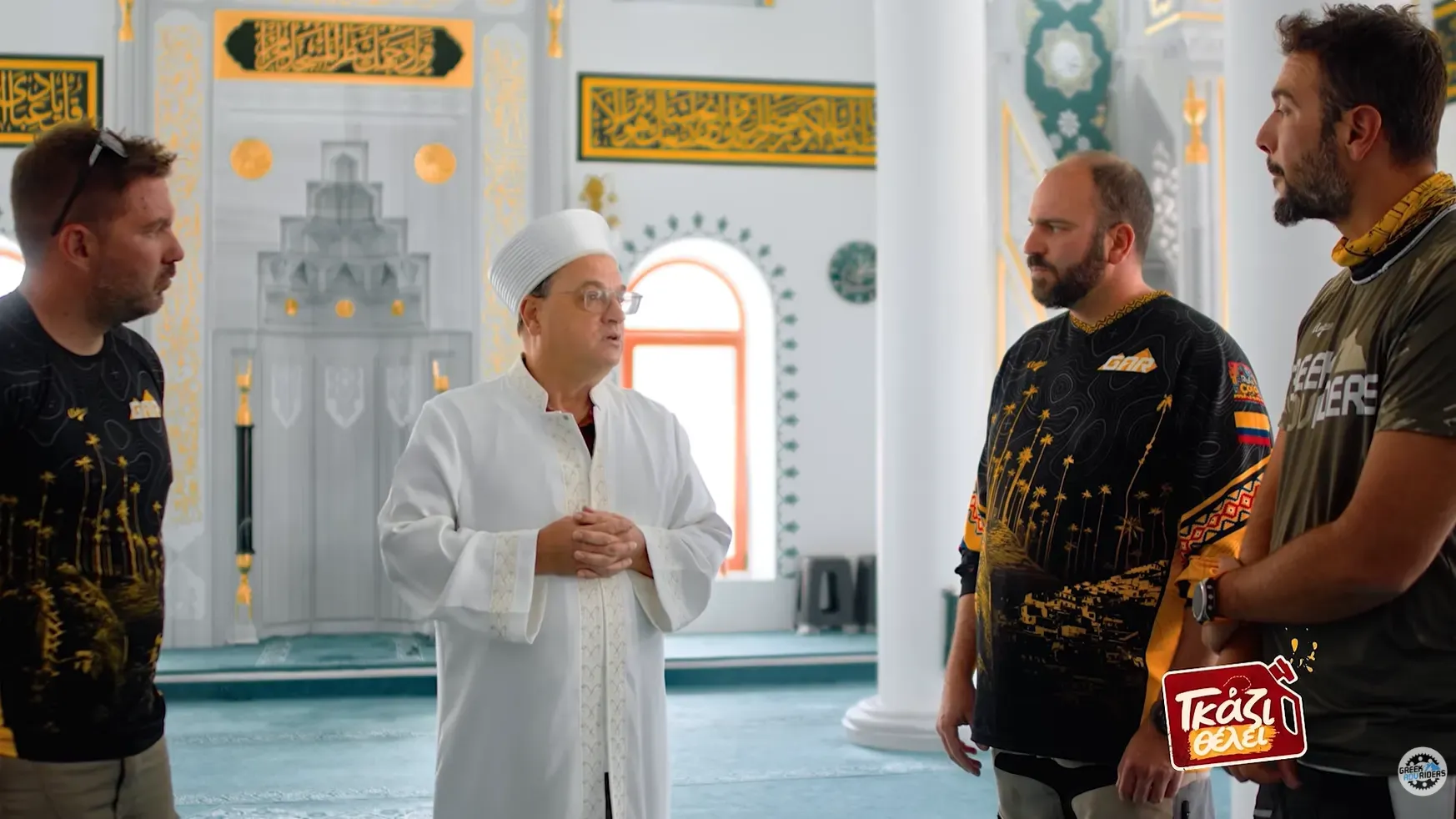
A religious official in Şahin who simply stated “I am Turkish” during a television interview has become the target of criticism from Greek media outlets, which accused him of promoting “Turkish propaganda”. The backlash has once again exposed the pressure faced by members of the Turkish Minority of Western Thrace when asserting their own identity.
Hamdi Bekir, the religious official serving at the Yeşil Mosque in Şahin (Ehinos), in the Xanthi region, sparked controversy after identifying himself as Turkish during an interview broadcast on Greece's OPEN TV.
The interview was part of the programme “Gkazi Thelei”, which visited villages in the mountainous region of İskeçe to explore local culture, traditional cuisine and everyday life. During its visit to the Yeşil Mosque, the programme's crew spoke with Bekir about the identity of the local population.
When the discussion turned to the description of villagers as Pomaks, Bekir rejected that characterisation and made his own identity clear: “We are Turkish.”
A SIMPLE IDENTITY STATEMENT TURNED INTO A CONTROVERSY
Rather than treating Bekir's words as an individual's declaration of identity, some Greek media outlets portrayed them as “provocation”, “Turkish propaganda” and an attempt to present the villages of the region as Turkish.
A news commentary published by a portal in İskeçe went further, arguing that Bekir's remarks were incompatible with the Treaty of Lausanne.
The reaction also targeted the television crew. The programme's producers were accused of interviewing people allegedly spreading “Turkish propaganda” inside the mosque. OPEN TV's management was similarly criticised for broadcasting the interview without sufficiently challenging Bekir's statements.
WHEN DECLARING ONE'S IDENTITY BECOMES A TARGET
The controversy highlights a longstanding concern for the Turkish Minority of Western Thrace: the right of its members to define and express their own identity without facing public hostility or having their declarations dismissed as political provocation.
In this case, a religious official's straightforward statement about who he is was turned into a media controversy, with accusations directed not only at him but also at the broadcaster that gave him a platform.
Bekir's remarks contained no reported insult or threat against any individual or community. He simply identified himself as Turkish. Yet that declaration was enough to trigger accusations of propaganda and renewed attempts to challenge the way local people describe themselves.
The interview with Bekir can be seen between the 29th and 33rd minutes of the OPEN TV programme.