Islamophobia in Western Thrace: just a phobia?

There is something worth asking about the word Islamophobia itself.
We use the term almost automatically. It is now part of everyday political language, journalism and academic discussion. It refers to prejudice, hostility and discrimination directed towards Muslims or Islam, and there is little doubt that the phenomenon it describes is real.
But perhaps we have become so accustomed to the word that we have stopped asking what it actually tells us.
Islamophobia literally sounds like a fear of Islam.
But is fear really what we are witnessing?
When a Muslim is viewed with suspicion because of his religion, when a woman is insulted because she wears a headscarf, when a mosque is attacked, or when the Qur’an is deliberately desecrated, are we simply observing fear?
Or are we witnessing something more deliberate: the production of an enemy, the drawing of a social boundary and the symbolic humiliation of a group?
This distinction is not merely semantic. It changes how we understand the problem.
NOT EVERY FORM OF HOSTILITY IS FEAR
Fear is a powerful human emotion. People can fear what they do not know, what they misunderstand or what they have been taught to perceive as dangerous.
But fear does not automatically produce hatred.
A person may be afraid of something without wanting to humiliate it. They may feel uncomfortable without seeking to exclude others. They may disagree profoundly with a religion without believing that its followers are inferior or inherently dangerous.
This is where the concept of Islamophobia becomes more complicated.
Consider the image of the Muslim that has become familiar in much of contemporary public discourse.
The Muslim is often associated with terrorism, extremism, violence, intolerance and security threats.
There are obvious reasons why this image has emerged. Terrorist organisations have committed terrible crimes while claiming to act in the name of Islam. Those crimes must be condemned without qualification. Muslims themselves should not be expected to defend terrorism simply because the perpetrators invoke their religion.
But something else happens when these organisations become the primary lens through which Muslims as a whole are viewed.
The terrorist becomes the prototype.
The exceptional case becomes the presumed norm.
And the individual Muslim is no longer encountered as an individual. He or she is encountered as a member of a suspicious category.
This is a familiar sociological process: people are not judged solely by what they do, but by what they are presumed to be.
At that point, we have moved beyond fear.
We have entered the territory of prejudice.
FROM RELIGION TO “TYPE”
There is another reason this deserves attention.
Islam is a religion, not a race. Muslims are not a homogeneous ethnic group. They speak different languages, belong to different nations, come from different historical traditions and hold very different political and theological views.
Yet anti-Muslim prejudice often treats “Muslim” as though it were a fixed human type.
This is what sociologists mean when they talk about racialization.
A social identity does not have to be biologically racial in order to become racialized. A religious, cultural or national identity can be represented as if it were fixed, inherited and externally recognizable. Once this happens, individual differences become secondary.
The question is no longer, “What does this person believe?”
It becomes, “What kind of person is he?”
And the answer has already been supplied by the stereotype.
This helps explain why even secular or non-practising Muslims can experience anti-Muslim prejudice. Their personal beliefs may have little relevance to how they are classified by others.
The category comes first.
The individual comes second.
That is not simply a psychological fear of a religion. It is a social process of categorization.
WHY ARE MUSLIM SACRED SYMBOLS SO OFTEN THE TARGET?
There is another aspect of the issue that is often overlooked.
Muslims certainly have the right to criticise other religions, just as Christians, Jews, atheists and everyone else have the right to criticise Islam. A democratic society cannot function by placing religions beyond criticism.
But criticism and humiliation are not the same thing.
If someone challenges a theological doctrine, that is an argument.
If someone questions the historical development of Islamic institutions, that is an argument.
If someone criticises the political behaviour of a Muslim organisation, that is an argument.
But deliberately desecrating the Qur’an is not a theological argument.
Attacking a mosque is not a theological argument.
Harassing a Muslim woman because she wears a headscarf is not a theological argument.
These are symbolic acts.
And symbols matter because communities attach meanings to them.
For Muslims, the Qur’an is not merely a text. The mosque is not merely a building. Religious practices are not merely private preferences. They are part of a system of meaning through which people understand themselves, their community and their relationship with God.
One does not have to share those beliefs to understand their social significance.
Indeed, understanding the significance of a symbol is precisely what allows us to distinguish criticism from deliberate humiliation.
This distinction is not merely theoretical for the Muslim minority of Western Thrace.
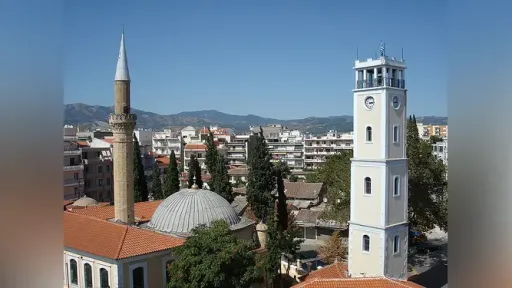
The local minority press has documented a number of incidents over the years in which Islamic religious sites and symbols have been targeted. In February 2026, for example, a cross and accompanying letters were drawn on the exterior wall of the Hürriyet Mosque in İskeçe, on its qibla-facing side. The incident took place during Ramadan and prompted a public condemnation from the elected mufti.
More recently, in September 2026, insulting expressions directed at Islamic belief were written on the exterior wall of the Çınar Mosque in central İskeçe. The incident was condemned by the elected mufti's office and by the Consultative Council of the Western Thrace Turkish Minority, which called for the perpetrators to be identified and prosecuted.
Nor are such incidents entirely new. A human-rights report documenting events in Western Thrace recorded attacks on mosques in İskeçe in 2009, including an arson attack at the Okçular Mosque in which carpets, wooden fixtures, the minbar and Qur’ans were damaged. The report also documented a previous attack in which the Sünne Mosque in İskeçe was burned.
These incidents should not be collapsed into a single category, nor should every act of vandalism automatically be interpreted as an expression of Islamophobia without examining its circumstances. That would itself be analytically careless.
But the recurrence of attacks directed specifically at mosques, Islamic symbols and sacred texts raises a legitimate sociological question.
What is being communicated when a mosque is marked with a cross?
What is being communicated when the walls of a mosque are covered with insults directed at Islam?
And what is being communicated when the sacred text of a minority community is deliberately targeted?
The answer may not always be reducible to religious disagreement.
It may instead be a message about who belongs, whose sacred symbols deserve respect and whose presence can be treated with contempt.
That is symbolic boundary-making.
THIS IS NOT AN ARGUMENT FOR SILENCING CRITICISM
There is an important line that should not be crossed here.
Defending Muslims against hatred does not require defending Islam against criticism.
These are different things.
A sociological approach should be particularly careful about this distinction because religions are social institutions. They can and should be studied, questioned and criticised. Religious traditions contain internal disagreements, historical contradictions and competing interpretations. Muslims themselves disagree with one another about almost every important question concerning their religion.
There is nothing inherently Islamophobic about saying that a particular Islamic interpretation is wrong.
But there is a difference between saying “I reject this belief” and saying “the people who hold this belief are inherently dangerous and do not belong here.”
The first is disagreement.
The second is exclusion.
And between these two points lies one of the most important boundaries in democratic societies.
WHEN THE “OTHER” IS CREATED
Every society creates boundaries.
We distinguish between insiders and outsiders, between those who belong and those who are perceived as not quite belonging. These boundaries can be flexible and peaceful, or rigid and hostile.
The problem begins when an entire group is constructed as the Other.
The Other is not simply someone who is different. The Other is someone whose difference is presented as meaningful in a negative way.
He is not merely Muslim; he is too Muslim.
She is not merely wearing a religious garment; she is supposedly displaying a refusal to integrate.
They are not merely immigrants, citizens or neighbours; they are represented as a demographic or cultural threat.
Once this happens repeatedly, prejudice becomes more than an attitude held by particular individuals. It can become part of the way a society interprets reality.
This is why the language of “fear” can sometimes be misleading.
People do not necessarily fear the Other because they have independently discovered something threatening about them.
They may have learned to see them as threatening.
And there is a major sociological difference between those two things.
This process can also be observed in Western Thrace in another form: through the language used to describe the minority itself.
In June 2026, for example, Greek-language publications described the FEP party and representatives associated with the minority's religious institutions using the term “Islamofascist.”
There is, of course, nothing inherently illegitimate about using the term Islamofascist when it is applied carefully to a specific political ideology that demonstrably combines Islamist and fascistic elements. The problem begins when such a label is extended indiscriminately to a minority's political or religious representatives.
At that point, the label does more than express political disagreement.
It transforms a minority into a political threat.
And once a minority has been successfully associated with an extreme political category, its members no longer need to behave in extreme ways for the label to shape how they are perceived.
Again, the category comes first.
The individual comes second.
WHEN PREJUDICE BECOMES POLITICAL
The most serious forms of anti-Muslim hostility emerge when these representations begin to influence institutions and political demands.
If Muslims are collectively regarded as dangerous, restrictions that would otherwise appear extraordinary can begin to seem reasonable.
If Muslim identity is associated with disloyalty, ordinary citizens can become objects of suspicion.
If Islamic religious expression is interpreted as evidence of extremism, practices that are entirely ordinary to believers can become politicised.
The result is a process in which a minority is continually required to prove that it is not what the majority has imagined it to be.
This is a particularly powerful form of social inequality because the burden of proof is placed entirely on the minority.
The Muslim must demonstrate that he is peaceful.
That he is loyal.
That he is modern.
That he is democratic.
That he is “integrated.”
The non-Muslim, by contrast, rarely has to demonstrate that he is none of these things.
This asymmetry tells us something important.
The issue is no longer simply individual fear.
It is power.
AND WHAT ABOUT RACISM?
Some readers may object to describing Islamophobia as racism because Muslims are not a race.
The objection is technically correct but sociologically incomplete.
Racism does not operate only through biological theories of race. Modern societies have repeatedly developed ways of treating cultural, ethnic, religious and national differences as if they were fixed characteristics of human groups.
When people are assigned supposedly inherent characteristics because they are identified as Muslim, when millions of individuals are reduced to a single threatening identity, and when this identity becomes a basis for exclusion, the distinction between religious prejudice and racialized prejudice becomes increasingly difficult to maintain in practice.
This is why contemporary discussions of Islamophobia increasingly require us to think about racialization as well as religion.
The question is not whether Islam is a race.
It is whether Muslims are sometimes treated as though they constitute an immutable and inferior type of people.
In many contexts, the answer is clearly yes.
AND WHEN DOES IT BECOME FASCISTIC?
The word fascism should not be used casually.
Not every person who dislikes Islam is a fascist. Not every discriminatory act is fascism. Concepts lose their analytical value when they are used simply as moral insults.
Yet there is a recognisable fascistic logic in the idea that a society has a pure or authentic “us” and that another group represents an internal threat to that social body.
When Muslims are portrayed collectively as an alien presence, when their religious identity is treated as fundamentally incompatible with national belonging, and when exclusion is presented as necessary for the protection of society, we encounter a logic that deserves to be taken seriously.
The important point is not to label everyone.
It is to identify the mechanism.
SO, IS IT REALLY A PHOBIA?
Perhaps the answer depends on what we are talking about.
There may certainly be people who fear Islam because they know little about it.
There may be people whose perceptions have been shaped by terrorism, political violence or negative personal experiences.
There may be people whose prejudice comes primarily from ignorance.
But there are also people who do not merely fear Muslims.
They dislike them.
They distrust them.
They want them excluded.
They deliberately humiliate their sacred symbols.
They treat them as collectively responsible for crimes they did not commit.
And sometimes they construct an entire political worldview around the idea that Muslims are an existential threat.
Calling all of this a phobia risks flattening important differences.
More importantly, it risks transforming a social relationship into an individual psychological problem.
Perhaps the more useful question is therefore not simply, “Why are some people afraid of Islam?”
It is:
How did Muslims come to be represented as a group that should be feared, distrusted or excluded?
Who produces that representation?
How is it reproduced?
Which institutions legitimise it?
Which political interests benefit from it?
And what happens to a society when an entire religious community is repeatedly asked to prove that it belongs?
These are not questions about phobias.
They are questions about power, identity, social boundaries and the production of the Other.
So, Islamophobia, just a phobia?
No—not if by “phobia” we mean a private and irrational fear detached from social structures.
Sometimes what appears as fear is actually prejudice.
Sometimes prejudice becomes racialization.
Sometimes racialization becomes discrimination.
And sometimes discrimination becomes an ideology of exclusion.
At that point, using the softer language of “phobia” should not prevent us from recognising what is actually happening.
Because a society should be judged not only by how it treats its majority, but also by the kind of “Other” it creates—and by what it permits itself to do in the name of protecting itself from that Other.