Rubio uses Athens speech to promote MAGA vision of the West

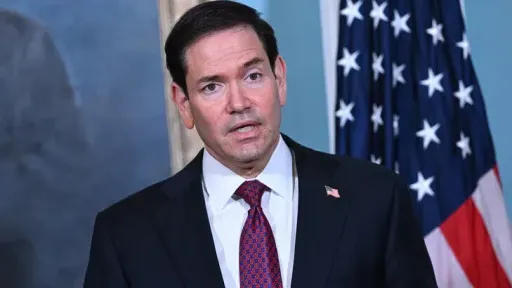
US Secretary of State Marco Rubio used a speech in Athens to promote the Trump administration’s vision of Western civilization, linking ancient Greek philosophy to modern nationalism, economic protectionism and technological competition, according to an analysis published by Türkiye Today on October 8, 2026.
In the analysis, author Enes Berna Kilic argues that despite the symbolic setting of the Acropolis, the address focused less on Greece or bilateral relations and more on presenting the administration’s political agenda as a continuation of the West’s historical legacy.
Rubio briefly acknowledged Athens’ contributions to democracy and philosophy, citing Plato and Aristotle, and referred to Greek influences on the founding of the United States. The central theme, however, was the Greek concept of thumos, which he used to frame his argument for renewed Western ambition and national strength.
Ancient philosophy meets MAGA politics
Rubio described thumos as “the fire of passion, strength, courage, [and] pride,” presenting it as a driving force behind national achievement.
He criticized what he portrayed as a post-war political order overly concerned with safety, international consensus and risk avoidance. In his view, these priorities have limited Western countries’ ability to pursue ambitious economic and strategic objectives.
The secretary linked the revival of this spirit to rebuilding domestic manufacturing, securing critical supply chains, strengthening US leadership in artificial intelligence and semiconductors, and expanding capabilities in space and defense.
Kilic’s analysis argues that the speech framed economic nationalism and technological independence not simply as policy choices but as essential elements of Western survival and global competitiveness.
From Greek heroes to American expansion
Rubio constructed a broad historical narrative connecting ancient Greek figures and events with European scientific achievements, imperial conquests and modern American exploration.
He invoked Socrates, the Spartans at Thermopylae and Achilles, before extending his account to figures including Michelangelo, Copernicus, Galileo, Isaac Newton, Alexander the Great, Julius Caesar, Charlemagne and Spanish conquistador Hernán Cortés.
Christopher Columbus, the American frontier and the Apollo 11 moon landing also featured in this historical framework.
According to Kilic, the speech brought together democratic philosophers, scientists, conquerors and explorers under a single narrative of Western ambition and exceptionalism.
Rubio also referred to his Spanish ancestry and the arrival of his ancestors in the Americas, using the reference to defend his political position on national identity and immigration.
The analysis notes that this historical framing places imperial expansion and military power alongside philosophy, scientific discovery and democratic traditions as defining elements of Western civilization.
Sovereignty takes priority over global institutions
Rubio also challenged the post-Cold War model of international cooperation, arguing that governments had surrendered too much authority to international institutions and bureaucracies.
He rejected the idea that an enlightened foreign policy should place the interests of the global community above those of a country’s own citizens, maintaining that national interests remain central to security and diplomacy.
Rather than advocating complete isolationism, he presented alliances as instruments for protecting national sovereignty and advancing mutual interests.
The speech cited defense commitments involving Greece and a US-Denmark-Greenland Arctic agreement as examples of cooperation based on shared strategic benefits.
Kilic argues that Rubio used the historical example of ancient Greek city-states to portray military deterrence, border enforcement and national self-preservation as longstanding features of Western political tradition.
A West urged to abandon historical guilt
Another central theme was Rubio’s criticism of what he described as Western societies’ declining confidence in their own history and achievements.
He argued that post-war prosperity had contributed to a culture increasingly embarrassed by the West’s past, suggesting that excessive self-criticism could undermine its ability to defend its interests and maintain its global position.
The address connected this argument to contemporary debates over immigration, industrial policy, national identity and geopolitical competition.
In Kilic’s interpretation, Rubio presented Western countries with a choice between reclaiming national purpose and risking further decline in an increasingly competitive international order.
Greece provides the backdrop for Washington’s message
Although the speech was delivered in Athens, its principal message was directed toward the broader Western alliance and the future of US leadership, the analysis concludes.
By placing contemporary American political priorities within the context of ancient Greek philosophy and Western historical achievements, Rubio sought to present nationalism, economic strength and strategic competition as expressions of the West’s longstanding identity.
Whether this interpretation of Western heritage resonates with European partners remains uncertain. The speech nevertheless signaled Washington’s effort to reshape the debate over Western leadership around national sovereignty, industrial capacity and competition among major powers.
Source: Enes Berna Kilic, analysis published by Türkiye Today on October 8, 2026.