A politics afraid of one word: “WE ARE TURKS”
Following the controversy sparked by Şahin village imam Hamdi Bekir’s statement about his identity on OPEN TV, the broadcaster was forced to remove the footage.
An imam spoke in the village of Şahin. What he said was not a threat to anyone. He did not lay claim to anyone’s land. He did not question anyone’s citizenship. He simply spoke about his own identity.
But a controversy erupted.
Because there was one word in the sentence he uttered that certain circles could not bear to hear: Turkish.
Following the controversy sparked by the statement on identity made by Hamdi Bekir, imam of the Green Mosque in Şahin, on OPEN TV, Millet reported that the relevant section of the interview had been removed from the footage shared by the channel. The broadcaster should explain the reason for this change. Yet the fact that a person's declaration of identity has provoked such a reaction is, in itself, an issue that deserves serious attention.
Let me ask: What is wrong with someone saying, “I am Turkish”?
Someone else may identify as Pomak. Another may emphasise their Roma identity. Their right to express their own identities must, of course, be respected. Our objection is not to their speaking, but to the denial of that same right to those who say they are Turkish.
When someone identifies as Pomak, their words are accepted as an expression of their own will. Why, then, is someone who identifies as Turkish immediately presumed to be acting under external influence?
Is a person free only when they choose an identity that pleases the state?
The measure of freedom of identity is the respect you show for an identity you do not wish to hear.
This is the fundamental contradiction we face in Western Thrace today. We say that we are citizens of Greece. We live on the streets of this country, pay its taxes and fulfil our responsibilities. At the same time, we say that we are Turkish.
Why are these two realities being set against each other?
What benefit does society gain from confusing citizenship with ethnic identity and then turning that confusion into a security issue?
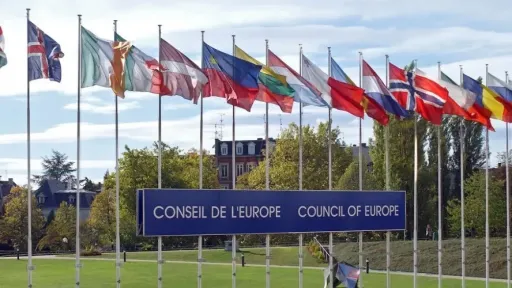
Moreover, the issue does not end with a single sentence on a television screen. It extends to the names of associations, their signs and the right of a community to express itself collectively. In the cases concerning the İskeçe Turkish Union and other related associations, the European Court of Human Rights ruled that freedom of association had been violated. Council of Europe documents explicitly record that one of the arguments at the heart of these cases was the view that the word “Turkish” expressed the existence of an ethnic minority.
So should we not ask this question?
Why does the word “I am Turkish”, which causes controversy when uttered by an individual, become an even greater source of fear when people come together and say, “We are Turks”?
How can you erase from people's memories a word that you cannot even allow on an association's sign?
At every turn, Lausanne is brought before us: “The Treaty refers to a Muslim minority.”
Yes, that is the legal terminology used in the Treaty of Lausanne. But how can this possibly lead to the conclusion that people have no ethnic identities? The Treaty’s provisions on minority protection safeguard not only religion, but also rights relating to language, education and the administration of institutions. Article 45 extends these protections to the Muslim minority in Greece as well.
Are we denying that we are Muslim?
No.
Does our Muslim identity disappear when we say that we are Turkish?
No.
Then why is a treaty that should protect us being presented as a justification for narrowing our identity?
The Treaty of Lausanne cannot be used as a document of silencing that places limits on how people describe themselves.
Let us also look at the past.
The archives of the very state that is now uncomfortable with the word “Turkish” contain official correspondence calling for that same word to be used. Documents published by Human Rights Watch include administrative instructions from 1954 and 1955 requesting that the term “Turkish” be used instead of “Muslim”. School signs were also part of this practice.
Why is a word that was once officially required on signs now considered objectionable?
Have our grandparents changed?
Has our language, our family memory or our gravestones changed?
Or is it the state's attitude towards us that has changed?
A cultural agreement was signed between Türkiye and Greece in 1951. This was followed by educational arrangements and the protocols of 1968. Teachers trained in Türkiye and educational materials sent from Türkiye became part of minority education. Turkish-language education was an area in which the two countries were able to reach agreement.
So, under a different political climate, the same state was able to approach Turkish-language education and cultural ties with Türkiye through cooperation.
Why, then, is it now so defensive in the face of practices it once accepted?
Let us take our memory back to 1913.
Amid the Balkan Wars and changes of sovereignty, the administration established with Gümülcine (Komotini) as its centre is remembered in our history as the Republic of Western Thrace. This initiative was an important expression of the political presence and will of the Turkish and Muslim population in the region. It established its own administration, issued stamps and left its mark on history.
Let us also place the circumstances of the time in their proper context: in 1913, the region was not under uninterrupted and peaceful Ottoman rule. It was experiencing a profound upheaval shaped by wars, withdrawals and treaties. The short-lived administration emerged in this very environment.
The message it left us is clear: the history of Turkish identity in these lands stretches far further back than today's television controversies.
A few minutes removed from an interview cannot erase more than a century of collective memory.
So, why did this change take place?
It would be incomplete to begin the entire process with 1974 alone. Interventions in the minority's elected foundation administrations had also taken place during the 1967 junta period. The Cyprus issue and tensions between Türkiye and Greece further reinforced the tendency to view the minority through a security lens. Human Rights Watch, too, emphasised that state suspicion towards the Turks of Western Thrace was closely linked to the state of relations between the two countries.
But why should our lives change according to the political climate between two capitals?
Will we be acceptable citizens when Athens and Ankara agree, and suspicious citizens when they disagree?
Is the child in Şahin responsible for what happened in Cyprus? The teacher in Gümülcine? The shopkeeper in İskeçe?
Can a state make its own citizens pay the price for disagreements in its foreign policy?
Such an approach does not inspire confidence among citizens. It wounds the sense of belonging of people who are constantly forced to prove their citizenship.
There is a striking historical example that shows how fear has been directed at people and words.
During the First World War, anti-German sentiment in the United States grew so intense that the teaching of German was banned in some places. Families of German descent changed their surnames. Even the names of foods associated with German culture were changed; sauerkraut was renamed “liberty cabbage”.
Imagine that: while at war with a country, becoming so hostile that even its language, surnames and the names of its food are treated as enemies...
Today, this seems strange to us.
Because changing the name of sauerkraut does not make a country safer. Preventing a child from learning their grandfather's language does not make that child a better citizen either.
When I look at the reaction to the word “Turkish” in Western Thrace, I am reminded of this story.
Trying to make a community's name invisible does not make that community disappear. It only erodes trust between the state and its citizens.
Generations raised in fear carry a heavy burden. They learn to distrust their neighbours before they even get to know them. They regard a language as a threat without ever hearing it. Instead of listening to someone describe who they are, they look for a hidden agenda behind their words.
And then they mistake this suspicion for patriotism.
Yet a country that wants to maintain good relations with its neighbours must first establish a relationship of trust with its own citizens. How can a society whose children are constantly taught to see an enemy learn the language of peace?
Of course, states must protect their security. But every claim made in the name of security must have a concrete basis. An imam declaring his identity cannot, in itself, constitute evidence of a threat.
The words of those who feel Pomak, those who feel Roma and those who feel Turkish must all be shown the same respect. None of these identities should be turned into a political instrument against another.
Our demand is clear: we should not have to wait for the state's approval when describing who we are.
The response to the words heard in Şahin should not have been to cut the footage. It should have been to listen to that person, understand him and respect his right to express himself.
Because a citizen saying “I am Turkish” does not diminish the state. But a state that tries to silence this word despite wielding all its power diminishes confidence in its own democracy.