Türkiye eases Patriarchate process as Western Thrace minority seeks right to elect muftis
After more than 40 years of dispute, the Turkish minority continues to demand dialogue, recognition of its choice and a mutually acceptable solution.
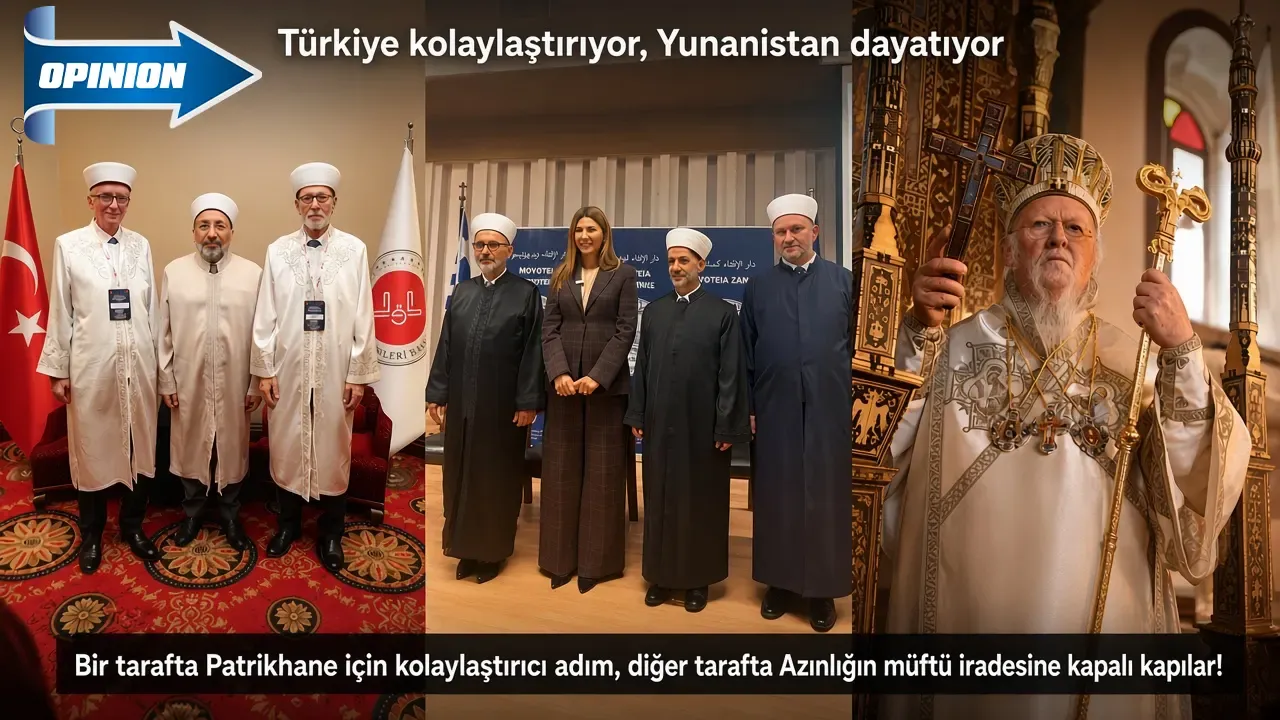
A renewed debate over religious freedom and minority rights in Greece has emerged following reports that Türkiye is preparing to grant citizenship to senior clergy serving under the Patriarchate, while the Western Thrace Turkish Minority continues to face obstacles in its long-standing demand to elect its own muftis.
The contrasting developments have brought renewed attention to the approaches of Türkiye and Greece towards religious institutions and the right of communities to determine their own religious leadership.
At the centre of the dispute is a question that has remained unresolved for more than four decades: whether the Western Thrace Muslim Turkish Minority can freely choose its own religious representatives rather than having official muftis appointed through state-controlled procedures.
Greece maintains control over mufti appointments
For years, the Greek state has maintained its own legal and administrative framework for the appointment of muftis in Western Thrace.
Following the introduction of new procedures, muftis were appointed in Dimetoka (Didymoteicho), İskeçe (Xanthi) and Gümülcine (Komotini).
Although the process was presented publicly as an election procedure, representatives of the Turkish Minority have questioned its legitimacy, arguing that the community's own institutions and representatives were not meaningfully involved.
The Ministry of Education and Religious Affairs and the General Secretariat for Religious Affairs oversaw the procedures through which the official appointments were made.
The minority's central demand, however, remains unchanged: the right to determine its own religious leadership through its freely expressed will, in dialogue and cooperation with the Greek state.
The community maintains that its demand is not aimed at establishing a religious structure outside or against the state, but at ensuring that its religious representatives genuinely reflect the will of the people they serve.
Türkiye reportedly facilitates citizenship for Patriarchate clergy
At the same time, a significant development concerning the future of the Fener Rum Patriarchate has emerged in Türkiye.
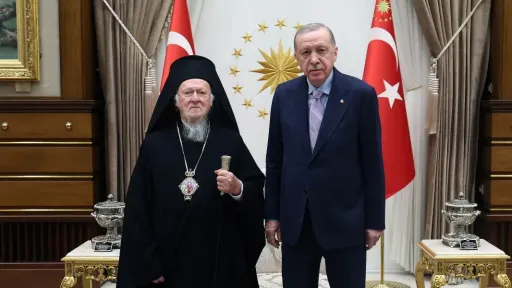
According to a report published by the Greek newspaper Ethnikos Kirikas, Patriarch Bartholomew presented a list of clergy seeking Turkish citizenship during a meeting with Turkish President Recep Tayyip Erdogan on July 27, 2026.
The list reportedly includes senior church officials serving in different countries, including Archbishop Makarios of Australia, Archbishop Apostolos of Canada, several metropolitans, bishops, archimandrites and deacons.
The same report claimed that the Turkish Presidency had approved the proposed names and that the remaining administrative procedures were being completed.
The reported initiative is particularly significant because Turkish citizenship is an important requirement for participation and eligibility in the Patriarchal election process under the applicable arrangements.
Several senior clergy serving outside Türkiye would otherwise face difficulties meeting this requirement.
The reported Turkish move is therefore being viewed as an effort to facilitate the Patriarchate's future administration and reduce potential obstacles to its leadership succession.
Two different approaches to religious institutions
The developments have highlighted a contrast between the approaches of the two neighbouring countries.
Türkiye is reportedly considering the Patriarchate's institutional needs and taking steps to facilitate the citizenship process for clergy nominated by its leadership.
Greece, meanwhile, continues to face criticism from the Western Thrace Turkish Minority over its refusal to establish a mutually agreed process allowing the community to choose its own muftis.
The legal and historical circumstances of the two cases are different. Nevertheless, both raise an important common question: how far should the wishes and institutional needs of religious communities be taken into account when determining their religious leadership?
This is the question that Greek authorities are increasingly being urged to address.
A dispute lasting more than 40 years
The mufti issue in Western Thrace is not a recent disagreement. Its roots go back to the 1980s, and the Turkish Minority has maintained its demand for the right to elect its religious leaders throughout the intervening decades.
The community has continued to recognise its own elected muftis, rejecting the state's appointment procedures and calling for a solution based on dialogue and mutual understanding.
For the Western Thrace Turkish Minority, the mufti institution is not simply an administrative body responsible for religious services. It occupies an important place in the community's religious, cultural and social life.
Consequently, the issue cannot be resolved solely through administrative appointments without taking into account the community's historical traditions and expressed wishes.
The time for dialogue and compromise
Greece has an opportunity to bring an end to a dispute that has persisted for more than four decades and has repeatedly created tensions between the state and the Turkish Minority.
The solution does not lie in introducing further procedures or making additional appointments without meaningful consultation.
Instead, Greek authorities should recognise the minority's institutions and representatives as legitimate interlocutors and work towards a mutually acceptable arrangement.
The Turkish Minority has repeatedly stressed that electing its own religious leaders does not mean creating an institution outside the Greek state or challenging its authority.
On the contrary, the elected muftis and other minority institutions have consistently called for dialogue with the authorities and a solution through legal and peaceful means.
A community committed to dialogue
Since Western Thrace became part of Greece, the Muslim Turkish Minority has maintained its loyalty to the country while seeking to resolve its problems through legal channels and dialogue.
Its demand concerning the mufti institution should be viewed within this broader context.
The community is not asking for confrontation. It is asking for its voice to be heard and its right to determine its religious leadership to be respected.
The reported Turkish initiative concerning the Patriarchate demonstrates that facilitating the future operation of religious institutions through dialogue and administrative solutions is possible.
Greece should also take a constructive step towards resolving the long-standing mufti dispute.
After more than 40 years, the time has come to replace unilateral decisions with consultation, imposition with mutual understanding, and confrontation with dialogue.
The Western Thrace Turkish Minority is not asking for a privilege. It is demanding respect for its will, its institutions and its right to choose its own religious leaders.
By Bilal Budur