ABTTF secures unanimous ELEN resolution on Western Thrace Turkish minority education rights
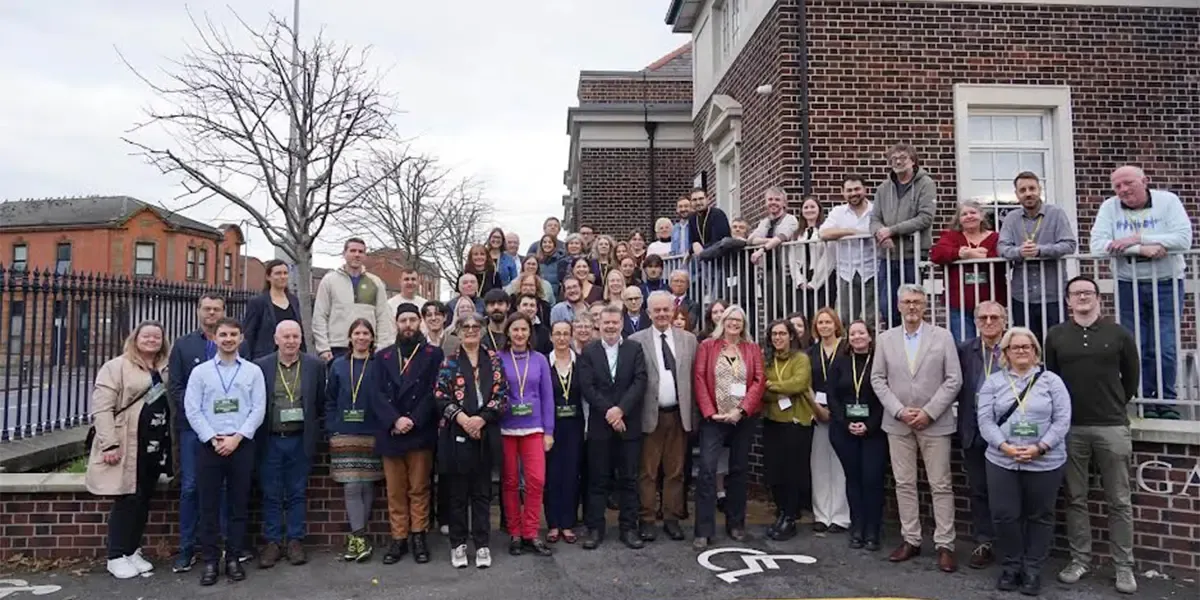
The Federation of Western Thrace Turks in Europe (ABTTF) has brought the educational rights and autonomy concerns of the Western Thrace Turkish Minority to the European Language Equality Network (ELEN) 2026 General Assembly in Belfast, Northern Ireland.
A resolution submitted by ABTTF calling on Greece to address longstanding problems affecting minority-language education was unanimously adopted at the assembly, held on November 22–23.
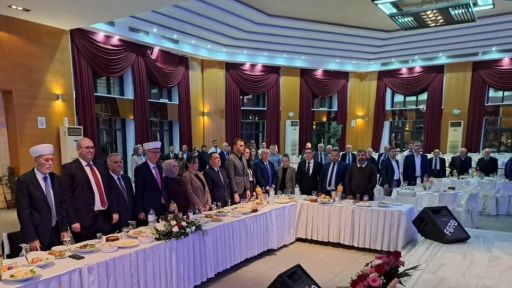
ABTTF was represented by President Halit Habipoğlu and Director of International Relations Melek Kırmacı. The gathering, hosted by Conradh na Gaeilge (The Gaelic League) and its local branch Glór na Móna in West Belfast, brought together representatives of national and linguistic minorities from across Europe.
UN MINORITY RIGHTS RAPPORTEUR ADDRESSES ASSEMBLY
The opening address was delivered by Professor Nicolas Levrat, the United Nations Special Rapporteur on Minority Issues. He briefed participants on his official visit to Brussels in January 2026, during which he assessed the human rights situation of national, ethnic, religious and linguistic minorities across the European Union.
Levrat said a UN report on the visit would be published soon. Its findings are expected to contribute to broader efforts to strengthen language protection frameworks across Europe.
The assembly also discussed a proposed European Strategic Framework for the Protection and Revitalisation of Minority and Endangered Languages for 2027–2040, supported by Levrat. The initiative aims to establish more sustainable conditions for minority and endangered languages.
ABTTF RESOLUTION ON MINORITY EDUCATION ADOPTED UNANIMOUSLY
The resolution submitted by ABTTF, entitled "Protecting the Right to Education in the Mother Tongue and Educational Autonomy of the Western Thrace Turkish Minority", received unanimous approval.
The resolution recalls that the minority's right to mother-tongue education and educational autonomy are guaranteed under the 1923 Treaty of Lausanne. It argues that these rights have been progressively weakened through legislative changes and administrative practices over the years.
Among the concerns highlighted is the absence of bilingual Turkish-Greek kindergartens for the minority, despite compulsory preschool education in Greece.
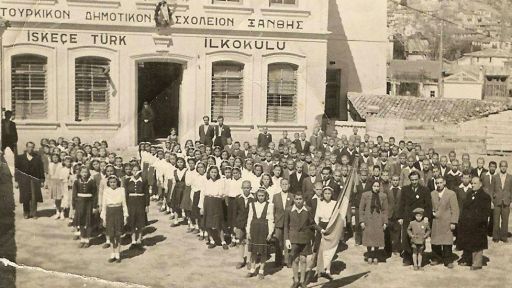
The resolution also draws attention to the decline in the number of Turkish minority primary schools in Western Thrace. According to the figures cited by ABTTF, their number has fallen from 188 in 2011 to 76 today, with closures attributed to insufficient student enrolment.
It further notes that only two Turkish minority secondary schools are operating in the region and highlights serious building and capacity problems at the İskeçe Turkish Minority Secondary and High School (Xanthi).
CALLS ON GREECE TO RESTORE EDUCATIONAL AUTONOMY
Through the resolution, ELEN calls on Greece to take steps to address the concerns raised by the minority community.
These include restoring the Turkish minority's educational autonomy, permitting the establishment of bilingual kindergartens, ending unilateral closures of Turkish minority primary schools, expanding secondary education opportunities and addressing the infrastructure and other needs of existing Turkish schools.
The resolution also recalls a visit by ELEN's president and secretary-general to Western Thrace on May 2–3, 2025, at ABTTF's invitation. During that visit, the delegation had the opportunity to hear directly about the minority's educational concerns.
AROMANIAN LANGUAGE PROTECTION ALSO ON THE AGENDA
Another resolution unanimously adopted at the assembly addressed the protection of the Aromanian language in the digital age. It was jointly submitted by the Council of Aromanians and EBLUL Greece under the title "The Aromanian Language in the Digital Age – Combating Digital Glottophobia".
The resolution warns that Aromanian, also known as Vlach, continues to lack adequate protection and support despite international recommendations aimed at safeguarding endangered languages.
It highlights the language's limited presence in digital databases, search engines, machine translation systems and voice technologies, arguing that these gaps threaten its everyday use and transmission to future generations.
The resolution calls on international institutions to support the development of digital language resources, translation tools and educational materials for Aromanian.