Council of Europe: Foreign funding of associations cannot be criminalised

New recommendation highlights concerns over restrictions affecting Turkish minority associations in Western Thrace.
The Council of Europe's Committee of Ministers has called on member states to protect the independence of civil society organisations, stressing that receiving foreign funding cannot, in itself, be considered unlawful or evidence of unacceptable activities.
In a new recommendation aimed at ensuring a free and safe environment for civil society, the committee urged governments to prevent unjustified interference, discrimination and restrictions against associations and human rights organisations.
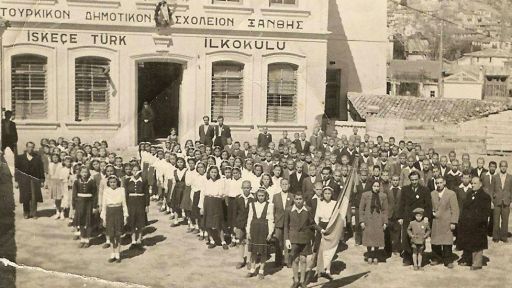
The decision is particularly significant for the long-standing legal struggle of Turkish minority associations in Western Thrace, which have faced obstacles to registration and operation in Greece.
Foreign funding must not lead to discrimination
The recommendation states that associations should not be stigmatised because of their activities or sources of funding.
The Committee of Ministers stressed that receiving financial support from abroad cannot, by itself, be treated as evidence of unlawful conduct or unacceptable objectives.
It also called on governments to avoid imposing special labels or discriminatory treatment on organisations receiving foreign funding and ensure that financial and administrative reporting requirements remain proportionate.
Member states were further urged to establish legal and financial conditions that allow civil society organisations to operate independently, access public support and participate in public debate without restrictions.
Implications for Turkish minority associations in Greece
The recommendation carries particular relevance for Turkish minority associations in Western Thrace, several of which have faced lengthy legal battles over their right to register and operate.
The European Court of Human Rights (ECHR) has previously ruled against Greece in several cases involving minority associations, finding violations of Article 11 of the European Convention on Human Rights, which protects freedom of association.
The rulings included cases involving the Evros Prefecture Minority Youth Association in 2007, the Rodopi Prefecture Turkish Women's Cultural Association in 2008 and the Xanthi Turkish Union in 2008.
In 2025, the court also found a violation of Article 11 in a case concerning the rejection of the registration application of the Xanthi Prefecture Turkish Women's Cultural Association.
However, implementation of the ECHR judgments remains an issue. The Council of Europe's Committee of Ministers continues to supervise their execution, while the Conference of INGOs submitted a new complaint in November 2026 concerning Greece's failure to implement the relevant rulings.
Updated rules strengthen civil society protections
The new recommendation updates the Council of Europe's previous framework, adopted in 2007, and covers the legal status, financing, public support, transparency and participation of civil society organisations in decision-making.
It also adopts the term "civil society organisations" (CSOs) instead of the previously widely used "non-governmental organisations" (NGOs), emphasising their independent role in democratic societies.
The recommendation reinforces the principle that freedom of association is a fundamental element of democracy and that governments must ensure organisations can operate without unjustified legal or administrative obstacles.