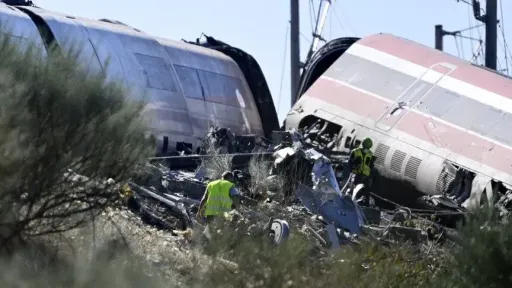
Only one in four rail passengers highly satisfied with safety in Greece

Only 26% of passengers are highly satisfied with safety on Greece's railway network, highlighting the continuing challenge of restoring public confidence three and a half years after the country's deadliest train disaster, according to passenger satisfaction data published by Hellenic Train.
The figure, covering the third quarter of 2026, marks a decline from 29.5% during the same period last year. Meanwhile, one in four passengers said they were dissatisfied with railway safety, reflecting persistent concerns about accidents and trains becoming stranded.
According to the findings reported by Kathimerini, only 51% of passengers said they were highly or completely satisfied with railway services overall, indicating that significant shortcomings remain.
Passenger satisfaction improves in some areas
The survey showed mixed results across different aspects of railway services.
Satisfaction with protection against criminal activity reached 31%, up from 28.67% a year earlier.
Passenger information also improved, with 48% expressing high satisfaction, compared with 43% in the third quarter of 2025.
Satisfaction with passenger services increased to 41%, from 38%, while 46% of passengers were highly satisfied with journey times, up from 43% over the same period.
Despite these improvements, safety remains one of the weakest areas of passenger satisfaction.
Frequent disruptions and delays, particularly on suburban railway services, alongside longstanding problems with infrastructure and rolling stock, continue to undermine confidence in the network.
Tempe disaster continues to weigh on public confidence
The findings come three and a half years after the March 2023 collision of two trains near Tempe in central Greece, which killed 57 people, most of them young passengers.
The disaster exposed serious deficiencies in railway safety systems and triggered nationwide protests, severely damaging public confidence in the country's railways.
Restoring that confidence remains a major challenge as authorities continue efforts to modernise infrastructure, improve operational safety and strengthen passenger services.
New platform offers real-time train tracking
Meanwhile, a new digital platform allowing trains to be monitored in real time was unveiled on Tuesday in the presence of Prime Minister Kyriakos Mitsotakis.
The railway.gov.gr platform uses satellite-based global navigation technology and Greece's HEPOS positioning system to display the locations of equipped trains on an interactive map, with continuously updated information.
The project was developed through a donation from 26 members of the board of the Union of Greek Shipowners.
Mitsotakis described the platform as an important step towards rebuilding trust between Greek society and the railway system, saying it would provide an additional layer of safety alongside existing mechanisms.
He also highlighted the potential use of artificial intelligence to analyse communications between train drivers and stationmasters.
New trains and European safety system
The prime minister announced that the first two new trains ordered by Hellenic Train had been delivered and were expected to enter service early next year.
He also said the European Train Control System (ETCS), designed to improve railway safety through automated monitoring and control, had been installed both along the railway network and on trains and was currently undergoing certification.
The new initiatives form part of broader efforts to modernise Greece's railways. However, the latest passenger satisfaction figures underline the gap between planned improvements and public expectations, particularly regarding safety.
Source:Kathimerini