Atatürk commemorated at ceremony in Athens
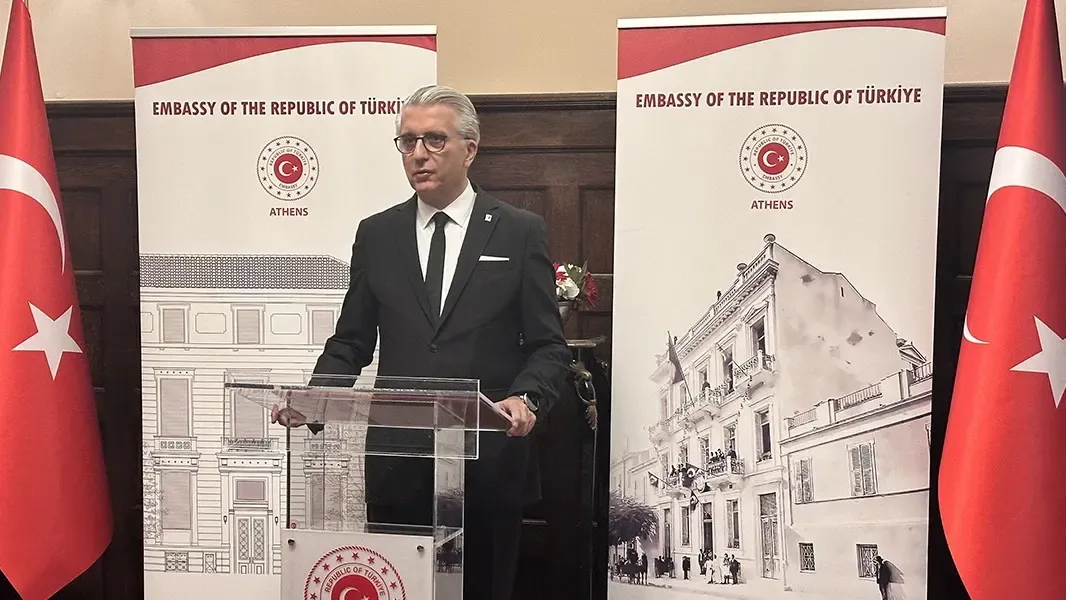
The founder of the Republic of Türkiye, Mustafa Kemal Atatürk, was commemorated at the Turkish Embassy in Athens on the 88th anniversary of his death, with officials also highlighting his contribution to Turkish-Greek relations.
Mustafa Kemal Atatürk, the founder of the Republic of Türkiye, was commemorated in Athens on November 10, marking the 88th anniversary of his death.
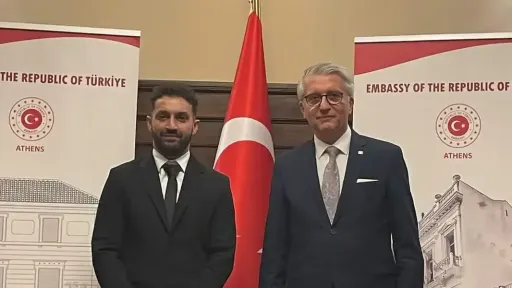
The ceremony, held at the Turkish Embassy in Athens, began with a moment of silence followed by the Turkish national anthem. Hosted by Turkish Ambassador to Athens Çağatay Erciyes, the event was attended by embassy and consulate staff, military personnel, representatives of Turkish institutions operating in Athens and members of the Turkish community.
Addressing the gathering, Ambassador Erciyes paid tribute to Atatürk, expressing respect, gratitude and remembrance for his legacy.
"Today, we once again remember the struggle he led and the great legacy he left us. We deeply feel our responsibility to carry this legacy into the future," Erciyes said.
He recalled how Atatürk had led the Turkish War of Independence during one of the nation's most difficult periods, ultimately securing victory through the determination and resolve of the Turkish people.
Erciyes also highlighted Atatürk's 15-year presidency, during which he spearheaded major transformations aimed at national development and modernisation. He noted that Atatürk placed education, science and production at the centre of these reforms, advanced women's equal rights and entrusted the Republic to younger generations.
ATATÜRK'S LEGACY IN TURKISH-GREEK RELATIONS
Erciyes said commemorating Atatürk in Athens carried particular significance given that he was born in Thessaloniki (Selanik), a city now in Greece.
He also underlined Atatürk's contribution to the development of Turkish-Greek relations, describing his role in the shared history of the two countries as significant.
Referring to Atatürk's cooperation with former Greek Prime Minister Eleftherios Venizelos, Erciyes said the two leaders had demonstrated that reconciliation was possible following war.
"Atatürk, together with Venizelos, showed that reconciliation was possible after war. They demonstrated the courage and political will needed to build friendship between two peoples who had recently been at war," he said.
Erciyes added that Türkiye remained committed to resolving outstanding issues with neighbouring Greece through good-neighbourly relations and international law.
He expressed support for meaningful and constructive dialogue, saying Türkiye wanted peace and cooperation to prevail on both sides of the Aegean and for history to be interpreted accurately.
"Our political will in this direction is clear. We expect Greece to demonstrate the same political will," he said.
DIPLOMAT HIGHLIGHTS ATATÜRK'S PRINCIPLE OF PEACE
Following the ambassador's address, Ahmet Kaan Ketboğa, Third Secretary at the Turkish Embassy, also delivered a speech.
Ketboğa described Atatürk as a leader who enabled the Turkish nation to rise from the ashes during one of the most turbulent periods in history, despite immense hardships and challenges, by remaining firmly committed to freedom and independence.
He also highlighted the significance of Atatürk's principle, "Peace at home, peace in the world," stating that the reforms carried out by Türkiye under this vision had not only shaped the country's future but also served as an example for the international community.
The commemorative ceremony concluded with tributes to Atatürk and his enduring legacy.
Source: Anadolu Agency (AA)