French contact with Türkiye sparks row over Greece-Cyprus power cable

A diplomatic dispute has emerged over the Greece-Cyprus electricity interconnector after France reportedly contacted Türkiye regarding planned survey operations in the Eastern Mediterranean, prompting Athens to insist that the communication was a notification rather than a request for permission.
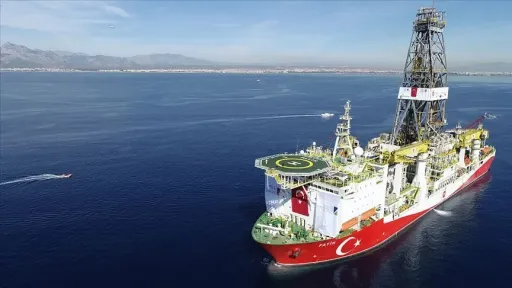
The controversy centres on the Great Sea Interconnector, an undersea electricity cable project linking Greece and Cyprus. French research vessel Abeille Marengo is preparing to conduct survey work in areas where Türkiye also claims maritime jurisdiction.
Greek government spokesperson Pavlos Marinakis rejected reports suggesting that France had sought Ankara's approval, stressing that notification and permission were two entirely different matters.
"Permission and notification are different things. The claims being circulated have nothing to do with reality," Marinakis said.
He maintained that the French company involved had sought authorization exclusively from Greek and Cypriot authorities and that the project was proceeding according to established procedures.
Conflicting reports over Paris-Ankara communications
Greek media have published differing accounts of the diplomatic exchanges between France and Türkiye.
According to reports cited by Türkiye Today, France communicated with Ankara through official channels, although the nature and content of that communication remain disputed.
Greek media outlet Enikos described the French approach as a standard notification sent to Türkiye and Egypt, rather than a request for authorization.
Other reports, including those by Sigma Live and Kathimerini, also referred to written diplomatic communications with countries in the region following Greece's approval of the survey operations.
However, MEGA, citing Turkish sources, reported that France had submitted a request to Ankara concerning the project. Turkish sources reportedly considered the French approach sufficient to avoid further tensions at sea.
Kathimerini also reported that Ankara was dissatisfied with certain wording in the French diplomatic note and could be seeking clearer language regarding its positions on maritime boundaries in the Eastern Mediterranean.
French communications reportedly included Greece, Cyprus, Egypt and Türkiye, while Paris was said to be avoiding taking a position on competing maritime jurisdiction claims.
Greek Deputy Foreign Minister Loverdos said he was unaware of any arrangement between Paris and Ankara, adding that Greece had not informed Türkiye about the project.
He stressed that the government was prepared for different scenarios and would defend the country's sovereign rights if necessary.
Athens insists project will move forward
Marinakis said Greece had completed the necessary procedures after approving the survey and cable-laying operations and issuing Navtex 1411/26 on November 6. Türkiye subsequently issued a counter-Navtex.
Athens maintains that the French communication was intended solely to address navigational safety and did not constitute recognition of Turkish maritime claims.
The Greek government has also rejected opposition calls to publish the French diplomatic correspondence, with Marinakis arguing that Athens could not release official communications belonging to another state.
Meanwhile, Turkish Foreign Minister Hakan Fidan sought to play down concerns, telling Kathimerini over the weekend that "everything is normal, everything is fine."
Turkish media commentator Yahya Bostan also reported that France had sent written notification to Ankara through official channels, although the details remained unclear.
French research vessel awaits green light
The Abeille Marengo remains at the port of Heraklion in Crete as diplomatic contacts continue.
According to Kathimerini, a planned calibration voyage was postponed, although the vessel remains prepared to begin operations under the relevant navigation notice.
The ship is expected to carry out initial test voyages before proceeding with the main survey activities. Reports indicate that it could initially operate within Greek territorial waters before moving towards areas also claimed by Türkiye as part of its continental shelf.
Ankara maintains that activities in maritime areas it considers under its jurisdiction require coordination with Turkish authorities.
Despite the diplomatic disagreement, there have been no reports of a major naval buildup in the area, although Turkish unmanned aerial vehicle flights south of Kasos have been reported.
US involvement denied by Athens
Some Greek media reports have suggested that Washington does not want the project obstructed and that US Ambassador to Türkiye Tom Barrack could provide a verbal briefing to Ankara.
However, the Greek government has denied any American intervention or diplomatic approach concerning the interconnector. Reports from Ankara have also indicated that there is no confirmed information about US involvement.
The dispute is unfolding as the COP31 climate conference takes place in Antalya, with diplomatic attention focused on avoiding a possible confrontation in the Eastern Mediterranean.
Athens considers the Great Sea Interconnector a strategically important energy infrastructure project designed to strengthen regional electricity connections and improve energy security between Greece and Cyprus.
Source:turkiyetoday