Türkiye marks 88th anniversary of Atatürk’s death

Türkiye is marking the 88th anniversary of the death of Mustafa Kemal Atatürk on Tuesday, November 10, honouring the founder of the Republic and the military leader who guided the country through its War of Independence.
Atatürk died on November 10, 1938, at the age of 57, at Dolmabahçe Palace in Istanbul. His death at 9.05 am prompted widespread mourning across Türkiye and abroad.
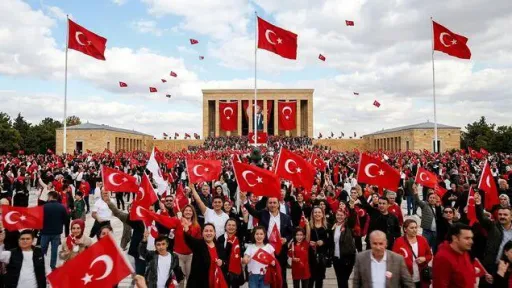
His legacy remains central to the country's national identity, with Anıtkabir in Ankara, his final resting place, serving as the focal point of annual commemorations.
Born in Thessaloniki in 1881, Atatürk rose through the Ottoman military ranks before becoming the leading figure of the Turkish National Struggle and the establishment of the Republic of Türkiye.
From Thessaloniki to the military leadership

Mustafa Kemal received his early education in Thessaloniki before continuing his studies at military schools in Thessaloniki and Manastir, now Bitola in North Macedonia.
He moved to Istanbul in 1899 to attend the Military Academy, graduating in 1902 as a second lieutenant. He subsequently completed the Military Staff College in 1905, earning the rank of staff captain.
His early military career included assignments in Syria, Macedonia and Libya, where he took part in operations against Italian forces during the Italo-Turkish War.
He later participated in the Balkan Wars, serving in Gallipoli and Bolayir and contributing to the recapture of Dimetoka and Edirne.
Gallipoli victory established his military reputation
Atatürk gained national recognition during the First World War through his leadership in the Gallipoli campaign in 1915.
As commander of the 19th Division, he played a central role in stopping Allied forces advancing towards Conkbayiri on the Gallipoli Peninsula.
During the fighting, he rallied his troops with the words: "If you have no ammunition, you still have your bayonets."
A piece of shrapnel struck his chest during the campaign, but his pocket watch absorbed the impact and saved his life.
His performance during the Dardanelles campaign earned him the title of "Hero of Anafartalar".
He later served on the Eastern Front, where he halted Russian advances and helped recapture Bitlis and Mus in 1916, earning promotion to general.
National struggle began with journey to Samsun
Following the First World War and the occupation of Ottoman territories, Mustafa Kemal increasingly opposed policies that he believed threatened the country's independence.
On May 19, 1919, he arrived in Samsun, marking the beginning of the Turkish National Struggle.
He subsequently organised the Erzurum and Sivas congresses, which established the political foundations of the independence movement and called for the protection of national sovereignty and territorial integrity.
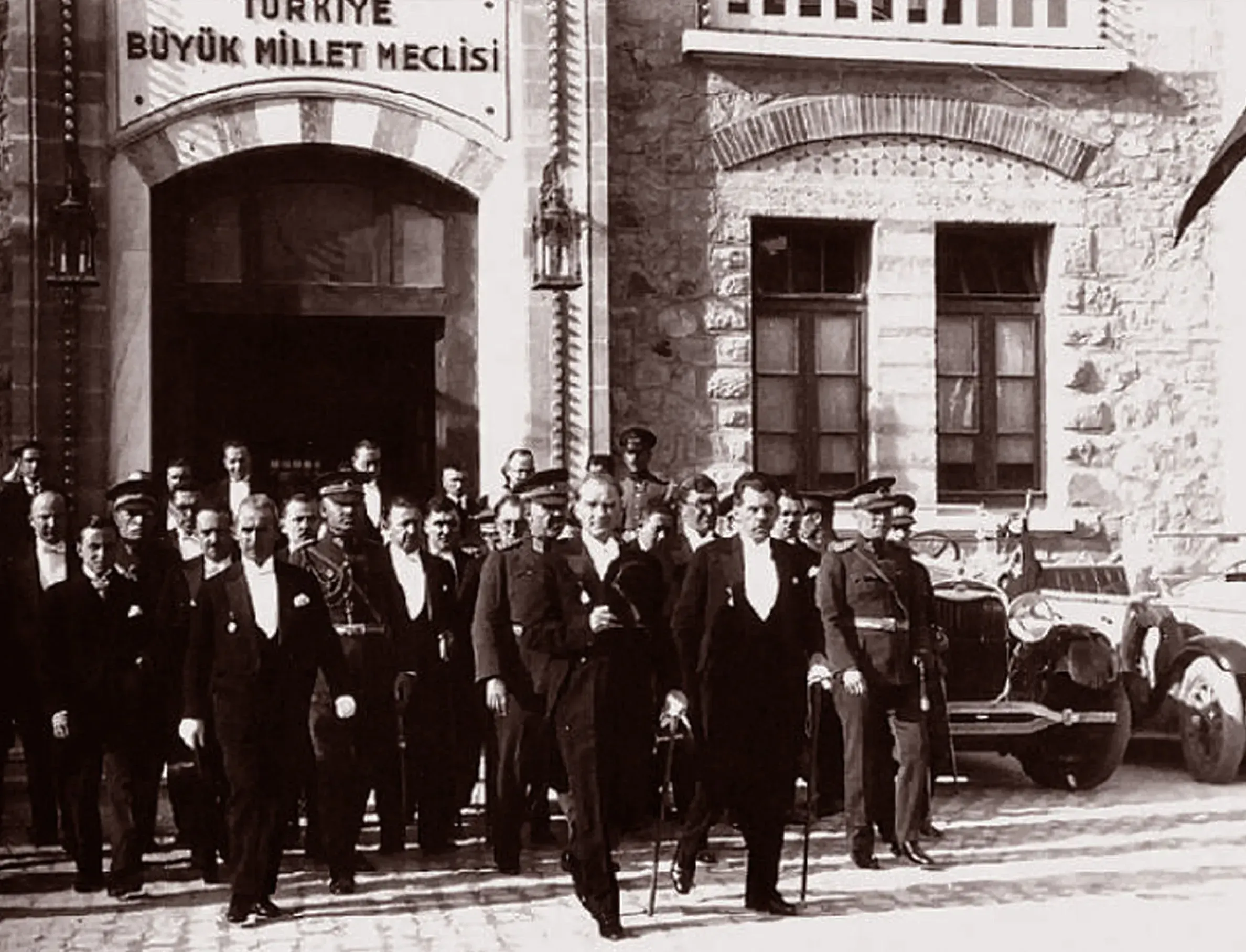
On April 23, 1920, the Grand National Assembly of Türkiye opened in Ankara under his leadership, electing him its president.
Earlier that month, on April 6, 1920, Anadolu Agency was established on his instructions to communicate the objectives and developments of the National Struggle to the international community.
War of independence paved the way for the Republic
The Turkish National Struggle culminated in a series of military victories against Greek forces and other foreign troops.
Under Atatürk's command, Turkish forces secured victory at the Battle of Sakarya in 1921, after which the Grand National Assembly awarded him the rank of field marshal and the title of Gazi.
The Great Offensive began on August 26, 1922, leading to the decisive Turkish victory at Dumlupinar on August 30. Turkish forces subsequently entered Izmir on September 9.
The military campaign paved the way for the Armistice of Mudanya and the withdrawal of Allied forces from occupied Turkish territories.
The Treaty of Lausanne, signed on July 24, 1923, internationally recognised the new Turkish state and established the foundations of its modern borders.
On October 29, 1923, the Republic of Türkiye was officially proclaimed, with Mustafa Kemal becoming its first president.
He was elected to the presidency four consecutive times and remained in office until his death in 1938.
Reforms shaped modern Türkiye

During his presidency, Atatürk introduced major political, economic and social reforms aimed at transforming the country into a modern republic.
His government promoted industrial development through the Five-Year Industrial Plan launched in 1933, while also investing in agriculture and rural development.
Türkiye's international position was strengthened through diplomatic initiatives, including its admission to the League of Nations, the Balkan Pact, the Montreux Convention on the Turkish Straits and the Saadabad Pact.
He also pursued the incorporation of Hatay into Türkiye, describing the territory as his "personal cause". The objective was achieved in 1939, following his death.
On November 24, 1934, the Turkish parliament granted him the surname Atatürk, meaning "Father of the Turks", through Law No. 2587.
Final resting place became national symbol
Following his death in Istanbul on November 10, 1938, Atatürk's remains were temporarily placed at the Ankara Ethnography Museum after a state funeral.
On November 10, 1953, his remains were transferred to Anıtkabir, the monumental mausoleum built in Ankara in his honour.
Eighty-eight years after his death, Atatürk continues to occupy a central place in Türkiye's historical and political identity.
His life, from his birth in Thessaloniki to his leadership of the independence movement and the founding of the Republic, remains a defining chapter in the country's modern history.
Source-Photos:AA