Macedonian Language Center case postponed for a year
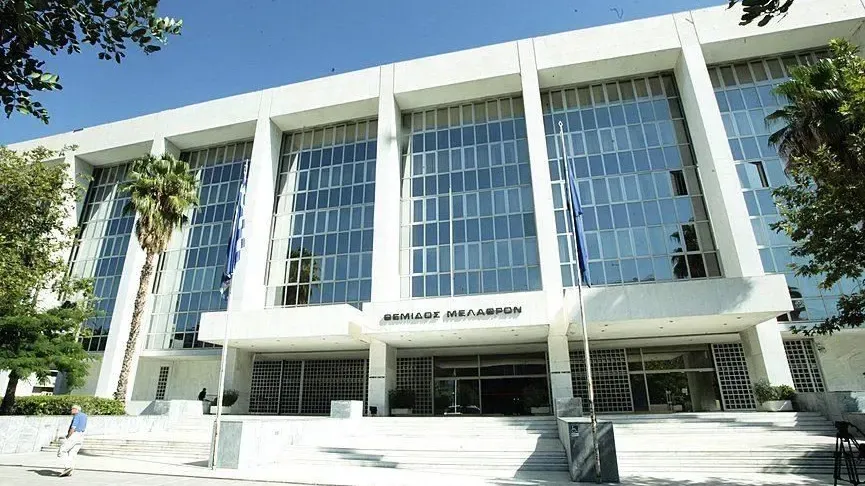
The case had been scheduled to be heard by the Court of Cassation’s Fourth Civil Division on September 21, 2026, but was adjourned to a later date.
The proceedings concern the registration of the association, which has been at the center of a long-running legal dispute over freedom of association in Greece.
Registration dispute dates back to 2022
The Macedonian Language Center in Greece was registered following a court decision in 2022. Applications seeking its dissolution were rejected in 2023.
However, the Western Macedonia Court of Appeal ruled in 2024 that the association’s registration should be annulled. The case was subsequently brought before the Court of Cassation.
The dispute has also attracted the attention of the Council of Europe’s Committee of Ministers, which supervises the implementation of judgments of the European Court of Human Rights (ECHR).
Council of Europe raises concerns over ECHR compliance
The Committee of Ministers has previously examined the case in the context of the ECHR judgment in House of Macedonian Civilization and Others v. Greece.
The ECHR ruled in 2015 that Greece had violated Article 11 of the European Convention on Human Rights, which protects freedom of association, in the case concerning the refusal to register the “Home of Macedonian Civilization.”
The case followed an earlier 1998 judgment in Sidiropoulos and Others v. Greece. In that case, the ECHR also found a violation of Article 11 after Greek authorities refused to register a Macedonian cultural association in Florina. The Court held that the applicants had the right to form an association to preserve and develop their traditions and culture.
The Council of Europe has continued to monitor the implementation of the 2015 judgment. Parliamentary and Council of Europe documents have linked the case to broader questions concerning Greece’s compliance with ECHR judgments on freedom of association.
Parallel concerns over Turkish minority associations
The issue has also been discussed alongside a separate group of ECHR cases concerning associations linked to the Turkish minority in Western Thrace.
In Bekir-Ousta and Others v. Greece, the ECHR ruled in 2007 that Greece had violated Article 11 by refusing to register an association established by members of the Muslim minority in Western Thrace. The Court found that suspicion about an association’s objectives was not, by itself, sufficient justification for refusing registration where there was no indication of violence or anti-democratic methods.
The Council of Europe continues to supervise the implementation of judgments in the Bekir-Ousta and Others group. In June 2026, the Committee of Ministers again called on Greece to implement the relevant judgments concerning freedom of association.
ABTTF president criticizes Greece
Halit Habip Oğlu, president of the Federation of Western Thrace Turks in Europe (ABTTF), said Greece had failed to fully implement relevant ECHR judgments.
Habip Oğlu argued that the prolonged domestic proceedings concerning Macedonian and Turkish minority associations demonstrated what he described as selective treatment in the exercise of freedom of association.
He referred to the ECHR judgments in Sidiropoulos and Others, House of Macedonian Civilization and Others and the Bekir-Ousta and Others group, arguing that the judgments are legally binding on Greece rather than merely advisory.
The ABTTF president also alleged that associations containing the words “Turkish” and “Macedonian” in their names face restrictions while associations referring to other ethnic or cultural identities are allowed to operate.
The comparison between the different cases involves distinct legal proceedings and factual circumstances, but all are connected to Article 11 of the European Convention on Human Rights and questions surrounding freedom of association.
The latest postponement means that the legal status of the Macedonian Language Center will remain unresolved pending the Court of Cassation’s future proceedings.