Greece records sharp fall in births across regions

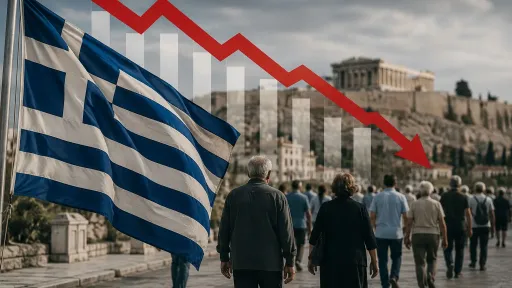
Greece recorded a sharp decline in births over the past 15 years, with the number of newborns falling by about 42% between 2009 and 2024, according to a demographic study reported by Greek newspaper To Vima.
The study, conducted by demographer Byron Kotzamanis of the Institute for Demographic Research and Studies, found that births fell from about 117,440 in 2009 to roughly 68,310 in 2024.
Six mainland regions recorded declines of more than 50% during the period: Thesprotia, Grevena, Phthiotis, Kozani, Evrytania and Florina.
Births have declined for decades
The study shows that Greece’s demographic decline extends well beyond the past 15 years.
Average annual births fell from about 148,000 in 1979-80 to around 67,000 in 2024-25. At the same time, the average age at which women gave birth increased from 26.2 to 32.2.
Births have generally declined since the late 1970s, with a modest increase recorded between 2003 and 2009. The study attributed much of that temporary rise to immigration following the early 1990s.
The number of children born to successive generations has also decreased. Women born in the late 1950s had an average of about two children, compared with fewer than 1.5 among women born around 1985.
Fertility rate falls to 1.24
Greece’s total fertility rate declined from 2.2 children per woman in 1979-80 to 1.24 in 2024-25.
The decline has not been uniform across the country. Six island regional units recorded birth declines of less than 30% between 2009 and 2024, while the decreases in the Cyclades and Zakynthos were below 15%.
The figures highlight significant regional differences in Greece’s demographic trajectory.
Deaths far outnumber births in most regions
The study also found a widening gap between births and deaths across much of the country.
Only five of Greece’s 74 regional units recorded more births than deaths in 2024: Thira, Mykonos, Kos, Naxos and Rethymno.
The demographic imbalance was particularly pronounced in Serres, Evrytania and Grevena, where at least 3.5 deaths were recorded for every birth.
The figures underline the scale of Greece’s long-term demographic challenge, with fewer births, an ageing population and substantial differences between mainland and island regions.