Kasselaris political comeback faces legal barriers
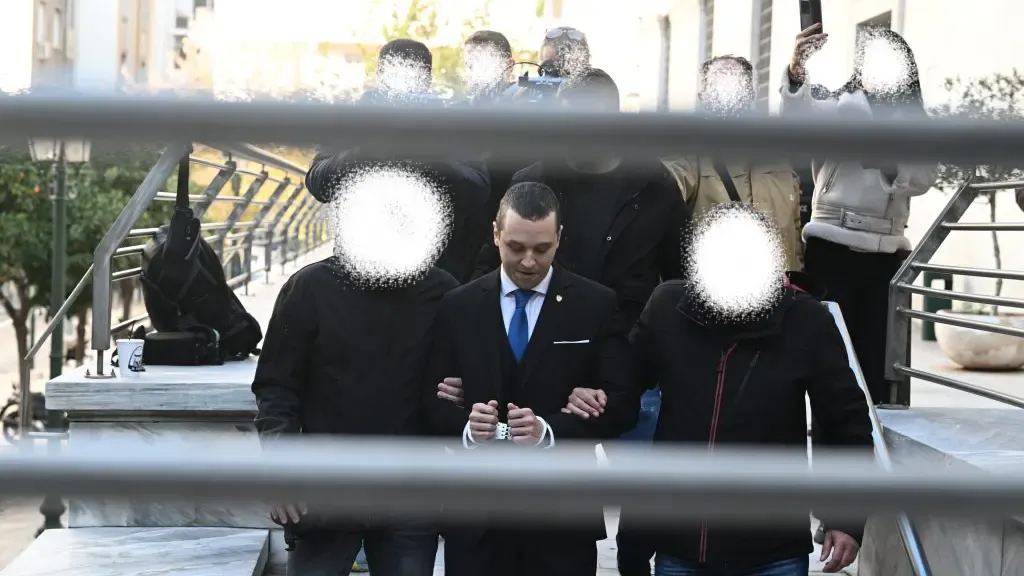
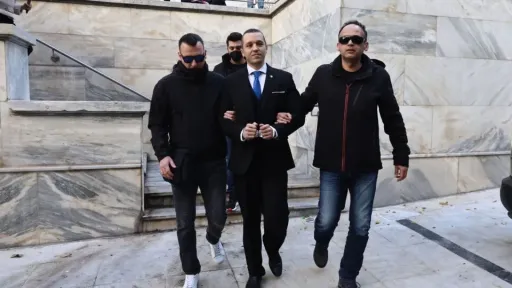
Former Golden Dawn lawmaker Ilias Kasselaris could face significant legal obstacles if he seeks to return to Greece’s central political scene following his release from prison, constitutional law professor Spyros Vlachopoulos told ERTnews.
Vlachopoulos said the existing legal framework leaves some possibilities open for Kasselaris to participate in elections, but also gives the Supreme Court significant powers to prevent a political formation from standing if it determines that the group does not serve the free functioning of the democratic system.
Kasselaris was sentenced to 13 years in prison for directing a criminal organization. His conviction was not based on his political views or ideas, but on his role as a leading member of the organization.
Independent candidacy remains possible
According to Vlachopoulos, Kasselaris could legally stand as an independent candidate.
There is no specific legal obstacle preventing him from contesting an election as an individual candidate, meaning he could potentially seek election independently in any constituency.
In practice, however, such a route would be extremely difficult. Independent candidates are also subject to the requirement of securing at least 3% of valid votes nationwide in order to be elected to parliament.
Supreme Court can block party linked to hidden leadership
A different situation would arise if Kasselaris were to establish or influence a political party while not formally appearing as its leader.
Greek law allows the Supreme Court to prevent the certification of a political formation if its declared or concealed leadership is a person convicted of certain criminal offenses, including directing a criminal organization.
If the Supreme Court determines that Kasselaris is the actual or concealed leader of a party, the party could be barred from participating in elections.
The crucial issue, Vlachopoulos said, is that the restriction does not apply only when Kasselaris formally presents himself as party leader. It can also apply if he is judged to exercise real leadership behind the scenes.
Party candidacy could still trigger scrutiny
Another possibility would be for Kasselaris to appear simply as a parliamentary candidate for an existing political formation.
In such a case, there would be no automatic formal obstacle to his candidacy, according to Vlachopoulos.
However, the Supreme Court could still examine whether the party as a whole serves the free functioning of the democratic system.
This means that even if a party formally presents itself as democratic and its statutes protect democratic principles, the court could decide that the political formation does not meet the constitutional requirements.
In such circumstances, the court would not necessarily exclude Kasselaris personally. Instead, it could refuse to certify the entire electoral list or party formation.
The Spartans precedent raises questions
The discussion also examined how the Spartans party was allowed to participate in the 2023 elections despite allegations at the time of links to Kasselaris and possible concealed leadership.
Vlachopoulos said the case highlights broader problems with the current procedure, particularly the extremely short period available to the Supreme Court to examine political formations before elections.
Political parties and electoral lists are certified shortly before voting, leaving the court only a limited period to consider evidence and submissions.
The constitutional expert argued that a special procedure with stronger legal safeguards and sufficient time should be established for such cases.
“You cannot decide it in one afternoon”
Vlachopoulos stressed that decisions affecting whether an entire political formation can participate in elections should not be made within a matter of days.
He warned that an incorrect decision could have serious consequences if a party subsequently succeeds in electing lawmakers, potentially affecting the functioning of parliament and the representation of voters.
He also pointed to previous periods when the Greek parliament operated with fewer than its full number of lawmakers, describing the issue as particularly problematic.
Public profile could influence assessment
Asked whether Kasselaris could operate behind a party without formally appearing as its leader or candidate, Vlachopoulos returned to the concept of concealed leadership.
He said that if a person is judged to be the actual leader of a political formation despite not formally holding the position, the relevant legal provisions could be activated.
A strong public leadership profile could also influence such an assessment.
“The more a person publicly appears with a leadership profile, the stronger the image of concealed leadership becomes,” Vlachopoulos said.
Expert cautious on electoral return
Asked whether Kasselaris is likely to participate in the next elections in any form, Vlachopoulos declined to make a prediction.
“It is very difficult, and I do not want to make predictions,” he said.
He stressed that the Supreme Court’s eventual decision would depend on the circumstances and evidence available at the time.
Even if Kasselaris were to run as a candidate for a party with formally democratic statutes, the court could still examine whether the party genuinely serves the free functioning of the democratic system.
Broader debate over banning political parties
Vlachopoulos said the case also raises a broader constitutional question over whether, and under what conditions, political parties should be subject to prohibition.
Greece currently does not have a general constitutional mechanism for banning political parties. The issue was considered during the drafting of the 1975 Constitution but was ultimately not included.
Vlachopoulos said the question should be reconsidered during a future constitutional review, with strong legal safeguards and enough time for judicial examination.
He argued that decisions of such importance should not be made “in one day, in one afternoon,” but through a comprehensive procedure providing adequate legal guarantees.
He also referred to Germany, where political parties can be banned under certain circumstances and where the Alternative for Germany has faced scrutiny by the country’s domestic intelligence authorities.
The debate, he said, concerns fundamental questions about the protection of democracy and requires clear rules and strong institutional safeguards well before an election takes place.
Source:ERT