Farmers vow to maintain blockades, reject talks

Farmers are angered by prolonged delays in subsidy payments, caused by a scandal involving the embezzlement of European Union agricultural aid. They are also struggling with low product prices, rising energy costs, and increasingly severe climate conditions.
Prime Minister Kyriakos Mitsotakis warned that blocking roads and public infrastructure harms the country and local economies. In a statement posted on Facebook, he said such actions damage regions that depend on smooth transport and trade.
Following a meeting on Saturday, farmers’ unions rejected the prime minister’s invitation to hold talks on Monday. Their decision came after protesters temporarily blocked the port of Volos last week, a key transport hub serving Thessaly, Greece’s main agricultural region. Thessaly is still recovering from extensive damage to livestock and infrastructure caused by Storm Daniel in 2023.
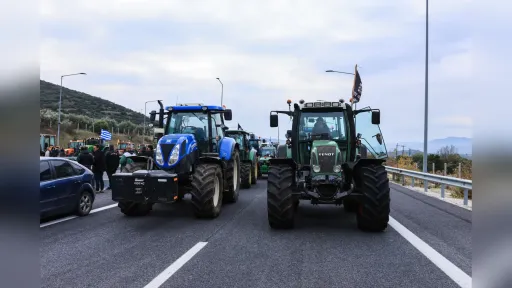
On Sunday, farmers continued their protests by setting up tractor blockades on major roads, particularly in Thessaly, causing significant traffic disruptions. On Crete, farmers—supported by fishermen—also blocked the island’s two main airports for several hours earlier in the week.
Farmers’ leaders said that without “concrete answers” to their demands, dialogue was meaningless. Mitsotakis responded that the government would not engage in talks under ultimatums, stressing that solutions could only be reached through discussion.
He added that the government recognizes farmers’ legitimate concerns and is examining additional support measures. Authorities are currently investigating a major fraud case involving EU agricultural subsidies, uncovered in May by the European Public Prosecutor’s Office, which has delayed payments to farmers and livestock breeders.
The government has pledged to ensure that additional funds are directed to eligible farmers. On Saturday, more than a dozen arrests were made on Crete in connection with the fraud investigation, adding to 37 arrests carried out in October.