UK PM rules out EU return without referendum

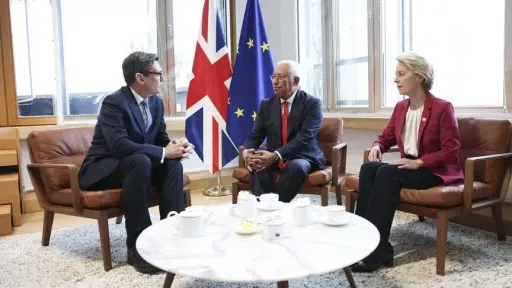
British Prime Minister Andy Burnham has said it would be “unthinkable” for the United Kingdom to rejoin the European Union without holding a referendum, while defending his government's latest agreement with Brussels.
Speaking in the House of Commons on Monday, Burnham was responding to Conservative MP Sir Bernard Jenkin, who asked whether he could rule out any attempt to take Britain back into the EU without a public vote.
“Yes, it would be unthinkable,” Burnham replied.
However, the prime minister stressed that his government was not seeking to reverse Brexit or hold another referendum.
“I am not proposing at this moment to rerun the referendum,” he said, adding that the recent agreement with European leaders was consistent with the manifesto on which he was elected.
Government rejects EU digital identity concerns
Burnham also rejected claims that the new agreement would require Britain to join the EU's digital identity system.
Responding to Conservative MP David Davis, he insisted that the UK was not joining the bloc's digital identity wallet scheme.
Britain left the European Union in 2020, following the 2016 referendum in which 52% voted to leave and 48% supported remaining.
The prime minister argued that too many bridges had been burned with Europe during the initial Brexit negotiations and said Britain should consider a range of options for its future relationship with the 27-member bloc.
Deal promises £17 billion in economic benefits
Defending the agreement, Burnham described it as a “landmark moment” that could deliver an additional £17 billion ($22 billion) in economic benefits for the UK.
The deal includes a youth mobility scheme, the removal of most checks on British food exports and the linking of the British and EU emissions trading systems.
Burnham said the agreement would also protect key industries, particularly automotive, steel and aluminium, from significant export tariffs.
He argued that existing post-Brexit arrangements had negatively affected British economic growth and that closer cooperation could provide greater certainty for businesses.
Conservatives criticise negotiating strategy
The agreement has faced criticism from Conservative Party leader Kemi Badenoch, who accused Burnham of weakening Britain's negotiating position by publicly revealing the government's priorities.
Badenoch argued that the prime minister had effectively given away the UK's negotiating red lines.
Burnham rejected the criticism, insisting that his government had secured important protections for British manufacturers.
He said the negotiations had addressed concerns over the potential application of the EU's “Made in Europe” provisions, securing guarantees for the British car, steel and aluminium industries.
The prime minister maintained that the agreement represented a positive step towards rebuilding economic ties with Europe without reversing Britain's decision to leave the bloc.
Source:AA