Europe and Türkiye eye $351 billion military infrastructure boom
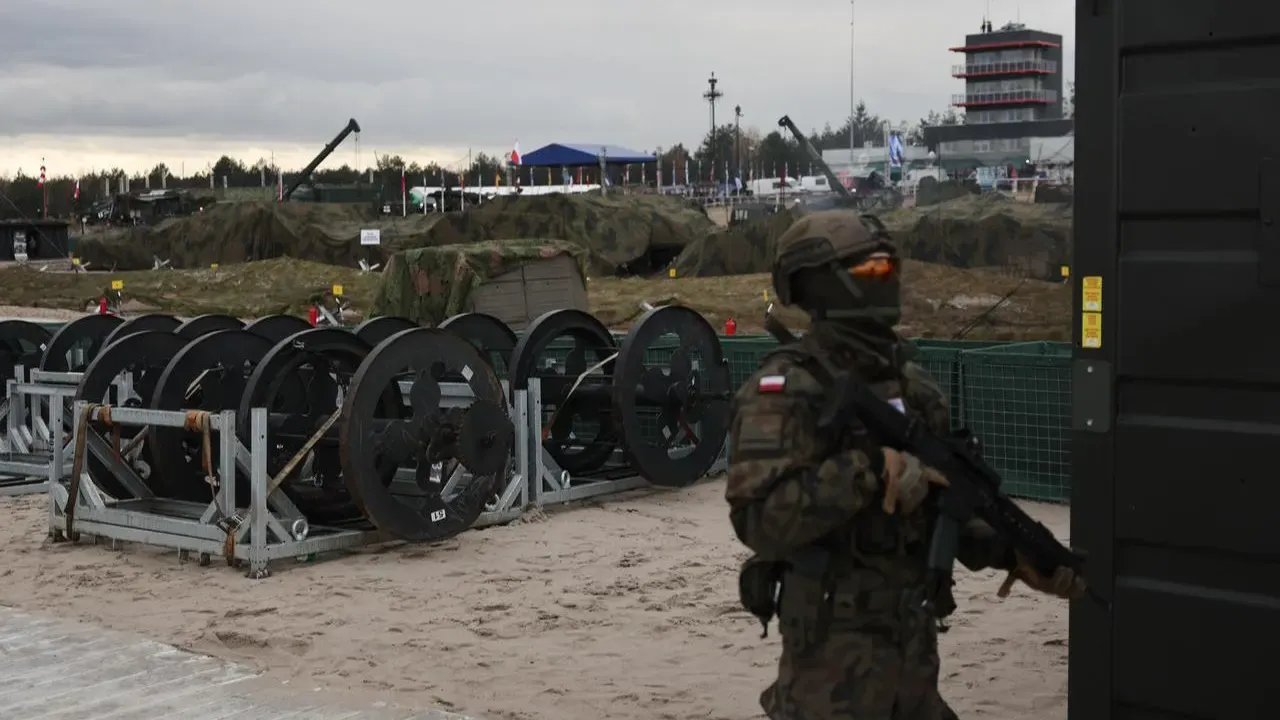
European countries, including Türkiye and the United Kingdom, could invest an estimated €320 billion ($350.9 billion) in direct military infrastructure between 2026 and 2035, as governments accelerate defence preparations and construction companies position themselves for a major expansion, the Financial Times reported on Saturday.
The estimate, compiled by consulting firm Boston Consulting Group (BCG), excludes Ukraine and covers military facilities such as barracks, ammunition storage sites, airfields, naval bases, training grounds and command-and-control centres.
The potential investment could rise to €620 billion when broader defence and security infrastructure spending in Germany, France and Poland is included.
An additional €300 billion ($329 billion) is expected to cover projects such as upgrading bridges, ports and electricity networks to meet military requirements.
Construction giants prepare for defence boom
Major construction groups are increasingly targeting defence-related projects, anticipating sustained demand for military facilities and infrastructure with both civilian and military applications.
Spain's ACS, Austria's Strabag and France's Vinci are among the companies expecting more opportunities, while building materials suppliers Heidelberg Materials, Holcim and CRH have also reported rising demand prospects, according to the Financial Times.
ACS estimates that global defence infrastructure spending could nearly double to €120 billion ($131.6 billion) annually by 2030, compared with €68 billion ($74.5 billion) this year.
In Europe, annual spending could increase from €19 billion ($20.8 billion) to as much as €30 billion ($32.9 billion).
The company's projections also point to substantial increases in North America and Australia.
ACS has already completed 154 security and defence projects across Europe. Its current portfolio includes the modernisation of a military airport in the Czech Republic and an armed forces university campus in Germany.
Strabag, meanwhile, is involved in the construction of a military hospital near Germany's Ramstein Air Base under a €859 million ($942.1 million) contract.
Construction companies are also establishing dedicated defence divisions, developing specialised materials and obtaining security clearances for employees to compete for military contracts.
CRH, for example, is developing low-carbon concrete designed to withstand heavy military vehicles and freezing winter conditions.
NATO spending targets drive investment

The expected expansion is closely linked to NATO's commitment to increase annual defence and security spending to 5% of gross domestic product by 2035.
Under the agreement, member states are expected to allocate 3.5% of GDP to core defence requirements and an additional 1.5% to security-related infrastructure and civil preparedness.
However, the pace of investment will depend on national budgets, political decisions and administrative procedures.
Anthony Codling, head of building materials research at RBC Capital Markets, highlighted the difficulties of translating political commitments into completed infrastructure projects.
“There is often a Grand Canyon between a political commitment and a poured foundation,” he said.
Infrastructure spending still below projections
Despite the growing investment trend, actual spending remains considerably below the levels required to meet the industry's long-term forecasts.
The European Defence Agency estimates that declared EU defence infrastructure spending will reach €11.6 billion ($12.7 billion) this year.
Although the figure has increased by approximately 20% annually since 2023, the current pace remains below the trajectory projected by BCG.
The expected investment wave is creating new opportunities for construction companies and building materials manufacturers, as European governments seek to strengthen military facilities, transport networks and critical infrastructure amid changing security requirements.
Source:turkiyetoday