EU weighs action on Israel as pressure mounts ahead of ministerial talks

The European Union is considering possible measures against Israel as divisions among member states come into focus ahead of a key foreign ministers’ meeting in Luxembourg.
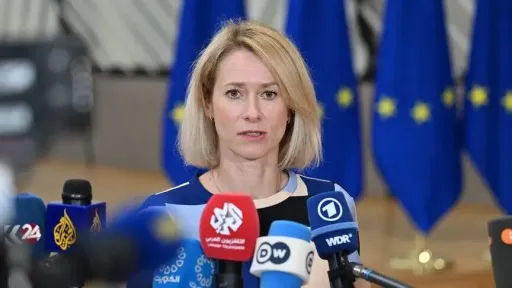
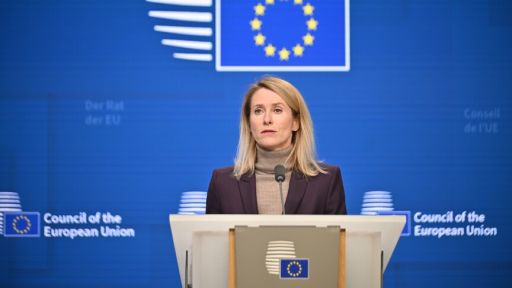
EU foreign policy chief Kaja Kallas said the bloc would assess whether there is sufficient support to act, after Pedro Sanchez renewed calls to suspend the EU-Israel cooperation agreement.
Foreign ministers from the 27-member bloc are set to debate the issue on Tuesday, with growing pressure from countries including Spain, Ireland and Slovenia to adopt a tougher stance over Israel’s actions in Gaza, the West Bank and Lebanon.
While the EU has previously outlined potential steps — including trade restrictions and sanctions on Israeli officials — no measures have yet secured the necessary backing. Suspending the entire EU-Israel Association Agreement would require unanimous approval, making it unlikely due to opposition from pro-Israel governments.
Diplomats say a more realistic option could be partially suspending trade provisions under the agreement, which would only require a qualified majority. However, this would still depend on shifts in position from key member states such as Germany and Italy.
Momentum for action may be growing following political changes in Hungary, which had previously blocked EU sanctions on Israeli settlers in the West Bank. Officials expect progress on that front once a new government takes office.
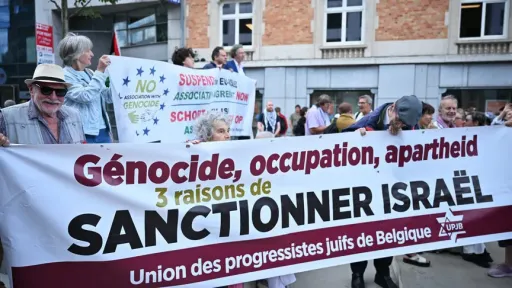
Pressure is also mounting from civil society. The European Left Alliance called for the immediate suspension of the EU-Israel agreement, citing a citizens’ initiative on Palestine that has gathered more than one million signatures across the bloc.
Rights groups urge EU to act against Israel ahead of foreign ministers' meeting
Rights organizations echoed those demands, urging the EU to move beyond statements and use its economic and political leverage. At a briefing hosted by Human Rights Watch, advocates called for measures including an arms embargo, sanctions and accountability mechanisms.
“This is not a crisis of knowledge, but of political will,” said Claudio Francavilla of Human Rights Watch, warning that continued inaction risks undermining international law.
As ministers prepare to meet, the EU faces increasing pressure to translate concern into concrete action, with the outcome likely to test unity within the bloc on one of its most divisive foreign policy issues.
Souce:AA