Srebrenica honors genocide victims as calls grow to preserve memory

Thousands of people gathered in eastern Bosnia and Herzegovina to commemorate the 31st anniversary of the Srebrenica genocide, completing the annual Peace March and attending the burial of 10 newly identified victims at the Potocari Memorial Cemetery.
More than 6,000 participants from around the world retraced the nearly 100-kilometer route taken by Bosniak civilians who fled through forests after Bosnian Serb forces overran the UN-declared safe area of Srebrenica in July 1995.
The victims' remains, identified through years of forensic investigations and DNA analysis, were laid to rest following the consent of their families. The youngest victim buried this year was 20-year-old Senad Jusic, while the oldest was 56-year-old Ramo Dautovic.
With the latest burials, the number of genocide victims interred at the Potocari Memorial Cemetery has risen to 6,782. More than 1,000 people remain missing.
Survivors urge world to remember

For survivors and their families, the annual Peace March remains both a tribute to those killed and a reminder of the suffering endured during the genocide, in which at least 8,372 Bosniak men and boys were systematically murdered.
A daughter of a genocide survivor said walking the route taken by her father as a 15-year-old fleeing to safety was the best way to understand the tragedy.
"We need to share the stories about Srebrenica all around the world so that it never happens again. Never again," she said.
Amor Masovic, a Bosniak lawmaker and former head of Bosnia and Herzegovina's Institute for Missing Persons, said many families are still unable to bury the complete remains of their loved ones.
"The vast majority of those buried here are incomplete: one, two, 10, 50 bones, but not 206, which is what they had when their mothers gave birth to them," he said.
International support for remembrance

Canada marked the anniversary by reaffirming its commitment to justice, accountability and reconciliation, while commemorating the International Day of Reflection and Commemoration of the 1995 Genocide in Srebrenica, established by the UN General Assembly in 2024.
Ottawa reiterated its support for Bosnia and Herzegovina's sovereignty, territorial integrity and multiethnic character, stressing the importance of preserving peace and stability in the region.
Museum strengthens education efforts

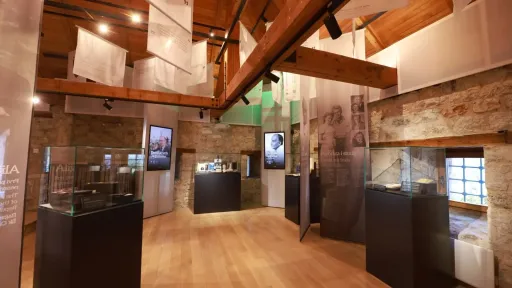
The commemorations also coincided with the first anniversary of the Türkiye-backed Srebrenica Genocide Museum at the Potocari Memorial Center.
Located inside the former UN battery factory where thousands of Bosniaks sought refuge in July 1995, the museum documents the genocide through personal belongings, archival material, photographs, survivor testimonies and multimedia exhibitions.
Curator Azir Osmanovic said the museum has become a key educational center, helping visitors better understand the events leading to the genocide, the mass executions and the decades-long search for the missing.
The museum, funded by the Turkish Cooperation and Coordination Agency (TIKA), also hosts educational programs, including an international summer school attended by students from nearly 20 countries, as part of broader efforts to preserve the memory of Europe's worst atrocity since World War II.
Source:AA