International pressure mounts over Israeli territorial expansion and settler violence

- UN warns Israeli settler groups could face blacklist over child rights violations
- Israel clashes with EU foreign policy chief as criticism grows over occupation policies
- Türkiye urges global action against Israel, backs regional diplomacy
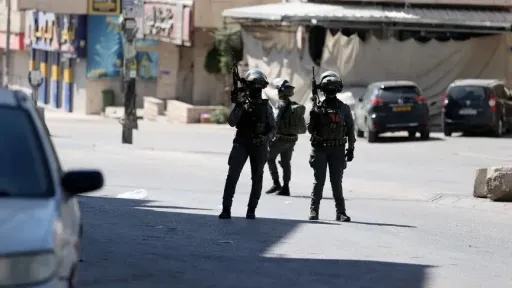
Israel's expanding military control over territory in Gaza, southern Lebanon and Syria since the outbreak of regional conflicts in 2023 has drawn increasing international scrutiny, as the United Nations, European Union and regional powers voiced concerns over occupation policies, settler violence and the humanitarian impact on Palestinians.
According to rights groups and international observers, Israel has expanded the area under its military control by roughly 1,000 square kilometers since the start of the conflict triggered by Hamas' cross-border attack in October 2023. Israeli authorities describe the seized areas as security "buffer zones" necessary to prevent future attacks and have indicated they intend to maintain a long-term presence.
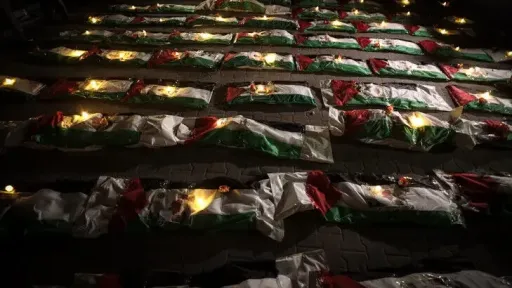
In Gaza, Israeli military operations and evacuation orders have displaced more than 2 million Palestinians, while large sections of agricultural land and residential areas have become inaccessible following widespread destruction. Rights group Gisha estimates Israel currently controls more than 60% of the territory, with Prime Minister Benjamin Netanyahu indicating that Israeli control could increase further.
Israel has also maintained its presence in areas of southern Lebanon and inside a United Nations-monitored buffer zone in Syria established after the 1973 Arab-Israeli war. The move followed the collapse of the Syrian government led by Bashar Assad in late 2024, with Israel citing security concerns and efforts to prevent weapons transfers to Hezbollah.
The United Nations and several governments have argued that Israel's presence in the Syrian buffer zone violates the 1974 disengagement agreement, while Syria's interim President Ahmad al-Sharaa has called for a full withdrawal.
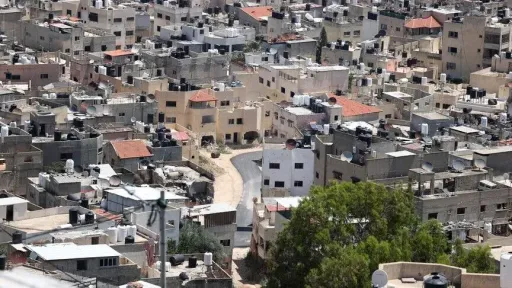
Meanwhile, settlement expansion in the occupied West Bank has accelerated. Israeli authorities have approved dozens of new settlements and expanded existing ones in recent years, a policy widely regarded by the international community as illegal under international law and a major obstacle to a future Palestinian state.
UN raises prospect of settler blacklist

The growing focus on settler activity was reflected in the latest United Nations annual report on Children and Armed Conflict, which recorded a sharp rise in violations affecting Palestinian children.
UN Secretary-General Antonio Guterres warned that Israeli settler groups could be added to the organization's global blacklist of perpetrators if the pattern of violations continues.
The report documented a record 38,558 grave violations against children worldwide in 2024 and identified the Occupied Palestinian Territory and Israel among the areas with the highest levels of abuses.
According to the report, the UN verified the killing of 2,668 Palestinian children in Gaza and 57 in the West Bank during the reporting period. It also attributed 326 grave violations against children to Israeli settlers and 9,465 to Israeli forces.
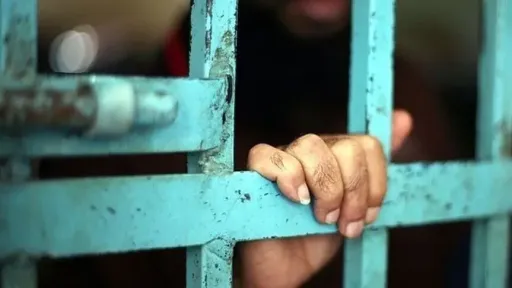
Guterres said he was "deeply alarmed" by what he described as a significant increase in attacks by Israeli settlers affecting Palestinian children and expressed concern over reports of violence and poor conditions involving Palestinian child detainees.
Israel already appears on the UN's list of parties accused of committing grave violations against children. Inclusion of settler groups would not trigger automatic sanctions but would increase international scrutiny and require engagement with the UN to address the allegations.
Diplomatic dispute with European Union

Tensions also escalated between Israel and the European Union after Israeli Foreign Minister Gideon Saar announced he was suspending contact with EU foreign policy chief Kaja Kallas.
Saar accused Kallas of comparing Israel's treatment of Palestinians to apartheid-era South Africa during a visit to Mexico, an allegation linked to media reports citing unnamed diplomats and officials. Kallas' office did not immediately comment on the accusation.
The dispute comes amid broader disagreements between Israel and the EU over settlement expansion, human rights concerns and the war in Gaza. While the bloc has repeatedly affirmed Israel's right to defend itself, it has also criticized settlement activity in the West Bank and imposed sanctions on individuals and entities accused of abuses against Palestinians.
Saar accused Kallas of acting with "blatant unfairness" toward Israel and said relations would remain frozen until the remarks were retracted.
Türkiye calls for international action

Türkiye's National Security Council (MGK), chaired by President Recep Tayyip Erdoğan, urged the international community to adopt a principled stance against Israel's actions in Gaza, the occupied West Bank and Lebanon.
In a statement following its meeting on Thursday, the council said Israeli cease-fire violations in Gaza, settler violence in the West Bank, actions affecting East Jerusalem and Al-Aqsa Mosque, and operations in Lebanon were undermining regional peace and stability.
The council reaffirmed Türkiye's commitment to a "terror-free Türkiye" and a "terror-free region," while also expressing support for Syria's territorial integrity and reconstruction efforts.
The MGK welcomed the recent agreement reached between Iran and the United States and stressed the importance of preserving diplomatic momentum aimed at achieving long-term peace and stability across the Middle East.
The developments underscore growing international concern over the trajectory of the Israeli-Palestinian conflict and its wider regional implications, as diplomatic tensions and humanitarian warnings continue to intensify alongside ongoing military and settlement activity.
Source:DailySabah