Bulgaria: Six found dead in unprecedented mountain case, authorities compare it to “twin peaks”

A mysterious case involving six deaths in a remote mountainous region of Bulgaria has shocked the nation, with authorities calling it “unprecedented” and drawing comparisons to the cult television series Twin Peaks. The case has triggered widespread speculation, conspiracy theories, and growing public distrust toward institutions.
Three Men Found Shot Dead in Burned Guesthouse
The investigation began in early February when three men, aged 45, 49, and 51, were discovered dead in the ruins of a burned guesthouse near the Petrohan Pass. The pass connects Sofia Province with Montana Province in northwestern Bulgaria.
All three victims had gunshot wounds to the head.
Forensic experts reported that the wounds appeared to be self-inflicted. DNA traces found on the weapons belonged exclusively to the deceased, according to officials.
Zahari Vaskov, Director of the General Directorate of National Police, described the case during a press briefing as “unlike anything previously seen in our country.”
Three More Bodies Discovered in Camper Van
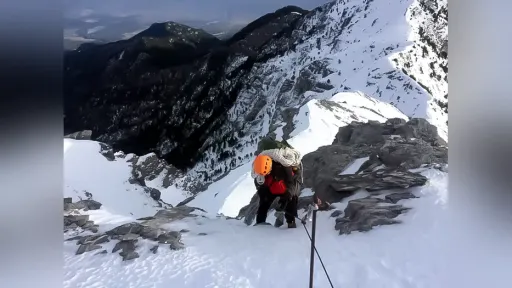
On Sunday, police located three additional bodies inside a camper van near Okolchitsa Peak, approximately 100 kilometers north of Sofia. The victims included two men, aged 51 and 22, and a 15-year-old boy.
Authorities suspect the second group of victims was connected to the Petrohan Pass deaths.
According to Bulgaria’s Prosecutor’s Office, forensic evidence suggests “the likelihood of two sequential murders followed by a suicide,” as reported by Agence France-Presse (AFP).
Environmental NGO, Border Patrol Links and Tibetan Buddhism
Police confirmed that five of the six victims were members of the National Service for the Protection of Controlled Areas, a non-governmental organization focused on environmental protection.
The NGO reportedly used the Petrohan guesthouse as its headquarters and organized youth camps there.
Some sources describe members as “forest rangers” who patrolled areas near the Serbian border for years, allegedly assisting border authorities. However, officials also stated that members practiced Tibetan Buddhism and cited a relative of one victim who spoke of “serious psychological instability” within the group.
Meanwhile, other relatives dispute that narrative.
Several family members claim the victims may have been murdered after witnessing illegal activities in the border region — an area frequently associated with smuggling and illegal logging.
Ralitsa Asenova, the mother of one of the victims found in the camper van, rejected claims of internal conflict.
“They clearly saw something. To me, this was a professionally organized murder,” she told Nova Television.
Political Shock Amid Government Crisis
The limited official information released so far has fueled rampant speculation across Bulgarian social media.
The case unfolds as Bulgaria remains without a stable government and heads toward its eighth parliamentary election in five years — a prolonged period of political instability that has weakened public trust.
Former President Rumen Radev described the case as “a political shock and a reflection of the country’s condition,” according to his press office. Radev, who stepped down last month after nine years in office, extended condolences to the victims’ families and urged authorities to clarify the circumstances.
“I will not comment further on this tragedy, which must be investigated by the competent authorities. The causes of these murders must be clarified as soon as possible, because public opinion demands answers,” he said.
A Nation Vulnerable to Conspiracy Theories
The case has unfolded in an environment already prone to disinformation.
A 2024 study by the Center for the Study of Democracy (CSD) and the Bulgarian-Romanian Digital Media Observatory found that 70% of Bulgarians believe in conspiracy theories, while 37% have fallen victim to misinformation.
Researchers described Bulgaria as being in a “post-truth” state — a context that has amplified alternative narratives surrounding the deaths.
As investigations continue, authorities face mounting pressure to provide transparency and restore public confidence.