Strong El Nino expected to raise extreme weather risks into 2027: UN weather agency

El Nino is firmly established and expected to strengthen further in the coming months, increasing risks of floods, drought and extreme heat, the UN weather agency said Thursday.
The World Meteorological Organization (WMO) forecast indicates an "exceptionally high likelihood of nearly 100%" that El Nino will persist through February 2027, according to its latest update.
Driven by exceptionally warm ocean conditions across the tropical Pacific, El Nino is expected to reach very strong intensity and peak toward the end of 2026, with climate impacts continuing into 2027.
WMO Secretary-General Celeste Saulo said droughts and floods were already causing disruption and damage and that impacts were expected to increase as El Nino intensifies.
"This exceptional El Nino demands exceptional preparation and response," she said, adding that the WMO is working with national meteorological and hydrological services to strengthen preparedness and early-warning efforts.
Sea surface temperatures in the central-eastern equatorial Pacific, the region associated with El Nino, are already well above average and continue to rise, according to the WMO.
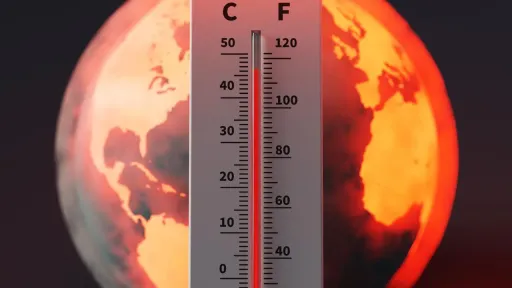
The Nino 3.4 index, which measures sea surface temperature anomalies in the central-eastern equatorial Pacific, averaged 1.5C (2.7F) above normal from May to July 2026 and reached 2C above normal in July.
Weekly values then rose further between late July and mid-August, ranging from approximately 2.2C to 2.6C above average, the organization said.
For September-November 2026, the WMO forecasts indicate an increased likelihood of above-normal temperatures across almost all land areas, while rainfall patterns are expected to show a response associated with the strong Pacific El Nino.
However, the strength of an El Nino event alone does not determine the severity of its impacts in individual countries or regions.
The WMO said effects vary by location and season and can be influenced by other climate drivers, including conditions in the Indian and Atlantic oceans.
The organization said a positive phase of the Indian Ocean Dipole is also expected to develop, while the equatorial Atlantic is forecast to remain generally warm.
These conditions may reinforce, weaken or alter typical El Nino impacts in different regions.
IOM seeks $110M to protect 4.9M from El Nino
The International Organization for Migration (IOM) on Thursday appealed for $110 million to protect 4.9 million people from the potentially severe effects of the developing 2026-2027 El Nino, including drought, flooding, and extreme heat.
The agency said the funding would support preparedness, early warning systems, and communities facing heightened displacement risks, while allowing essential assistance to be pre-positioned.
Citing new WMO forecasts of a near 100% probability that El Nino will persist through February 2027, IOM warned that climate shocks could destroy harvests, disrupt livelihoods and water supplies, and force families to move.
“Forecasts give us information we can act on,” IOM Deputy Director General Ugochi Daniels said, stressing that flexible funding could help communities prepare and allow those forced to move to do so safely.
According to the World Food Program, the 2015-2016 El Nino affected more than 60 million people worldwide, while nearly 68 million people in southern Africa were affected by drought during the 2023-2024 cycle.
El Nino and La Nina are opposite phases of the El Nino-Southern Oscillation, a naturally occurring climate pattern. El Nino is characterized by warming sea surface temperatures in the central and eastern equatorial Pacific.
The WMO said El Nino is a natural climate phenomenon and is not caused by climate change.
AA