Climate damage puts new strain on Europe’s public finances

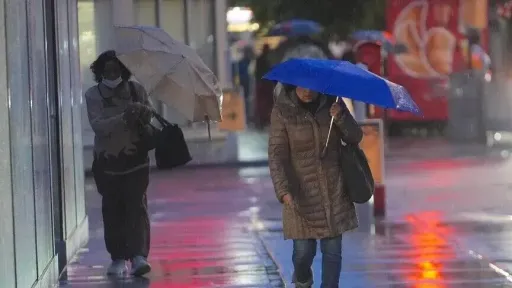
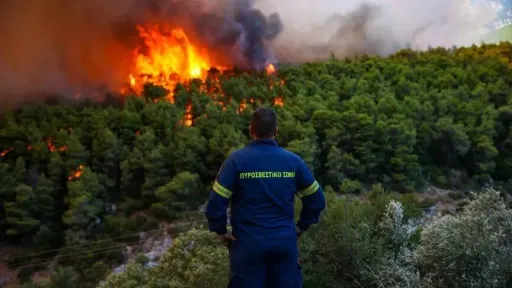
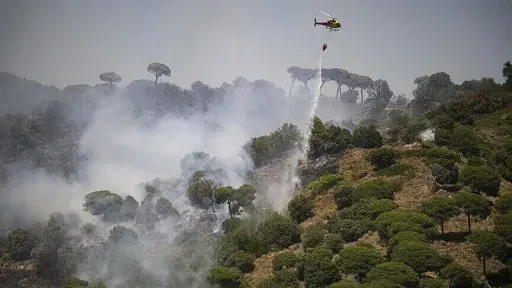
Europe’s increasingly severe floods, wildfires and other climate-related disasters are creating a growing financial burden for governments already facing higher defence spending and rising costs from ageing populations.
With most climate-related losses uninsured, taxpayers are likely to absorb much of the cost unless governments and the European Union take stronger measures to improve insurance coverage and invest in climate resilience.
“This just means the more you have these risks, the less they will be insured,” said David Zahn, head of European fixed income at Franklin Templeton. He warned that the impact could reach 1% to 2% of GDP in some countries.
Losses are accelerating
Weather- and climate-related extremes caused an estimated €822 billion in economic losses across the European Union between 1980 and 2024, according to the European Environment Agency.
Around a quarter of those losses occurred in just the past four years, highlighting the increasing frequency and cost of extreme weather.
The financial pressure is emerging as eurozone public deficits already average about 3% of GDP.
Federico Barriga-Salazar, head of Western Europe sovereign ratings at Fitch, said disasters that were previously treated as occasional budget shocks were increasingly becoming recurring expenses.
“If a government is already fiscally tight, it does create some policy trade-offs,” he said.
Insurance leaves governments exposed
Only about a quarter of climate-related catastrophe losses in the EU are insured, according to EU estimates. In some countries, coverage is below 5%.
The experience of recent floods illustrates the problem. The 2021 floods in Germany and neighbouring countries caused extensive damage, while Germany had to rely heavily on public funds because of relatively low insurance coverage.
Bruegel estimates that Germany drew on about €30 billion in public funds to cover most of its flood-related losses.
The 2024 floods in Spain, meanwhile, were the worst flooding event in Europe in five decades. Estimates cited by Fitch suggest reconstruction costs could amount to about 0.7 percentage points of Spain’s economic output between 2024 and 2026.
Governments seek new ways to share risks
The growing costs are prompting governments to examine new insurance and financing mechanisms.
Greece, whose tourism-dependent economy is particularly vulnerable to heatwaves and wildfires, is considering measures to expand insurance coverage while strengthening water and energy infrastructure in tourist areas.
Portugal has announced plans for mandatory home insurance supported by natural disaster and earthquake funds and a solidarity mechanism intended to ensure broad access to coverage.
Catastrophe bonds are another option being considered. They can provide governments with funding after predefined disasters but carry significant costs if disasters fail to occur.
EU officials are also examining broader solutions. The European Central Bank has proposed a joint public-private reinsurance scheme that would pool natural disaster risks and be supported by an EU fund for public disaster financing.
Prevention could prove cheaper
Experts argue that governments need to move beyond emergency spending and invest systematically in adaptation.
Heather Grabbe, a senior fellow at Bruegel, said European governments should assess their exposure, invest in measures that reduce future damage and pool risks across borders.
Studies have found that early investment in climate resilience can reduce future economic losses. A 2025 Oxford University study warned of an “adaptation investment trap”, in which repeated disasters increase public debt and leave governments with less money to finance future protection.
Spanish Prime Minister Pedro Sanchez has argued that green investments equivalent to 0.1% of GDP could prevent losses eight times larger while avoiding tax revenue losses three times the value of the original investment.
The European Commission said it was examining ways to close the climate insurance protection gap as part of a wider package of measures expected by the end of the year.
The challenge for Europe is increasingly clear: the cost of adapting to a warmer and more volatile climate must be paid upfront, or governments risk paying far more after each new disaster.
Source:Kathimerini