Nepal and China search for more than 3,000 missing after floods

Rescuers in Nepal and China searched Sunday for more than 3,000 people missing after a glacial collapse triggered flash floods and mudslides that swept through villages and infrastructure along the Himalayan border.
Authorities in the two countries reported 3,048 people missing and 768 deaths. Some bodies were carried downstream into India, where officials said seven bodies believed to be linked to the disaster had been recovered from rivers flowing from Nepal.
Nepal reported 752 deaths and 2,502 people missing, while authorities in Tibet reported 16 deaths and 546 missing.
Glacial collapse triggered floods
The disaster struck early Wednesday after a glacier on the southern slope of Lirung Peak in Nepal fractured, according to China's Xinhua news agency.
The collapse triggered an ice-rock avalanche and a debris flow that traveled more than 20 kilometers before reaching Gyirong Port in Tibet.
The US Geological Survey also attributed the disaster to a glacial collapse.
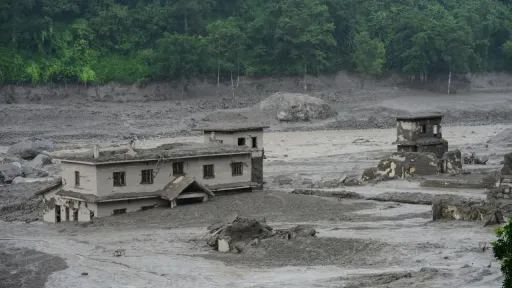
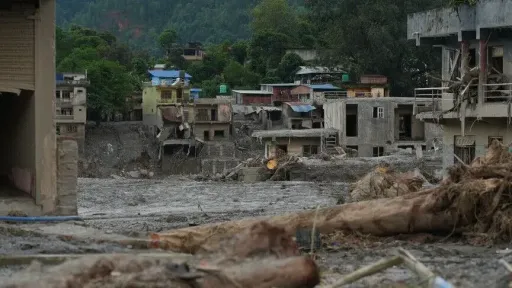
The floods carried large amounts of ice, mud and debris downstream, destroying settlements and damaging infrastructure.
Rescuers search for trapped workers
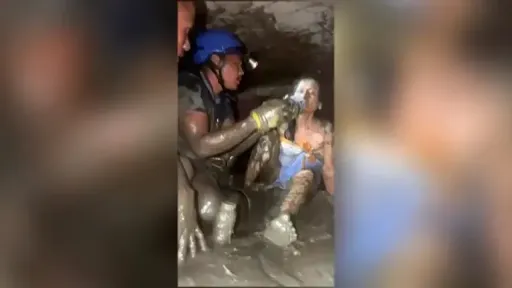
In Nepal, army troops and engineers worked to reach hydropower workers believed to be trapped inside a tunnel at the Trishuli 3A hydroelectric project.
Rescuers drilled through debris and inserted a pipe into the tunnel. Home Minister Sudan Gurung said air had begun to flow through a small opening.
Overnight rain and rising river levels temporarily flooded the excavation area, slowing the operation before conditions improved.
Nepal's disaster authority said 933 hydropower workers were among those missing.
New lake raises flood risk
Chinese rescuers near Gyirong Port moved to safer ground after a landslide created a new lake, state media reported.
Authorities temporarily suspended rescue operations because of the risk of further flooding. State broadcaster CCTV later said the lake was naturally discharging and had been largely drained.
Xinhua said 2,141 rescuers were deployed near Gyirong.
China also evacuated 555 stranded tourists and 499 Chinese residents from affected areas in Tibet.
Families await news
In Nepal, relatives gathered at rescue centers and searched lists of survivors as authorities began identifying recovered bodies.
Nepal said it was collecting DNA samples before burying some unidentified victims so that relatives could later reclaim the remains and conduct funeral rites.
Nepal's disaster authority said 592 foreigners, including trekkers and Hindu pilgrims traveling toward Mount Kailash, were among the missing.
The Isha Foundation said 80 members were traveling in the affected area and reported no encouraging indications of survivors near the immigration office.
“All the settlements near the river were swept away,” resident Buddhi Ram Dangol told AFP in Nuwakot district. “There is nothing left.”
International aid pledged
The United States and Canada each pledged $3.6 million in humanitarian aid to Nepal, while Britain offered $6.8 million.
The United Nations released $2.5 million in emergency funding. The European Union, the International Federation of Red Cross and Red Crescent Societies and other organizations also pledged assistance.
Malaysia said it would send search-and-rescue specialists.
Nepal has requested specialized equipment, including heavy-lift drones and technology to locate trapped people. Foreign Minister Shisir Khanal also called for forensic testing kits and refrigeration units to help identify and preserve bodies.
Khanal said reconstruction costs could reach billions of dollars.
Nepal and China have agreed to share satellite imagery and hydrological data as rescue and recovery operations continue.
The disaster has left thousands of families waiting for information while rescuers face difficult conditions and the continuing threat of floods and landslides.
Source:DailySabah