Nearly 1.1 billion children face multiple climate threats, UNICEF warns
Nearly half of all children worldwide — around 1.1 billion — are exposed to at least three overlapping climate and environmental threats, according to a new UNICEF report released on Tuesday.
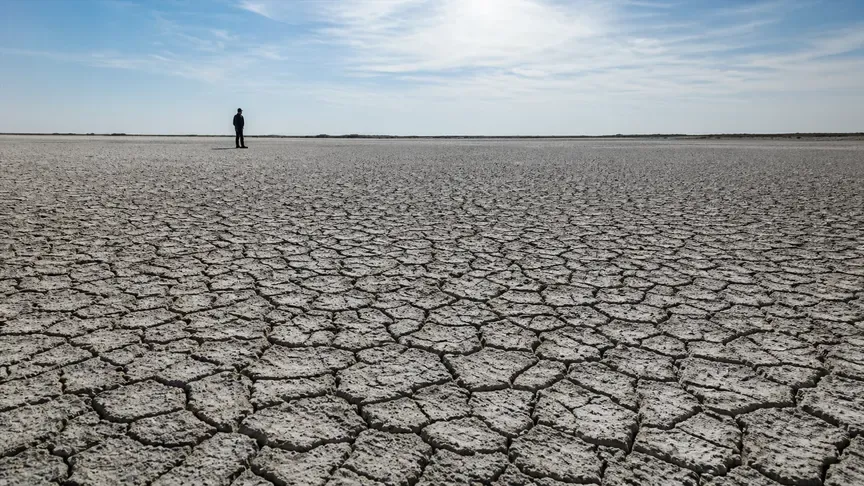
The UN children's agency said in its Children's Climate Risk Report 2026 that the most common combination of hazards includes drought, extreme heat above 35 degrees Celsius and heatwaves. It added that almost every child globally is exposed to at least one climate-related risk.
UNICEF warned that children are particularly vulnerable to the impacts of climate change because their bodies are more sensitive to extreme weather conditions than those of adults.
Children heat up faster, sweat less efficiently, breathe more rapidly and require more food and water relative to their body weight, the report said. Their chances of survival during extreme weather events are also lower.
Multiple risks overlap across vulnerable regions
The report assesses children's exposure to eight major climate hazards, including droughts, extreme heat, heatwaves, wildfires, coastal and river flooding, sand and dust storms, and tropical cyclones.
According to UNICEF, climate risks often occur simultaneously and reinforce one another, increasing their impact on children's health, safety and development.
Around 300 million children live in areas exposed at the same time to drought, extreme heat and heatwaves, while more than 115 million face a combination of drought, extreme heat and tropical storms.
The Sahel region of Africa is among the hardest-hit areas, with more than 4 million children exposed simultaneously to heatwaves, extreme heat and sand and dust storms. In Asia, Bangladesh, Myanmar and Pakistan are among the countries most affected by overlapping climate threats.
Call for stronger climate action
The report includes a climate risk atlas mapping where climate hazards occur and how severely they affect children. UNICEF said the tool could help governments and policymakers better target investments and strengthen essential services in vulnerable regions.
“Children and young people are least responsible for climate change, yet they are disproportionately affected,” said Christian Schneider, head of UNICEF Germany.
He called on the German government and the international community to strengthen climate action and increase support for countries most vulnerable to the effects of climate change.
Photo:AA