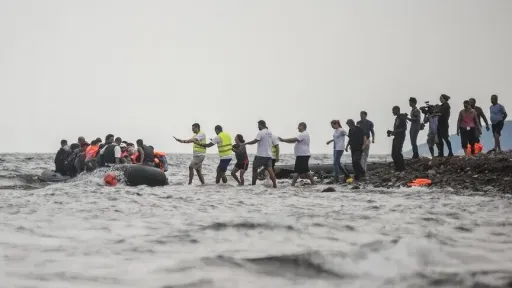
IOM calls on governments to strengthen cross-border coordination to contain Ebola outbreak

The International Organization for Migration (IOM) urged governments and partners on Tuesday to urgently strengthen cross-border coordination to contain the current Ebola outbreak in the Democratic Republic of Congo and Uganda.
In a statement, the UN agency warned that border closures alone risk driving movement underground and increasing transmission risks.
Confirmed cases of Ebola in the Congo surpassed 300 on Monday, according to the latest Health Ministry figures.
Meanwhile, deaths from the virus rose to 48. In Uganda, there have been 15 confirmed cases, and one death to date.
“Viruses do not stop at borders, and neither should our response,” said Ugochi Daniels, the IOM deputy director general for operations.
“When borders close, people often continue moving through informal routes where health screening and surveillance are limited. The most effective response is coordinated action that keeps mobility visible, safe and monitored.”
Last month, some countries, including Canada and the US, imposed travel restrictions and visa suspensions on residents from Congo, Uganda, and South Sudan, citing the Ebola outbreak.
Rwanda and Uganda, two countries sharing borders with Congo, have also limited travel from their neighbor.
The IOM warned that reactive border closures can reduce visibility of population movements, undermining health screening, surveillance, contact tracing, and early detection efforts.
The UN agency said data from its flow monitoring registry at key formal and informal crossing points showed that cross-border mobility continues despite restrictions, including through informal routes.
“Evidence from previous health emergencies shows that movement restrictions do not stop mobility but often redirect it towards informal and less-monitored routes,” it said.
The 17th Ebola outbreak recorded in Congo was declared on May 15. According to health authorities, the current outbreak is the third largest on record, highlighting both the recurring nature of the disease and the importance of sustained preparedness.
AA