Western Thrace Turkish minority media's challenges raised at global media workshop
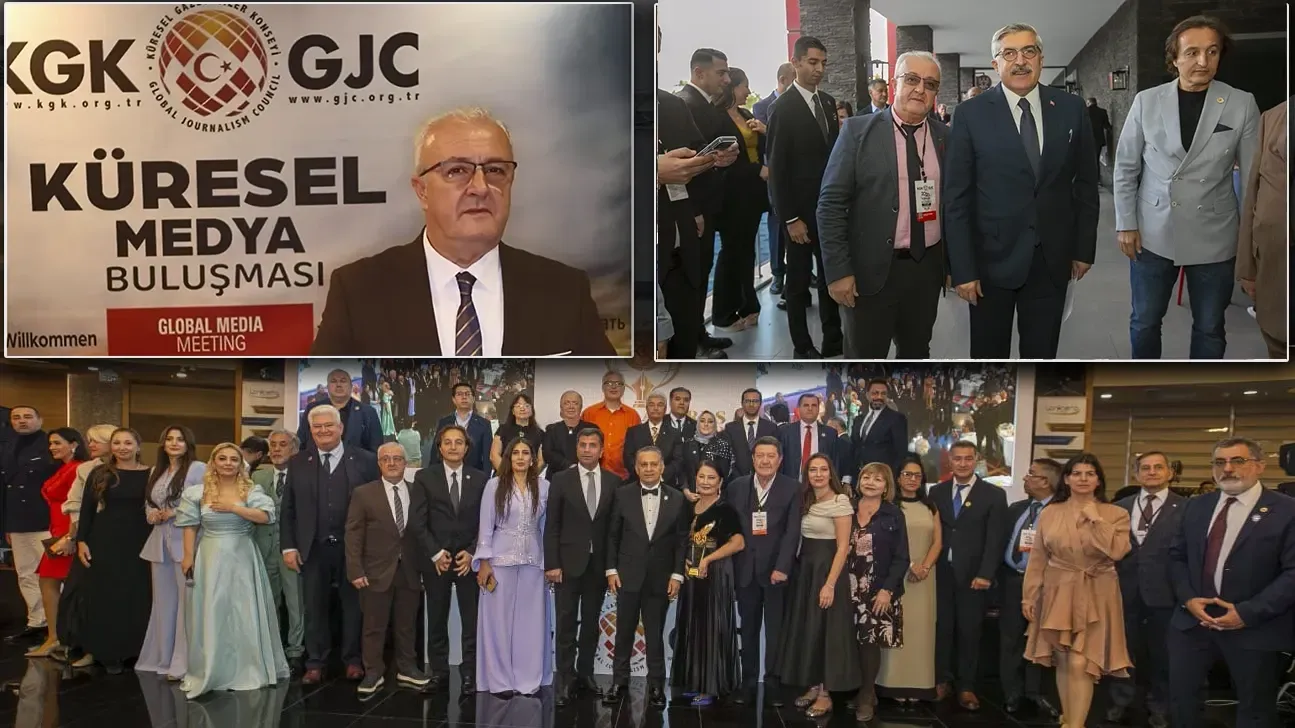
Necat Ahmet highlighted discrimination, economic barriers and pressure facing Turkish minority media in Western Thrace, Greece, at the 6th Global Media Workshop in Alanya, Türkiye, attended by approximately 350 journalists from 32 countries.
The challenges facing the Turkish minority press in Western Thrace were brought to the attention of international media representatives at the 6th Global Media Gathering and Media Workshop, organised by the Global Journalists Council (KGK) in Alanya, Türkiye, from November 6 to 10, 2026.
The event brought together approximately 350 journalists and media representatives from 32 countries to discuss the future of journalism, press freedom, digital transformation, artificial intelligence, the economic challenges facing media organisations and journalists' professional rights.
Representing Western Thrace, Necat Ahmet, manager of Çınar FM, journalist for Millet newspaper and TRT correspondent in Greece, addressed the difficulties experienced by Turkish minority media outlets in the region.
As Western Thrace's representative on the KGK's Foreign Media Council, Ahmet spoke during a meeting focusing on the professional challenges faced by journalists in the Balkans and across the European Union. He outlined what he described as discriminatory practices against Turkish minority media in Greece, as well as pressure on journalists carrying out their professional duties.
NECAT AHMET HIGHLIGHTS DISCRIMINATION AGAINST TURKISH MINORITY MEDIA
Speaking at the Foreign Media Council meeting, Ahmet said local media organisations belonging to the Turkish Minority of Western Thrace were excluded from state advertising and public-sector promotional opportunities.
He argued that these practices prevented Turkish minority media outlets from operating on an equal economic footing and should not be viewed as isolated incidents, but rather as reflections of broader Greek state policies towards the Turkish Minority of Western Thrace.
Ahmet also drew attention to what he described as assimilationist and discriminatory policies affecting the minority's media organisations, highlighting both the financial obstacles facing Turkish-language publications and the pressure journalists encounter in their professional activities.
Among the issues he raised were alleged police surveillance of journalists, monitoring of reporting activities and pressure on Turkish minority media outlets. He said such practices made it more difficult for journalists to carry out their work freely.
Ahmet stressed that the challenges facing the Turkish Minority of Western Thrace extended beyond education, religion and identity, also involving serious concerns over press freedom and freedom of expression.
The discussion brought issues such as the fair distribution of public advertising, the economic independence of local media and journalists' right to work without pressure onto an international media platform.
FOUR MEDIA COUNCILS DISCUSS THE FUTURE OF JOURNALISM
An important part of the workshop consisted of meetings held by four councils operating under the KGK: the Mainstream Media Council, Local Media Council, Foreign Media Council and Digital Media Council.
The meetings addressed sector-specific challenges and potential solutions, with particular attention to the difficulties experienced by journalists working abroad and diaspora media organisations.
Representatives from 32 countries discussed the financial sustainability of Turkish-language media outlets operating overseas, professional solidarity and international press freedom.
The Mainstream Media Council examined rising operating costs for newspapers and television broadcasters, the shift of advertising revenue towards major digital platforms, trade union protections and employment conditions for journalists.
Meanwhile, the Local and Digital Media Councils focused on the financial difficulties of local online news outlets, discrepancies between circulation and audience measurement data used by the Press Advertising Agency (BİK) and Google Analytics, digital copyright issues and unregistered publishing.
Participants also criticised practices involving one-way announcements through WhatsApp groups instead of direct communication with journalists, as well as pressure to remove published news reports.
ARTIFICIAL INTELLIGENCE, DIGITAL JOURNALISM AND MEDIA LAW
The technological transformation of journalism was another major topic at the workshop, coordinated by Prof. Dr. Levent Eraslan, Chairman of the KGK Advisory Board.
Presentations covered the use of artificial intelligence in news production, robotic journalism, digital media, social media applications, search engine optimisation (SEO), journalists' professional skills, universal journalistic principles and media law.
Participants also discussed the risks accompanying digitalisation, including misinformation and disinformation, source protection, news verification and the preservation of journalistic ethics.
They emphasised the importance of maintaining journalism's fundamental principles amid technological developments and ensuring meaningful human oversight in the use of artificial intelligence.
SYMPOSIUM EXAMINES MEDIA'S ROLE IN COMBATING VIOLENCE
On November 9, the programme also included a symposium organised in cooperation with the Foundation for Combating Violence (HEGEM).
Titled "Social Mediation as a Model for Violence Prevention and the Use of Media in Violence", the symposium addressed violence prevention, social mediation mechanisms and the media's responsibilities in this field.
The programme also featured the presentation of a social mediation project and the collective opening of social mediation branches, extending the gathering's agenda beyond journalism to broader questions concerning the relationship between media and society.
KGK RELEASES 15-POINT DECLARATION
Following discussions by the four media councils, the KGK published a 15-point final declaration on November 10, outlining recommendations concerning the future of journalism.
One of its key priorities was continuing work on a Press Professional Association Law aimed at safeguarding journalists' professional rights and strengthening press freedom.
The declaration also called for measures to ensure the economic sustainability of local, mainstream and digital media organisations, the fair distribution of official announcements and advertising revenues, the resolution of measurement discrepancies between BİK and Google Analytics, and increased revenue from digital platforms.
Other priorities included protecting the copyright of journalists' news reports, photographs and videos; safeguarding editorial independence; improving working conditions and employment rights; and encouraging young journalists to enter the profession.
The declaration further advocated stronger ethical standards, action against unregistered publishing, a reassessment of press card practices and efforts to ensure that journalists hold professionally recognised credentials internationally.
It also called for common principles governing artificial intelligence in journalism, with an emphasis on verification, transparency, source protection and human oversight.
Monitoring legal proceedings and rights violations involving journalists, protecting press freedom and strengthening professional solidarity among media organisations were among the other recommendations.
GLOBAL ACHIEVEMENT AWARDS PRESENTED
The 6th Global Media Gathering concluded with the Global Achievement Awards ceremony and gala dinner on the evening of November 9.
Former Kosovo President Vjosa Osmani received the Global Diplomacy Award, while Kosovo Deputy Prime Minister Fikrim Damka was presented with the Global Friendship Award. Renowned Turkish football manager Fatih Terim received the Global Sports Award.
Journalist Hayrunnisa Çiçek was honoured with the Global Journalism Award for her reporting that kept developments in Gaza in the public spotlight, while TRT AVAZ received the Global Media Award.
Kyrgyz artist Roza Amanova received the Global Arts Award, and Kazakh scientist Sultanhan Zhussip was presented with the Global Science Award.
A special award named in memory of the late journalist Veli Altınkaya was presented to journalist and author Yavuz Donat. Professional achievement awards were also given to journalists who had completed 50 years in the profession.
WESTERN THRACE MINORITY MEDIA'S VOICE REACHES INTERNATIONAL PLATFORM
The 6th Global Media Gathering provided an international forum for journalists from different countries to discuss the economic, legal, technological and ethical challenges facing the profession.
For Western Thrace, one of the most significant aspects of the gathering was the opportunity for Necat Ahmet to bring concerns about discrimination, exclusion from state advertising, alleged police surveillance and pressure on Turkish minority media to the attention of international journalistic circles.
Raising issues concerning the Turkish Minority of Western Thrace's identity, freedom of expression and press freedom at international platforms was highlighted as an important step towards bringing the minority's concerns to a wider audience.