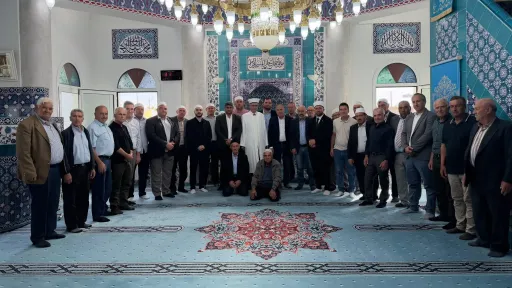
Türkiye’s YTB congratulates İskeçe Turkish Union on 99th anniversary

Türkiye’s Presidency for Turks Abroad and Related Communities has issued an official message celebrating the 99th anniversary of the İskeçe Turkish Union, one of the most prominent institutions representing the Turkish community in Western Thrace.
The milestone has drawn widespread recognition from civil society groups across the region, as well as from institutions in Türkiye, highlighting the union’s historical and cultural significance.
A Symbol of Identity and Community in Western Thrace
Founded on April 14, 1927, the İskeçe Turkish Union has long been regarded as a symbol of identity, unity, and cultural continuity for the Turkish minority in Greece.
Over nearly a century, the organization has played a key role in:
- Education and cultural preservation
- Social solidarity and community support
- Legal advocacy and minority rights efforts
- YTB Highlights a Century-Long Legacy
In its statement, YTB described the union as “more than an association”, emphasizing its role as a powerful voice for Western Thrace Turks.
The message noted that the organization has contributed to community life through:
- Traditional arts and music
- Folk dance and cultural expression
- Social and legal initiatives supporting minority identity
YTB also praised the union’s longstanding commitment to protecting its name and identity, calling it a “century-old torch” carried forward with determination.
Messages of Support from Türkiye and Beyond
The anniversary has prompted a wave of congratulatory messages from:
- Local institutions and NGOs in Western Thrace
- Ministry of Foreign Affairs of Türkiye
- Turkish diaspora organizations
Officials and community leaders emphasized the importance of the union’s legacy in sustaining cultural heritage and collective representation.
Approaching a Historic Milestone
As the İskeçe Turkish Union approaches its 100th anniversary, the 99-year milestone is being marked as a moment of reflection on its enduring influence and resilience.
Observers note that the organization remains a central pillar of community life and identity for Western Thrace Turks, amid ongoing discussions on minority rights and cultural recognition.