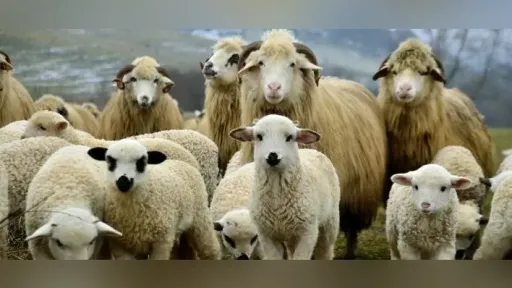
Samothraki under quarantine due to sheep pox

The island of Samothraki is facing a critical situation due to the outbreak of sheep pox, which has affected the island's livestock. With agriculture and animal husbandry being a major economic pillar, the disease poses a significant threat to the local economy.
Around 40% of the island’s population is employed in livestock farming, and there are approximately 50,000 animals on the island. The outbreak has raised concerns over a potential collapse of the island’s primary industry, which has historically been the backbone of its economy.
The mayor of Samothraki, Athanasios Vitsas, emphasized that while the disease has not spread throughout the entire island—affecting less than 3% of the herds—its impact is still significant. Seven out of 248 farms have been affected, and as a result, 900 animals from four farms have been culled. Another three farms will face similar culling, amounting to 3.8% of the total livestock on the island.
Despite the challenges, efforts are underway in collaboration with veterinary services and local authorities to manage the situation. Restrictions have been placed on the movement of livestock and feed, with the road network being disinfected to prevent the spread of the disease between farms. Additionally, milk collection and distribution remain unaffected as long as the pasteurization process is followed.
The main concern now lies with the families who depend financially on their animals. Slaughterhouses have been temporarily closed, and operations are suspended whenever infected animals are discovered. The island remains under quarantine until the situation stabilizes.
The exact cause of the outbreak is still under investigation, though it is suspected that the movement of people, animals, and vehicles between the island and the mainland may have contributed to the spread of the disease.
Source: ertnews.gr