MP Hüseyin Zeybek submits parliamentary questions to four ministries over İskeçe’s economic decline

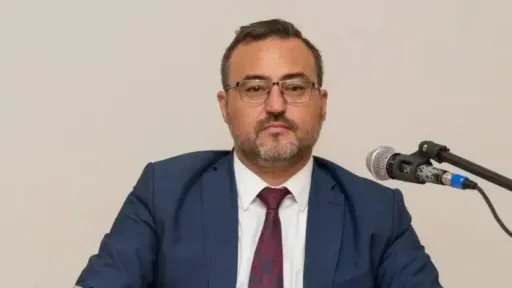
Hüseyin Zeybek, Member of Parliament for the New Left Party representing the regional unit of İskeçe, has brought long-standing economic and social challenges facing the area to the Greek Parliament, submitting a formal parliamentary question addressed to four key ministries.
Zeybek’s inquiry was directed to the Ministries of Economy and Finance, Development, Infrastructure and Transport, as well as Agricultural Development and Food. He highlighted persistently low living standards, economic stagnation, and chronic shortcomings in regional development planning in the northern Greek region.
Citing official data from the Hellenic Statistical Authority (ELSTAT) and Eurostat, Zeybek stressed that İskeçe has remained Greece’s poorest regional unit in terms of per capita income and purchasing power for years, while also ranking among the European Union’s most economically disadvantaged regions.
Structural Stagnation and Population Outflow
In his submission, Zeybek noted that per capita income in İskeçe remains significantly below both national and EU averages. He also underlined that the wider Eastern Macedonia and Thrace region consistently ranks near the bottom in economic indicators at both national and European levels. Despite limited improvements in neighboring areas, İskeçe continues to experience economic stagnation and decline.
Zeybek raised serious concerns over the accelerating emigration of young and productive residents, particularly abroad. He pointed out that a substantial portion of declared income in the region is not generated locally, but rather through overseas employment in sectors such as shipping, shipyards, and seasonal labor.
Lack of Investment and Regional Inequality
The MP also criticized the lack of substantial public and private investment, arguing that no major high-quality public projects have been implemented and that there is no targeted policy to attract private or foreign capital. He warned that development strategies disproportionately favor Athens and other major urban centers, deepening regional inequalities.
In addition, Zeybek emphasized the decline of the primary sector, stating that agriculture and livestock farming are suffering due to the absence of modern infrastructure and targeted support programs, leading to the gradual abandonment of rural areas.
Unimplemented Development Proposals
Zeybek further noted that numerous proposals adopted by the Cross-Party Committee on Thrace—many of which directly concern İskeçe—have either not been implemented or lack a publicly announced timetable. These include plans for a road connection between İskeçe, Demircik village, and the Greek–Bulgarian border, modernization of rail infrastructure and restoration of freight rail links, the creation of a technology and research campus around Democritus University of Thrace, and the establishment of a Southeast European cooperation and development body.
Additional proposals focus on leveraging Thrace’s cross-border location to enhance its appeal for investment and tourism, as well as implementing a region-specific program to strengthen the primary sector, agricultural processing, and livestock restructuring, particularly in mountainous areas.
Questions to the Government
Warning that İskeçe is facing a serious risk of long-term developmental marginalization, Zeybek asked the government to clarify:
- What concrete measures are planned to raise living standards and per capita income in İskeçe
- Which large-scale public investments are included or expected to be included in development programs, and their implementation timelines
- The current status of proposals adopted by the Cross-Party Committee on Thrace and which are funded or at a mature planning stage
- The strategy for attracting private and foreign investment to İskeçe, including specific incentive mechanisms
- Measures to prevent youth outmigration and reduce dependence on income generated outside the region and abroad
The parliamentary intervention places renewed pressure on the government to address regional disparities and deliver concrete development policies for one of Greece’s most economically vulnerable areas.