Law allowing private doctors in public hospitals “frozen” in Gümülcine, Doctors’ Association says

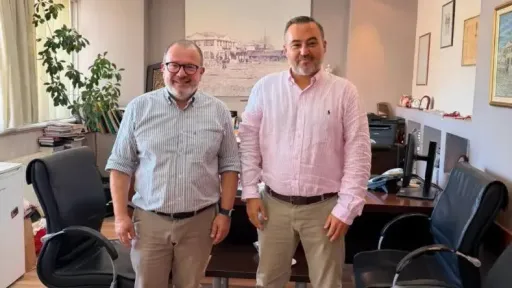
During a press conference on Wednesday, January 21, the Association’s president, Konstantinos Charitopoulos, and secretary general, Dimitrios Gymnopoulos, stated that all applications submitted by private physicians for cooperation with the hospital have been rejected, despite the law having been passed in August 2025 following pressure from the Panhellenic Medical Association and the Ministry of Health.
“De Facto Cancellation” of the Law
The contested regulation (Ministerial Decision G2a/oik.35764/2025) was designed to ensure equal treatment between hospital-based doctors—who were granted the right to operate private practices outside hospitals—and private physicians, who would be allowed to carry out diagnostic and surgical procedures inside public hospitals outside regular working hours.
According to the Medical Association, the law is particularly crucial for Rodopi, a region without private secondary healthcare facilities. As a result, many private doctors are unable to fully practice their specialty, while patients are frequently forced to travel to Thessaloniki for treatment, incurring significant financial and personal hardship.
All Applications Rejected
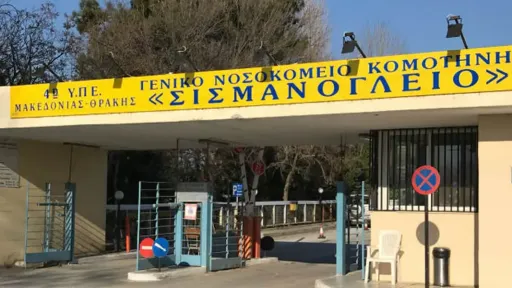
Approximately ten private doctors submitted cooperation requests to Sismanogleio Hospital, all of which were rejected—often with delays that, according to the Association, also violate the law. The hospital administration cited vague reasons, including lack of certifications for facilities, medical equipment, and organizational readiness.
Charitopoulos highlighted his own rejected request to perform bronchoscopies, noting that the same procedures had been carried out at the hospital until two and a half years ago by a now-deceased hospital pulmonologist, using the same facilities and equipment. He described it as “unthinkable” that these conditions are now deemed unsafe.
“These negative responses seriously concern us, because they effectively undermine the policy of the Ministry of Health itself,” he said, adding that the hospital is a safe environment for medical and surgical procedures, with responsibility ultimately resting on the physician performing them.
Exclusion and Economic Impact
Secretary General Gymnopoulos expressed deep frustration among private doctors, stating that despite decades of experience and the ability to perform complex procedures, they are being excluded in practice. “It is as if the law was passed with no intention of being implemented,” he said.
He also stressed the economic and social consequences for the region, as patients are forced to seek treatment outside Rodopi, leading to financial strain on families and revenue losses for the local hospital and economy.
“We are not competing with the public healthcare system’s free morning surgeries,” Charitopoulos clarified. “We are competing with private clinics outside the prefecture and keeping patients in their own region.”
Escalation of Actions Planned
The Medical Association of Rodopi announced plans to escalate its response, starting with a renewed letter to the Ministry of Health and followed by an appeal to the Prime Minister’s Office, requesting direct intervention to ensure the law is implemented in this border-region of Greece.
“We are asking for the obvious: that doctors in Rodopi be allowed to practice their specialty for the benefit of patients and the local community,” Charitopoulos concluded.
paratiritis