Halit Habipoğlu: “Our problems remain unresolved, our struggle will continue”

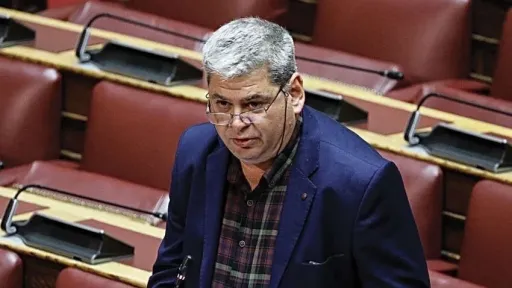
Halit Habipoğlu, President of the Federation of Western Thrace Turks in Europe (ABTTF), has issued a written statement on the occasion of the 38th anniversary of January 29 – the Day of Social Solidarity and National Resistance, emphasizing that the longstanding problems faced by the Turkish community in Western Thrace remain unresolved despite the passage of decades.
In his message, Habipoğlu underlined that the struggle of Western Thrace Turks continues across legal, political, and social spheres, stressing that fundamental rights and freedoms have deteriorated rather than improved over time.
“Our Democracy Has Become a Limping Democracy”
Recalling the events of January 29, 1988, Habipoğlu stated that although 38 years have passed, three associations remain closed solely because the word “Turkish” appears in their names. He noted that associations whose legal status was revoked have not been reinstated, while newly established organizations have been denied permission.
“Thirty-eight years later, we are still forced to shout ‘We are Turks’ and continue our struggle in the legal, political, and social arenas,” Habipoğlu said.
“In a country that repeatedly calls itself the ‘cradle of democracy,’ our rights and freedoms have moved backward rather than forward. Democracy has become a limping democracy for us—whenever it concerns us, one leg of democracy is deliberately left broken.”
Habipoğlu further emphasized that restrictions on freedom of association have been accompanied by mounting problems in other areas, particularly education. Despite the legally recognized autonomous status of minority education, schools have been systematically closed over the years.
“In 2010, we had 188 schools; today, this number has dropped to just 83,” he noted.
Religious Freedom and Institutional Interference
Habipoğlu also recalled the role of the late İskeçe Mufti Mustafa Hilmi Aga, who called thousands of Turks to the streets in 1988, describing it as an extraordinary act of courage under the conditions of the time. He argued that following Aga’s death in 1990, the authorities implemented retaliatory policies by seizing the community’s right to elect its own muftis and appointing state muftis in Gümülcine, İskeçe, and Dimetoka
“We opposed appointed muftis and elected our own in Gümülcine and İskeçe,” Habipoğlu stated.
“No One Can Silence Our Voice”
Concluding his message, Habipoğlu stressed that despite the passage of 38 years, not only have the problems remained unresolved, but new ones have been added.
“Even if another 38 years pass, no one can silence our voice. The Turkish presence in Western Thrace cannot be erased—even if a century goes by,” he said, extending his congratulations on January 29, the Day of Social Solidarity and National Resistance.