Concerns of Western Thrace Turks raised at UN Forum on Minority Issues

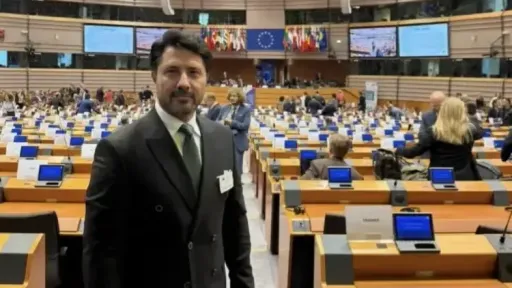
The Federation of Western Thrace Turks in Europe (ABTTF) and the Association of Western Thrace Minority University Graduates (WTMUGA) participated in the 18th Session of the UN Forum on Minority Issues, held on 27–28 November 2025 in Geneva, Switzerland, representing the Turkish community of Western Thrace.
This year’s session was held under the theme “Minorities’ contributions to diverse, resilient and peaceful societies.” ABTTF President Halit Habipoğlu, ABTTF Director of International Relations Melek Kırmacı, BTAYTD’s Dr. Pervin Hayrullah, and Kerem Abdurahimoğlu attended on behalf of the community.
Key Issues Raised by ABTTF
Speaking during the panel titled “Building trust and social cohesion: Addressing barriers to peaceful coexistence,” ABTTF highlighted the following concerns:
Under the 1923 Treaty of Lausanne, Western Thrace Turks were granted educational and religious autonomy, including the operation of bilingual “Turkish schools” with both Turkish and Greek signage.
However, ABTTF emphasized that over the decades Greece has increased political pressure and now denies the ethnic Turkish identity of the community.
Several longstanding associations have been shut down solely because the word “Turkish” appears in their names, despite operating for more than half a century.
Since 1991, the Greek government has refused to recognize the elected religious leaders (muftis) chosen by the Turkish community, effectively usurping this right.
ABTTF stated that the community faces systematic discrimination across many sectors, and that its educational and religious autonomy has been progressively eroded through restrictive laws and arbitrary regulations.
ABTTF also stressed that normalized discrimination stems from the state-driven “internal enemy” narrative targeting the Turkish minority, repeatedly echoed in politics and the media. Members of parliament and human rights defenders belonging to the Turkish community face hate speech and smear campaigns in Greek media.
The federation called on Greece to develop effective policies to combat structural discrimination and inequality, and urged the strengthening of the community’s role as a bridge-builder both domestically and internationally.
WTMUGA’s Intervention
WTMUGA reiterated that Greece does not recognize the ethnic Turkish identity of the Western Thrace community and continues to violate several minority and human rights—including the right to education. The association called on Greece to recognize the ethnic identity of Western Thrace Turks and to respect their fundamental rights and freedoms.
Greek Delegation’s Response
Representing Greece at the panel, the Greek side repeated its official position that the minority in (Western) Thrace is defined on a religious basis as a Muslim minority, according to the Treaty of Lausanne, and claimed that all rights guaranteed by the Greek Constitution and the European Union are fully upheld.