Commemorative event in Kirki honors Kyriakos Arikas amid strong environmental message
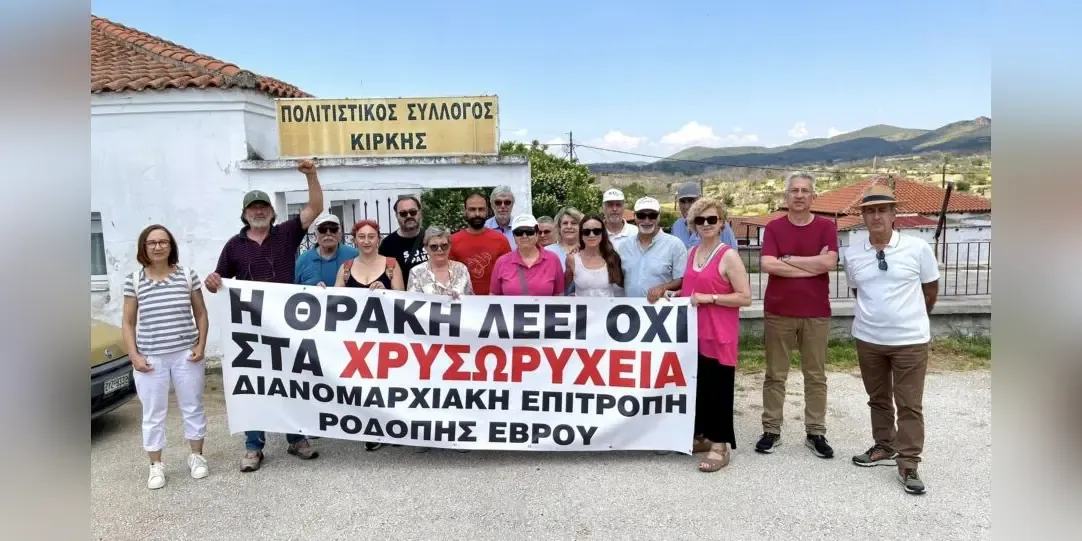
A commemorative ceremony honoring Kyriakos Arikas was held on Sunday, June 7, in Kirki, Meriç, bringing together residents, local officials, and representatives of regional organizations in a strong public expression of environmental awareness and opposition to gold mining activities.
The event was organized by the Cultural Association of Kirki, the Municipality of Dedeağaç, and the Inter-Regional Committee of Rhodope–Meriç Against Gold Mining and Metallurgy. It aimed to recognize Arikas for his long-standing scientific and social contributions, particularly his work on the geological identity of the Kirki region and his advocacy for environmental protection.
Speakers at the event highlighted Arikas’ academic and civic contributions, emphasizing his role in promoting awareness of the area’s natural heritage and environmental sustainability.
A wide range of attendees participated, including representatives of local government, professional and scientific bodies, and civil society organizations, as well as citizens from across Thrace.
Following the speeches, Arikas was awarded a commemorative plaque in recognition of his contribution to science, research, and environmental advocacy. The award was presented by the President of the Cultural Association of Kirki, Vasiliki Pantelidou.
In a symbolic continuation of the ceremony, participants undertook a 1.5-kilometer walk to the area of the old Kirki mines, underscoring the event’s central message regarding the relationship between human activity and the natural environment.
At the former mining site, Arikas presented findings from his research and spoke about the environmental risks associated with mining activities, including impacts on soil quality, water resources, biodiversity, and the wellbeing of local communities.
Organizers described the event as a moment of reflection and unity, emphasizing the importance of combining scientific knowledge with social responsibility in protecting the region’s natural environment.
The strong participation of citizens and institutions was seen as a clear indication of sustained public concern over environmental protection and the preservation of Thrace’s geological and ecological heritage.