“Aksios” ceremony for appointed mufti in Athens sparks backlash among Western Thrace Turks

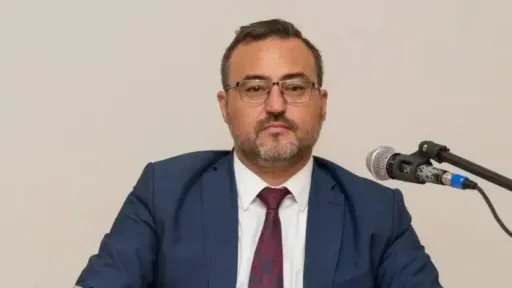
The oath-taking ceremony of Emin Serif, appointed by the Greek state as mufti of Didymoteicho (Dimetoka) despite strong objections from the Western Thrace Turkish Minority, has triggered widespread criticism after elements of Orthodox Church practice were incorporated into the event.
The ceremony, held in Athens in the presence of Minister of Education and Religious Affairs Sofia Zaharaki, drew particular attention when the minister used the term “Aksios” (“Worthy” or “Fit for the office”)—a technical and theological expression traditionally used within the Orthodox Church to confer ecclesiastical legitimacy on bishops and archbishops.
Members of the Western Thrace Turkish Minority argue that this language went beyond protocol and symbolized a state-imposed legitimacy over a religious office that the minority insists must be determined by community will, not government appointment.
Minority objections rooted in Lausanne Treaty
For decades, the Western Thrace Turkish Minority has opposed state-appointed muftis, citing the Lausanne Peace Treaty, European Union law, and international human rights conventions, which guarantee religious autonomy and the right to elect religious leaders.
The January 9 ceremony revived longstanding concerns, reinforcing claims that the Greek state continues to intervene directly in Muslim religious affairs while maintaining non-interference in the internal hierarchy of the Orthodox Church, Greece’s constitutionally recognized “prevailing religion.”
Controversy over MP’s attendance
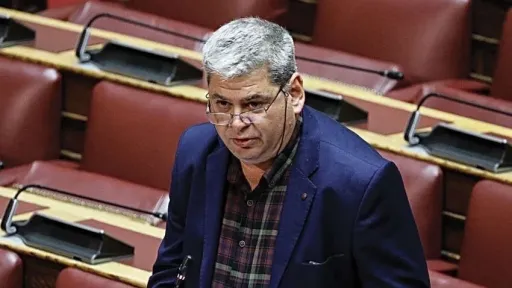
The presence of Rodopi PASOK MP Ilhan Ahmet at the ceremony also sparked controversy within minority circles. Critics questioned how an elected representative of the minority could attend an event perceived as undermining the community’s collective will, describing the moment as evidence of a growing representation crisis.
“Aksios” seen as institutional endorsement
In Orthodox tradition, “Aksios” is not a casual congratulatory phrase but a formal declaration of ecclesiastical approval. Minority institutions interpreted its use as an indication that the state seeks to place the mufti institution within an Orthodox-style hierarchy, contradicting principles of religious equality and autonomy.
Government defends appointment
The Ministry of Education and Religious Affairs described the appointment as a “historic step”, claiming it was conducted in full compliance with Law 4964/2022, the Greek Constitution, the Lausanne Treaty, and EU law. Minister Zaharaki argued that the reform strengthens the mufti institution under state guarantees and introduces a “modern and transparent” framework.
However, critics point out a perceived double standard: while Orthodox bishops are appointed exclusively through church bodies such as the Holy Synod, without ministerial oaths, Muslim religious leaders are subjected to direct state control and ceremonial endorsement.
Minority reaction: “A usurpation of will”
Minority institutions describe the appointment as a usurpation of religious will, arguing that a mufti must derive legitimacy from the conscience and consent of the Muslim community. They warn that unilateral state appointments violate freedom of religion, democratic representation, and minority rights protected under international law.
For the Western Thrace Turkish Minority, the mufti issue remains not a bureaucratic dispute but a core struggle over identity, religious freedom, and autonomy.